The Interference of Cosmic Weather
The prevailing wisdom in the quest for extraterrestrial intelligence may need a serious adjustment. New research indicates that the very conditions of "space weather," specifically intense stellar activity near alien star systems, could be distorting or broadening potential signals from alien civilizations, rendering them too faint or indistinct for current detection methods. This suggests that signals we might be missing aren't necessarily absent, but rather degraded before they even begin their interstellar journey.
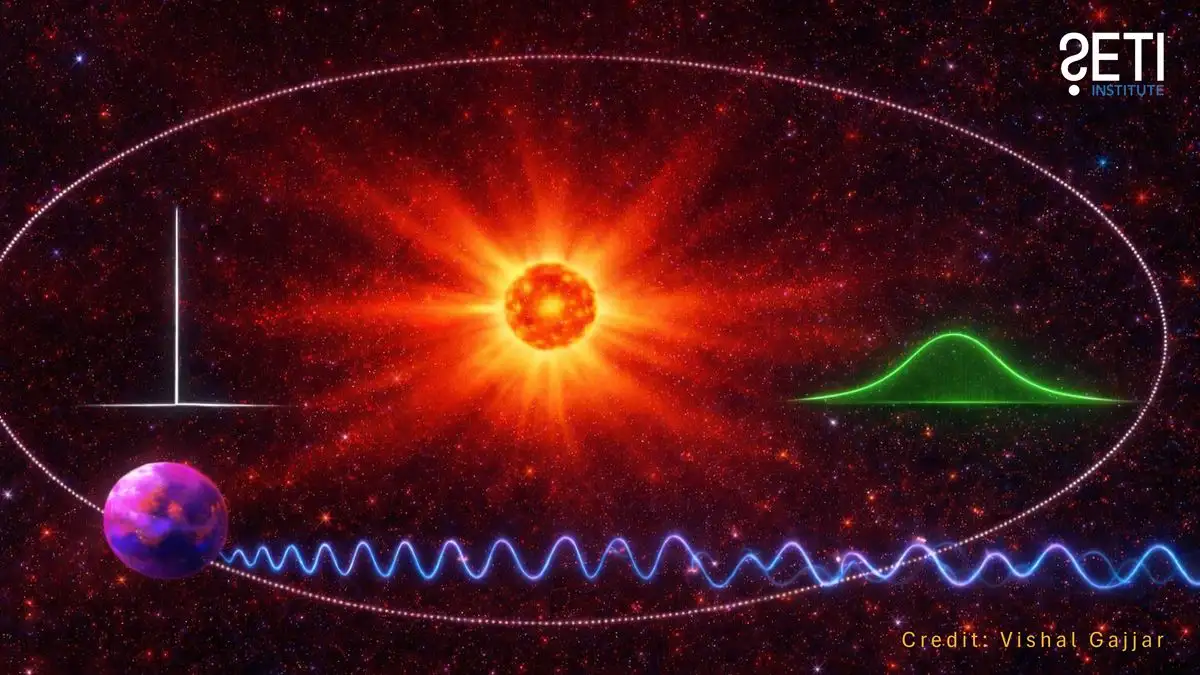
A recent report published in The Astrophysical Journal proposes that intense stellar activity, a phenomenon akin to solar flares and coronal mass ejections but occurring around other stars, can significantly broaden radio transmissions. This broadening causes signals that might otherwise be sharp and detectable to become wider and fainter.
This broadening effect means that many existing search strategies, which are optimized to identify extremely narrow and specific frequency spikes, may be inadvertently overlooking these distorted alien messages. The implication is profound: rather than assuming silence from the cosmos, we might be failing to "hear" due to interference occurring far closer to the source than previously considered. This necessitates a potential reevaluation of observation strategies, perhaps involving searches at higher frequencies or for signals exhibiting a wider frequency range than typically anticipated.
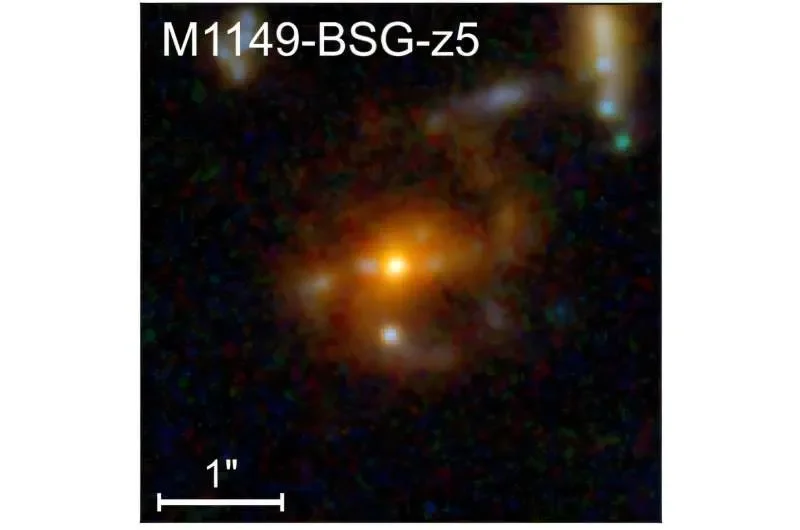
Read More: JWST Finds Oldest Barred Spiral Galaxy M1149-BSG-z5
Rethinking the Search Parameters
The established methodologies for the 'search for extraterrestrial intelligence' (SETI) have largely focused on detecting "ultra-sharp signals." However, the new findings suggest this focus might be too narrow. The SETI Institute, in collaboration with Grayce C. Brown, has put forth a framework for estimating how much radio signals could broaden under such stellar conditions.

This broadening transforms a potentially detectable signal into something that "could slip below detection thresholds."
Future observation surveys may need to incorporate these findings to adapt their search parameters.
The possibility exists that aliens might have been attempting communication for years, but our current listening apparatus is not tuned to catch these altered transmissions.
Unexplained Anomalous Phenomena and the Cosmic Echo
The broader conversation around extraterrestrial life and unexplained anomalous phenomena (UAP), previously known as unidentified flying objects (UFOs), continues to fuel speculation. While this new research doesn't directly address UAP, it offers a scientific perspective on why detecting potential signals from advanced civilizations could be more challenging than anticipated. The enduring mystery of whether humanity is alone in the universe is thus complicated by the practical difficulties of interstellar eavesdropping.
Other Cosmic Queries
Separately, scientists are investigating mysterious radio signals originating from an "unprecedented" region of space. Initial findings suggest these short flashes, lasting seconds to minutes, may emanate from a pair of colliding dead stars. This discovery highlights the diverse and often fleeting nature of cosmic radio emissions, some of which might have entirely natural, albeit exotic, origins.
Read More: Indigenous Data Rights Now Key in Conservation Genomics