

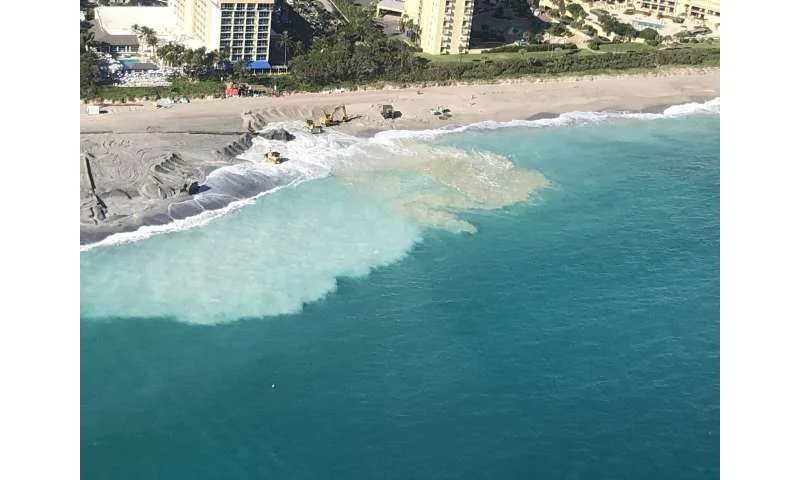
Persistent sediment plumes from beach nourishment projects in South Florida have created significant turbidity, impacting the nearshore waters vital for migrating blacktip sharks. A two-year observational study documented these plumes, some extending 15 kilometers along the coast and 250 meters offshore, drastically reducing water clarity.
This finding challenges the assumed benefits of beach nourishment, a common practice aimed at fortifying shorelines and supporting economic interests. Researchers from Florida Atlantic University were initially studying how blacktip sharks use these nearshore habitats and how nourishment might affect them. Instead, their work highlighted the immediate and widespread problem of murky water.
A Hidden Cost to Coastal Restoration
Each winter, thousands of blacktip sharks (Carcharhinus limbatus) migrate to the clear, shallow waters off South Florida. These waters are traditionally where they are easily observed. However, the seasonal beach nourishment projects, which involve moving large amounts of sand, coincide with this migration. The study observed 24 distinct sediment plumes generated by these projects, directly linking coastal engineering activities to a degradation of water quality crucial for marine life.
Read More: Car Exhaust Heat Makes Cities Hotter, New Study Shows
"This research uncovers a critical ecological tradeoff: while beach nourishment fortifies physical coastal structures and sustains human economic interests, it simultaneously jeopardizes the habitat quality beneath the surface."
This revelation points to a disconnect between physical coastal protection goals and the ecological realities of marine ecosystems. The implications extend beyond blacktip sharks, underscoring a broader impact of turbidity on marine life and potentially human safety, given the proximity to recreational areas.
Background: The Practice of Beach Nourishment
Beach nourishment, a form of coastal management, involves adding sand to eroded beaches. It is often undertaken to combat coastal erosion, protect property, and maintain recreational beaches, thereby supporting local economies. However, the process of dredging and pumping sand can stir up significant amounts of sediment, leading to temporary or, as this study indicates, persistent changes in water clarity.
The study, published in the Journal of Coastal Research, tracked these changes over two years. It highlights a need to re-evaluate current coastal engineering methods, urging the integration of biological considerations into planning and execution. This approach aims to balance the structural benefits of coastal protection with the preservation of crucial marine habitats and behaviors.
Read More: UK New North Sea Oil Fields Could Break Climate Promises


