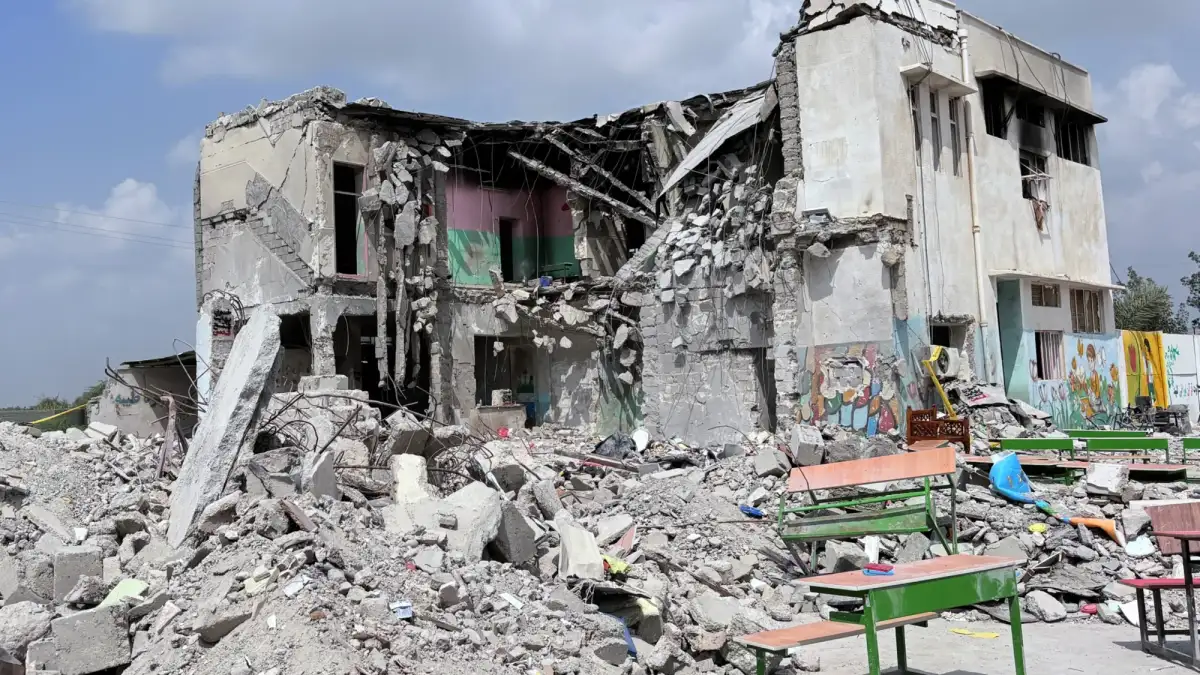
TEHRAN — Iranian officials have levied accusations against the United States, linking Washington to a recent deadly strike on a school within Iran and broader tensions escalating in the Strait of Hormuz. The pronouncements, made on March 12th and March 17th, 2026, cast a grim shadow over regional stability, with specific claims targeting American involvement in both incidents.
The inquiries, though their exact findings remain opaque in publicly accessible summaries, directly implicate the US in the lethal attack on an Iranian educational facility. Simultaneously, Iran has articulated a position that frames the United States, alongside Israel, as the architects of heightened friction in the Strait of Hormuz, a critical artery for global energy transport. This dual accusation suggests a strategy of attributing blame to external forces for both internal security breaches and external geopolitical pressures.
Read More: US May Cut NATO Troops If Allies Didn't Help in Iran War

The circumstances surrounding the school strike are currently under investigation, with Iran's official statements emphasizing the culpability of the US. The specific nature of this alleged involvement, be it direct action or indirect support, has not been elaborated upon in available summaries.
Concurrently, the situation in the Strait of Hormuz has been characterized by Iran as a direct consequence of actions by the US and Israel. This has raised concerns about the potential disruption of energy supplies that traverse this vital waterway. The Iranian perspective suggests a deliberate provocation aimed at destabilizing energy markets, with the US and Israel identified as the primary actors.
These accusations come against a backdrop of ongoing geopolitical complexities in the Middle East. The Strait of Hormuz, a narrow passage between the Persian Gulf and the Gulf of Oman, is of immense strategic and economic importance, serving as a transit point for a significant portion of the world's oil supply. Any instability in this region carries far-reaching implications for global energy markets.
Read More: Two-Week Ceasefire Between US, Israel, and Iran Starts Tuesday