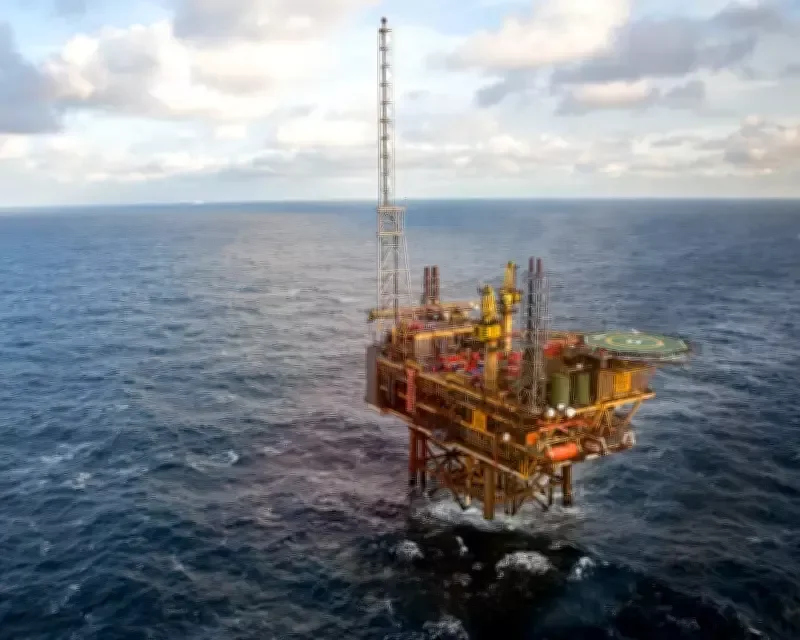
Experts are warning that the United Kingdom's potential approval of new oil and gas fields in the North Sea directly contradicts its commitments under the Paris Agreement and jeopardizes global efforts to limit warming to 1.5°C. The implications extend beyond national borders, potentially undermining progress in encouraging developing nations to transition away from fossil fuel-dependent economies.

This stance comes despite significant internal pressure on the UK government to greenlight these new developments. Forces pushing for the expansion include the oil industry, Conservative party members, Nigel Farage's Reform UK, certain trade unions, and factions within the Treasury. These groups argue for increased domestic production, often citing energy security concerns. However, research and expert analysis indicate that opening new fields would yield minimal impact on domestic energy prices and would not substantially alter the UK's reliance on fossil fuel imports.
Read More: Amazon Land Use Changes Cause Disease Clusters in Brazil
Climate Scientists Issue Stark Warning
A significant body of scientific literature, synthesized by researchers from institutions including the UCL Energy Institute, UCL Department of Political Science, and UCL Policy Lab, concludes that there is "no room for new fields to be opened" if the world is to adhere to climate targets. Their findings suggest that the world already possesses plans to extract more fossil fuels than can be safely burned, and that most remaining reserves must remain unexploited. The researchers are advocating for an immediate halt to all new exploration licenses and a refusal to grant development consent for fields already licensed but not yet operational. This recommendation highlights a two-stage process typical in the UK for oil field development: first, exploration licensing, and second, development consent for extraction.

International Ramifications and Shifting Priorities
The decision to license new fields carries substantial international weight. Experts, including Christiana Figueres, former executive secretary of the UN Framework Convention on Climate Change, emphasize that such a move would severely damage the UK's international climate credibility. This could embolden other nations, particularly developing countries considering the exploitation of their own fossil fuel reserves, potentially pushing global carbon emissions beyond safe limits and exacerbating climate breakdown.
Read More: Andrew sublet Royal Lodge cottages for years, NAO report says

The UK's climate envoy, Rachel Kyte, is slated to attend a conference where such international discussions are central, while the Secretary of State for Energy Security and Net Zero, Ed Miliband, will reportedly not be present. This absence, at a critical juncture for global climate negotiations, raises questions about the government's commitment to active engagement on the issue.
Economic Arguments Scrutinized
Arguments that new oil and gas fields would enhance energy security or reduce prices are being challenged. Christiana Figueres points out that genuine energy independence lies in scaling up clean, domestic energy sources rather than prolonging the viability of declining fossil fuel industries. Furthermore, reports indicate that the economic realities, coupled with the escalating risks of climate breakdown, argue against pursuing new fossil fuel extraction projects. The decision on these new fields, including projects like Rosebank and Jackdaw, is framed as a critical test of the UK's commitment to its climate pledges.
Read More: Kanyakumari Atomic Mining Permit Extended for 1144 Hectares in 2026