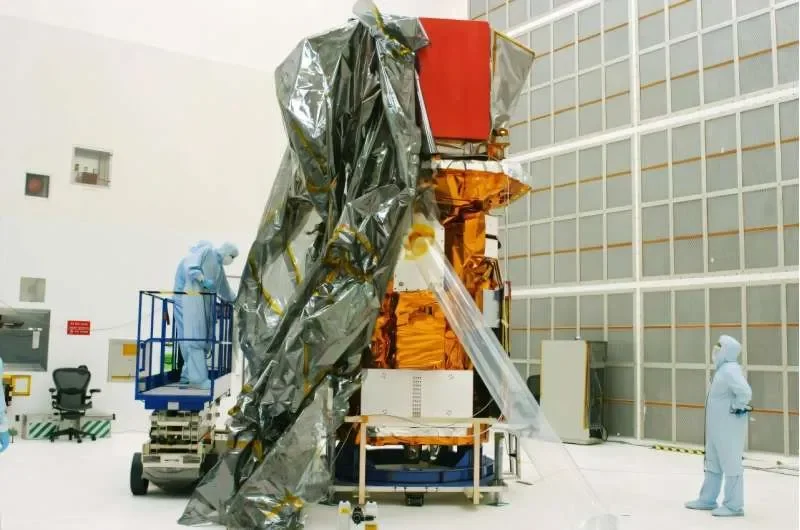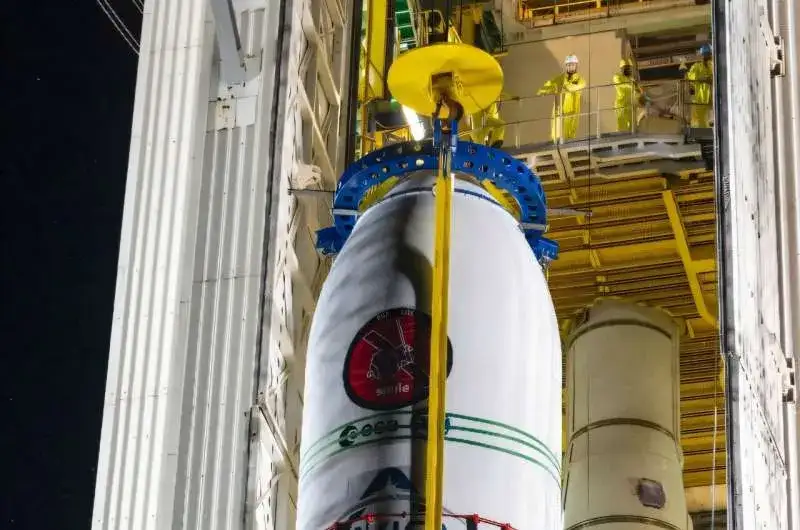
A joint European-Chinese spacecraft, SMILE, is slated for launch on Tuesday, its mission to closely observe how Earth's magnetic field, our planet's natural defense, copes with powerful solar storms. This endeavor marks the first time such observations will be conducted using X-ray imaging. The spacecraft will embark on an extremely elliptical orbit, initially placed 700 kilometers above Earth before extending to a maximum distance of 121,000 kilometers. This wide orbital path, particularly when swinging over the North Pole, is designed to provide a comprehensive, long-term view of interactions between solar winds and our planet's protective magnetosphere.
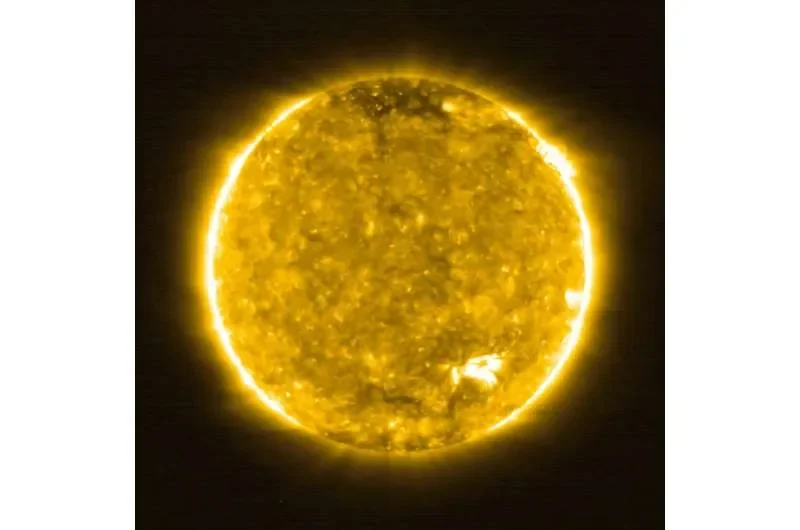
The primary objective of the SMILE mission is to capture unprecedented X-ray images of Earth's magnetosphere, a region previously unexamined in this manner. Scientists aim to gain a deeper understanding of 'space weather' – the conditions in space driven by the sun that can affect Earth and our technological infrastructure. While Earth's magnetic field generally deflects the majority of charged particles from the sun, understanding the dynamics of this interaction is crucial, especially as solar events pose increasing risks to orbiting satellites and astronauts.
Read More: NASA Robot Mission Launched to Raise Swift Telescope Orbit, Add 10 Years
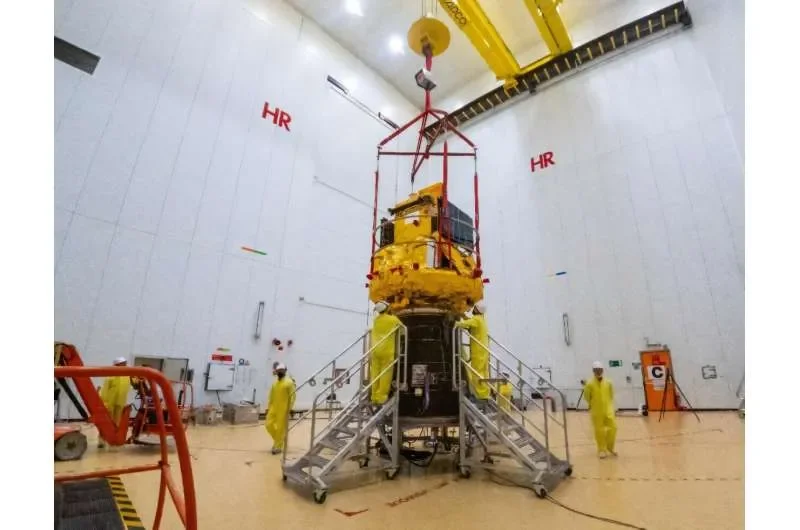
New Era in Space Weather Monitoring
Recent launches and upcoming missions signal a concerted global effort to bolster our ability to forecast and mitigate the impact of solar events. In September 2025, NASA launched three spacecraft: IMAP, SWFO-L1, and Carruthers. IMAP is positioned between Earth and the Sun to sample solar wind before it reaches our planet, providing data on how the sun influences our solar neighborhood. SWFO-L1, operated by NOAA, is designed to observe solar wind and storm activity, contributing to solar storm forecasting. The Carruthers mission focuses on studying Earth's exosphere, the planet's outermost atmospheric layer.
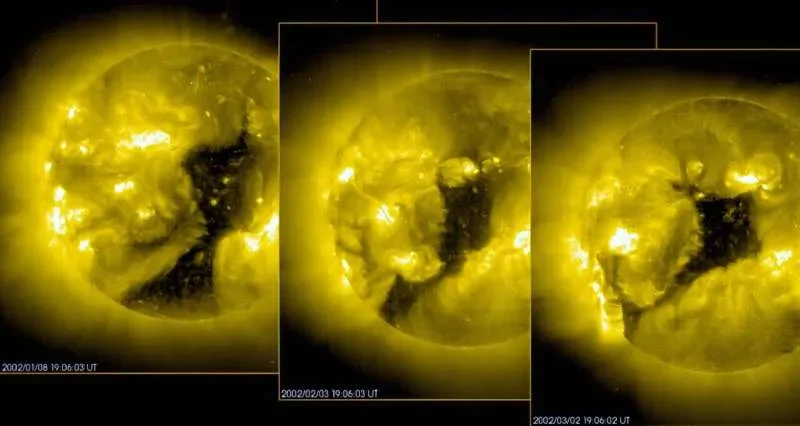
Extending Warning Times
Further enhancing our preparedness, the Space Weather Investigation Frontier (SWIFT) mission, utilizing solar sail technology, aims to significantly extend the warning time for solar storms. Current early warning systems, positioned at the L1 Lagrange point, offer about 40 minutes of notice. SWIFT, building on demonstrations like the Solar Cruiser, promises to more than double this crucial lead time, allowing for more effective preparation against potentially disruptive solar phenomena.
Read More: Indigenous Data Rights Now Key in Conservation Genomics
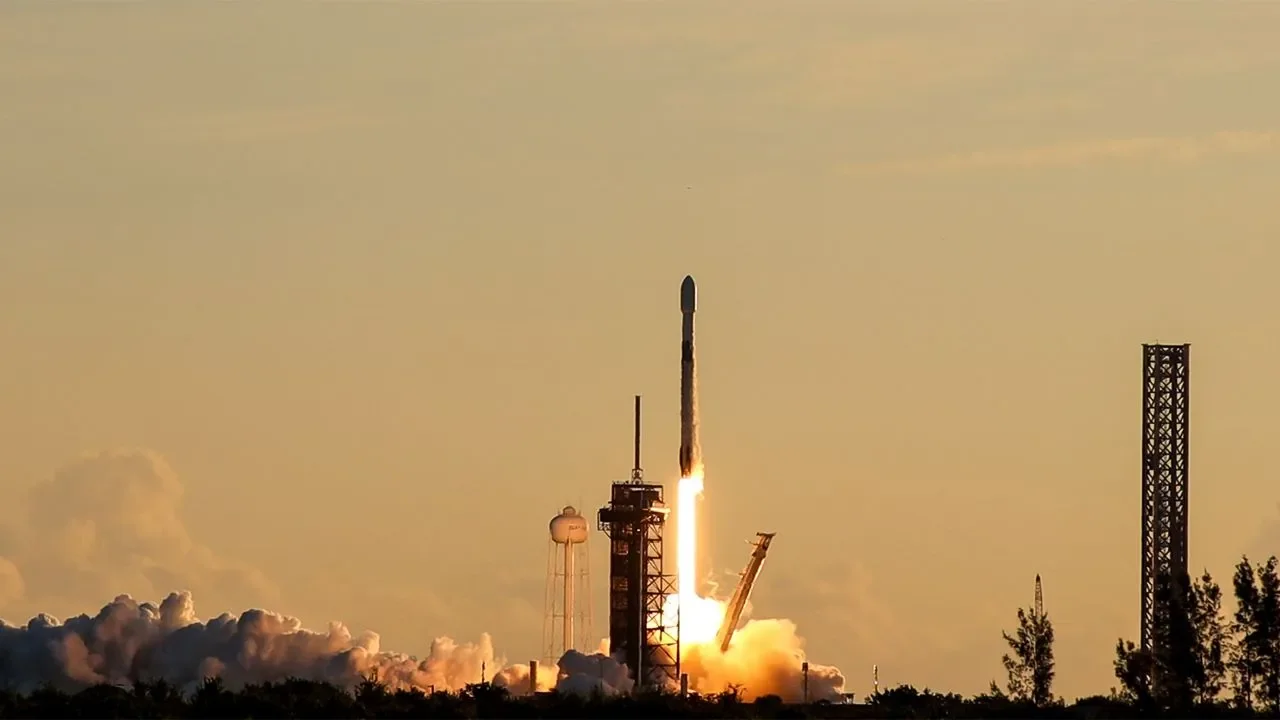
Background: The Sun's Influence
The sun continuously emits a stream of charged particles known as solar wind. Periodically, massive eruptions from the sun, such as solar flares and coronal mass ejections, release vast amounts of energy and plasma. These events, collectively termed solar storms, can travel through space and interact with Earth's magnetic field. While this field acts as a shield, powerful storms can cause geomagnetic disturbances, impacting power grids, communication systems, and even posing risks to space-based assets and human spaceflight. Understanding these interactions is paramount for ensuring the safety and reliability of our increasingly technology-dependent society.