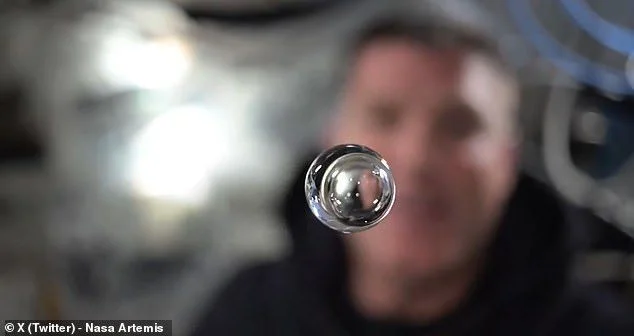
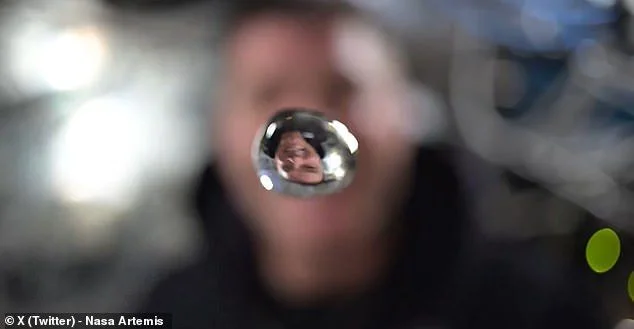
Astronauts aboard the recent Artemis II mission conducted a visual experiment, observing and interacting with a sphere of water in the microgravity environment of the Orion capsule. The footage, shared by NASA, shows the liquid forming a distinct ball, a direct result of surface tension overcoming other forces in the absence of significant gravity. This phenomenon dictates how liquids behave beyond Earth's atmosphere, influencing everything from life support systems to future habitation designs.
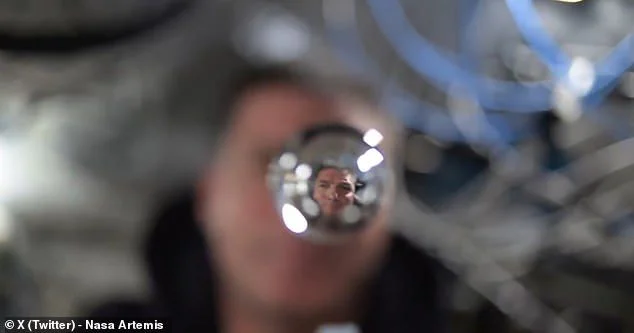
The experiment, described as a "captivating video," showcased how a water droplet molds itself into a floating sphere. It also offered a glimpse into how water refracts light and moves differently in space. This simple demonstration serves not only as a point of public fascination but also as a building block for understanding the practicalities of human space exploration.
Read More: NASA Robot Mission Launched to Raise Swift Telescope Orbit, Add 10 Years
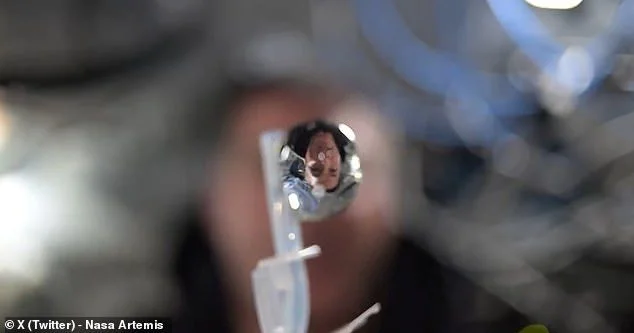
Key elements of the water experiment:
Surface Tension Dominance: In microgravity, the inherent cohesive forces within water cause it to form a spherical shape.
Visual Properties: The video highlights how this water sphere interacts with light, bending it in a unique way.
Astronaut Interaction: Mission Specialist Christina Koch, Mission Specialist Jeremy Hansen, Commander Reid Wiseman, and Pilot Victor Glover were involved in observing and manipulating the water bubble. Commander Wiseman, for instance, was seen interacting with the sphere using a straw.
Potential for Future Study: This kind of basic physics demonstration is crucial for preparing astronauts for extended stays and operations on celestial bodies like the Moon, as NASA aims to establish a Moon Base and plan for Mars missions.
Some observers have characterized the astronauts' engagement with the water sphere as playful, likening their actions to "adults acting like pre-teens." This sentiment underscores the human element of space travel, where scientific observation can intertwine with moments of curiosity and lightheartedness.
The Artemis II mission itself is framed by NASA officials as a pivotal endeavor. Amit Kshatriya, associate administrator of NASA, called it "the most important human space exploration mission in decades." The crew, which completed a 10-day mission around the Moon, splashed down on April 10, 2026. Their return marked a significant step in NASA's broader objectives.
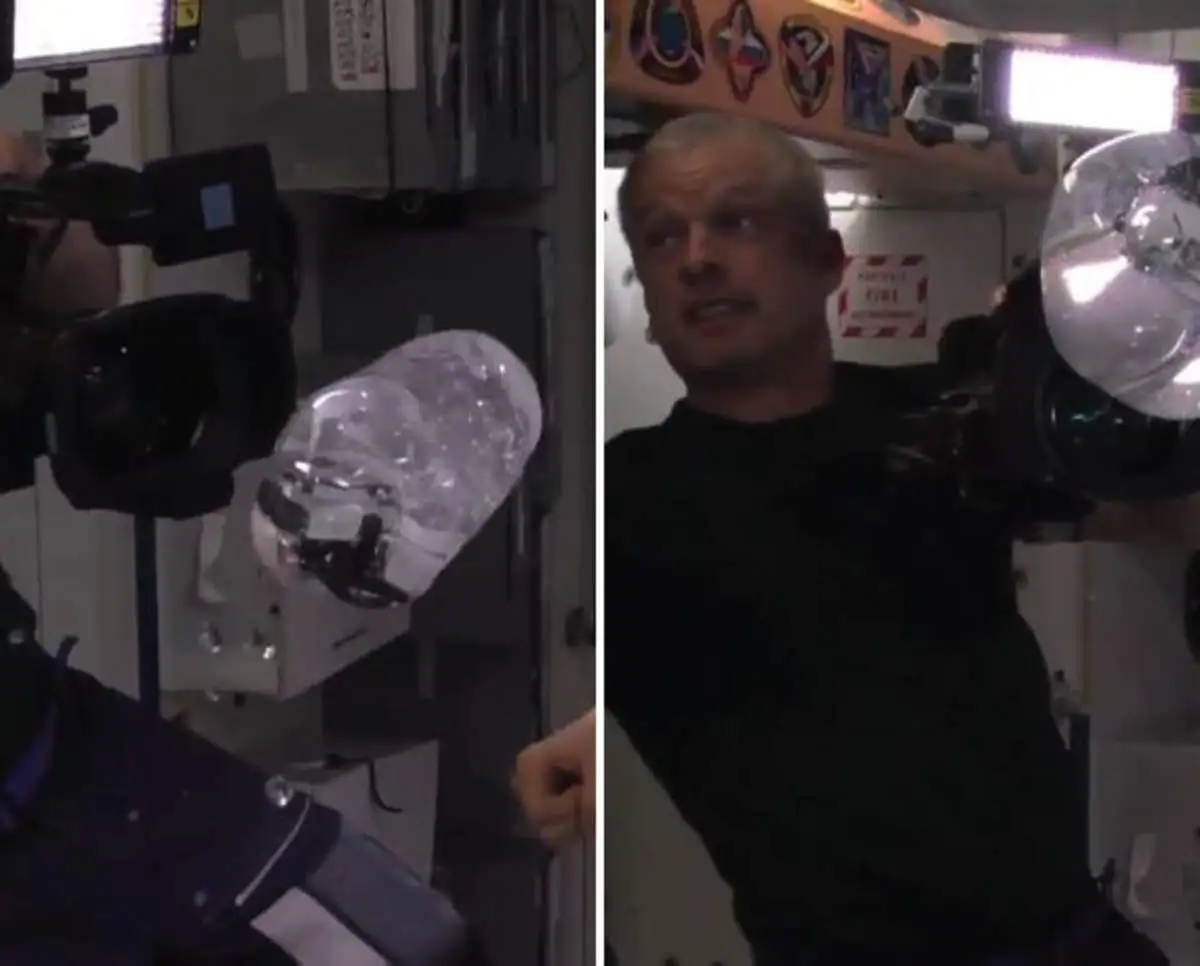
This exploration of water behavior in space is not entirely unprecedented. Similar observations have been made on other missions, including experiments aboard the International Space Station where astronauts have captured footage of water blobs, even at one point placing a waterproof camera, a GoPro, inside a floating bubble for an internal perspective. These past experiments provide a historical context for the Artemis II crew's activities.
Read More: Indigenous Data Rights Now Key in Conservation Genomics