New protocols aim to temper panic and misinformation.
Researchers involved in the search for extraterrestrial intelligence (SETI) have rolled out updated guidelines for handling potential signals from beyond Earth, a move intended to preempt widespread confusion, misinformation, and potential public outcry. The revised protocols place a significant emphasis on verification and careful communication, acknowledging the amplified reach of information – and disinformation – in today's hyper-connected digital landscape.
These guidelines, developed by a committee under the International Academy of Astronautics (IAA), are not legally binding but aim to foster responsible scientific practice. The past 15 years have seen an explosion in social media, a shift that fundamentally alters how scientific discoveries, particularly those as momentous as contact with alien life, would be disseminated.

Transparency Versus Premature Claims
Prof. Michael Garrett, director of the Jodrell Bank Centre for Astrophysics and chair of the IAA committee for SETI, articulated the delicate balance sought by the updated protocols. "I think we hope to avoid researchers ‘crying alien’ prematurely, and yet to let the public know we want to be as transparent and open as we can be," Garrett stated. He stressed the imperative for scientists to "try and control the narrative of whatever your discovery might be so that it doesn’t get distorted in some way."
Read More: Indigenous Data Rights Now Key in Conservation Genomics

Dr. Rebecca Charbonneau, a historian of science at the SETI Institute's discovery and futures laboratory, noted that the updated guidelines reflect a "longstanding commitment to transparency and responsible discovery communications" within the SETI community. The emphasis remains on rigorous verification and peer review of any detected signals before public pronouncements are made.
Navigating the Digital Wild West
The evolution of the internet and the "explosion of social media over the last 15 years," as described by Garrett, necessitate these proactive measures. The new frameworks are designed to help scientists, even those not actively searching for extraterrestrial life but who might stumble upon an anomaly, to navigate the complex implications of such a discovery.
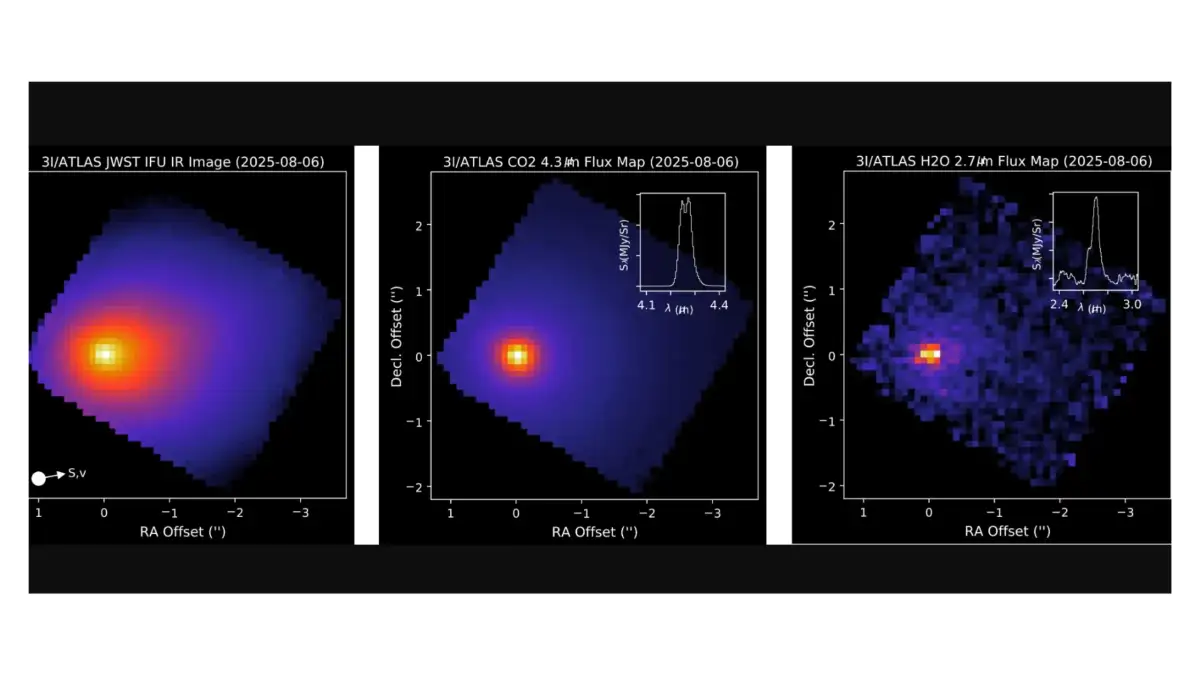
Recent events, such as the detection of the interstellar object 3I/ATLAS, have already ignited global intrigue surrounding extraterrestrial life. While SETI scientists have stressed that 3I/ATLAS poses no threat, the renewed public interest underscores the potential for widespread reaction to any future confirmation of intelligent signals. The protocols aim to provide a structure to manage this reaction, preventing a surge of unfounded speculation and panic.
Read More: US Space Force Victus Haze Mission Successfully Tests Orbital Intercepts
Historical Context: The Long Search
The search for extraterrestrial intelligence is not new. Historically, SETI efforts have been marked by both tantalizing hints and outright fabrications. These new guidelines are an attempt to provide a more robust framework for a hypothetical, yet profoundly significant, future discovery. Some theories, however, ponder whether advanced civilizations might have simply "gotten bored and stopped bothering," making detection difficult regardless of our preparedness for announcing a find. The pragmatic approach of the committee acknowledges that a discovery might come from unexpected quarters, emphasizing the need for these protocols to be broadly applicable.
Read More: New Room Temperature Photon Source for Quantum Tech in Korea