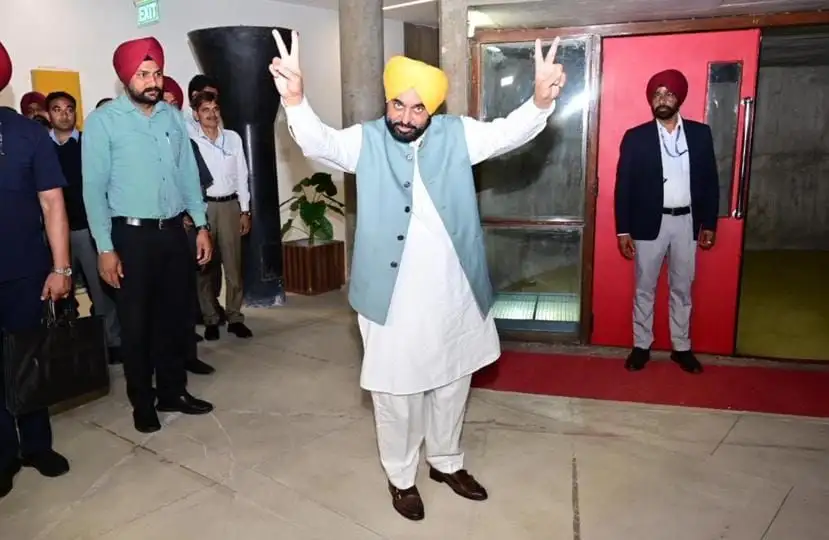
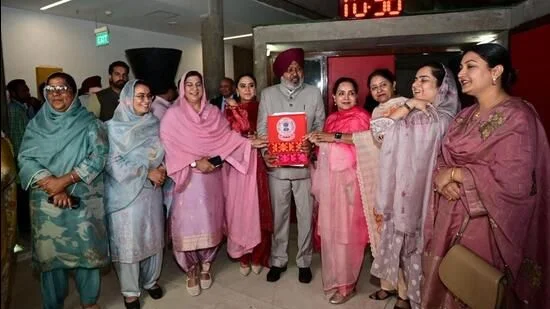
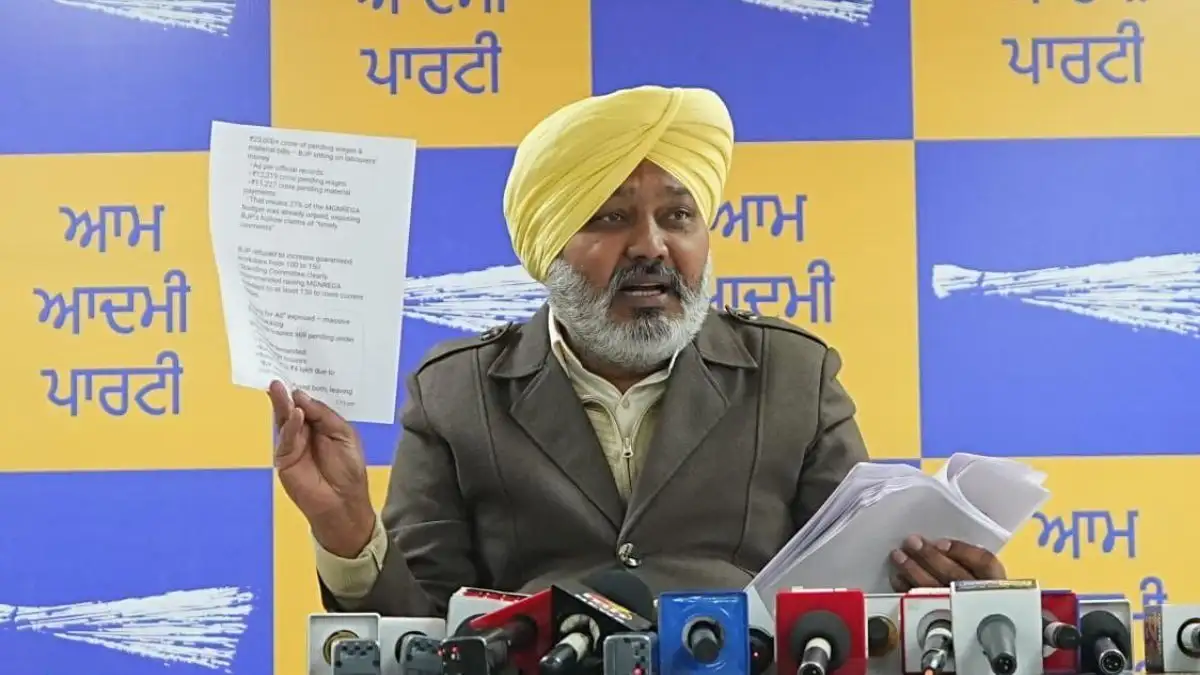
Chandigarh, March 8, 2026 – Punjab Finance Minister Harpal Singh Cheema today presented a budget totaling ₹2,60,437 crore for the fiscal year 2026-27. The budget, characterized by the minister as a "budget that fulfills all guarantees," centers on significant allocations for women's welfare, agriculture, education, and rural development.
The administration claims to have met all electoral promises, positioning this budget as a culmination of its governance journey. A key announcement is the 'Mukh Mantri Mawan Dhian Satikar Yojna', a direct benefit transfer scheme intended to provide ₹1,000 monthly to all adult women and ₹1,500 monthly to adult women from Scheduled Castes. This initiative alone has a budgetary allocation of ₹9,300 crore, with projections suggesting it will cover approximately 97% of adult women in the state, including those already receiving social security pensions.
Budgetary Focus Areas and Allocations
The budget details include substantial financial provisions for various sectors deemed crucial for the state's progress and welfare:
Read More: Solaris Energy SEI Stock Price Forecast Reaches $91.98 by July 2027
Agriculture and Allied Sectors: ₹15,377 crore has been earmarked. This includes ₹7,715 crore for power subsidy specifically for agriculture. A smaller allocation of ₹600 crore is designated for subsidizing stubble management machinery, alongside ₹40 crore to promote direct seeded rice (DSR) to conserve groundwater.
Education: A total of ₹19,279 crore is proposed for the education sector, marking a 7% increase from the previous year. This funding aims to bolster infrastructure in approximately 20,000 government schools, with provisions for boundary walls, toilets, and desks.
Rural Development and Infrastructure: The 'Rangla Punjab Vikas Scheme' sees its allocation doubled to ₹1,170 crore, with ₹10 crore designated for each of the 117 assembly constituencies. Furthermore, ₹1,500 crore is allocated for the rural guarantee scheme, and ₹800 crore is earmarked for covering one lakh houses under the Pradhan Mantri Awas Yojana (Gramin).
Women's Welfare and Social Security: Beyond the flagship monthly cash transfer scheme, ₹360 crore is allocated for the Ashirwad Scheme, and ₹261 crore for post-matric scholarships. The free bus travel facility for women will continue with a budget of ₹600 crore. Integrated Child Development Services (ICDS) will receive ₹932 crore, covering over 27,000 Anganwadi Centres. The 'Navi Disha Scheme' for free sanitary pads to needy women and adolescent girls has been allocated ₹65 crore.
Economic Projections and Fiscal Health
The finance minister projected Punjab's Gross State Domestic Product (GSDP) to reach ₹9,80,635 crore in FY27, anticipating an approximate 10% growth rate. The estimated effective revenue deficit is pegged at 2.06% of GSDP, while the fiscal deficit is projected at 4.08% of GSDP. The government anticipates total revenue receipts at ₹1,26,190 crore, with tax revenue expected to be ₹70,851 crore.
Broader Initiatives and Governance Narrative
The budget speech emphasized a commitment to public welfare and the realization of a 'Rangla Punjab' (vibrant Punjab). The minister highlighted the government's resolve to translate promises into tangible outcomes, stating that "from the very first day of assuming responsibility of the state, the Aam Aadmi Party government… has resolved that the guarantees given to the people would not remain mere words on paper." This budget is presented as evidence of this commitment, particularly with its dedication to mothers and daughters.
Read More: AAP's NEET Protests Questioned for Fake Student Support in Punjab
The finance minister also touched upon efforts to combat drug abuse, announcing plans to deploy 5,000 home guards in border areas and implement anti-drone systems to curb smuggling. An allocation of ₹110 crore is set aside for this purpose, with an additional ₹150 crore for a drug census. The '112' emergency service is to be strengthened with new vehicles, aiming to reduce response times. The commitment to providing 300 units of free electricity to domestic consumers remains, with a budget of ₹7,614 crore. A new industrial policy is also slated for implementation, supported by an allocation of ₹250 crore.
The budget presentation comes ahead of the state's assembly elections, positioning it as the government's final budget before heading to polls. The narrative presented by the finance minister underscores the administration's claim of fulfilling all promises made to the electorate during the 2022 elections, a period the minister referred to as a vote for change and rejection of "hollow politics." The speech also acknowledged the resilience of Punjab's populace in overcoming challenges, such as the previous year's floods.
Read More: Rocket Companies brand update in April 2026 changes logos and names