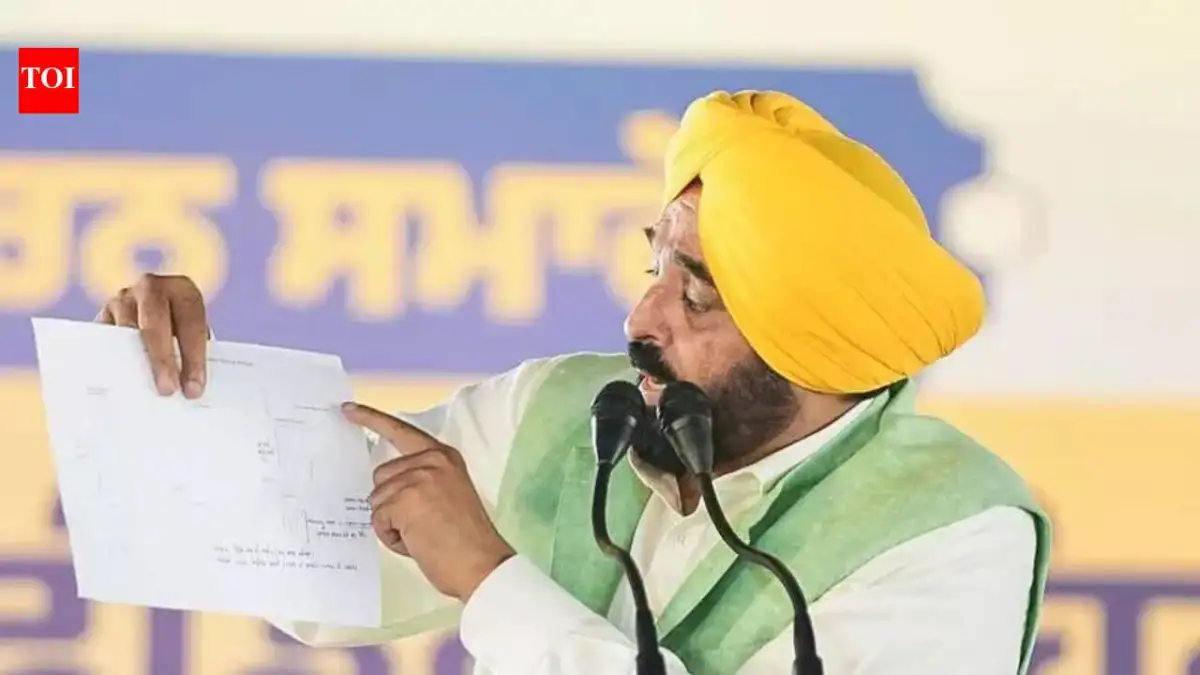
On Wednesday, the Punjab government finished the first stage of fixing a major water path called the Ferozepur Feeder Canal. For many years, farmers in the Malwa area have struggled to get enough water for their crops. This canal is often called the "lifeline" for the region because it brings water to four main districts. The Chief Minister, Bhagwant Singh Mann, opened this project to show that the state is making big changes to how water is managed. While the project is seen as a gift to the farming community, it also highlights the long-standing debate over how previous leaders handled the state’s resources. The stakes are high because without a steady water supply, the local economy could suffer and the ground might run out of water entirely.
History of the Water System and Recent Changes
The Ferozepur Feeder Canal starts at the Harike Headworks. It carries water to the districts of Ferozepur, Faridkot, Sri Muktsar Sahib, and Fazilka. For several decades, the canal had not been repaired or lined with concrete. This meant that a lot of water was lost before it reached the fields at the end of the line.
Read More: New Wheat Makes Bigger Starch for Food and Industry
The current government began a plan to rebuild and reline the canal to stop leaks and increase how much water it could hold. The work inaugurated this week represents the completion of the first phase of this effort.
Timeline: The project was opened on Wednesday at Makhu.
Past Issues: For 74 years, the canal’s size remained the same and it lacked a concrete lining.
Goal: To ensure water reaches "tail-end" villages (the ones farthest away) and to reduce the use of expensive tubewells.
Data on Canal Upgrades
The reconstruction involved making the canal both deeper and wider. This allows it to carry a much larger volume of water than before.
| Feature | Before Repair | After Repair (Phase 1) | Total Change |
|---|---|---|---|
| Depth | 18 feet | 21 feet | +3 feet |
| Width | 163 feet | 180 feet | +17 feet |
| Water Capacity | 11,192 cusecs | 13,873 cusecs | +2,681 cusecs |
| Project Cost | - | ₹180 crore | - |
The canal’s capacity has increased by nearly 24%, allowing an extra 2,681 cusecs of water to flow to farms.
Infrastructure and Farming Impact
The upgrade focuses on moving water more efficiently to fields that previously relied on "rotational supply." This old system meant farmers had to wait their turn, which was not always reliable during the busy growing season.
Read More: AAP's NEET Protests Questioned for Fake Student Support in Punjab
Groundwater Protection: By providing more canal water, the government expects farmers to use less groundwater. Overusing groundwater has caused the water table in Punjab to drop to dangerous levels.
Reaching New Areas: The project aims to provide water to 1,365 villages that were either newly linked or were at the far end of the system.
Economic Value: More water usually leads to better crop yields, which can increase the income of local families.
Comparing Political Views on State Progress
There are different views on why this project took so long to complete and what it means for the state's future.
The Government’s View:The current leaders argue that previous governments cared more about their own families than the public. They claim that the lack of repairs for 74 years was a sign of "failed leadership." They present this canal project as proof that they are delivering "structural reform" rather than just making promises.
The Traditional Parties' Perspective:While not quoted directly in these reports, the Chief Minister noted that older political parties are "envious." This suggests a tension between the new administration and the established political groups who governed Punjab in the past.
Broader Goals:The government also linked this project to other goals, such as making Punjab "drug-free" and providing 63,000 government jobs.
Read More: Karnataka requests higher Totapuri mango limit for farmers in April 2026
Could the successful completion of a water project create enough public trust to help the government solve much harder social issues like drug use?
Analysis of Regional Water Rights
The Chief Minister used the event to make a firm statement about water sharing. He stated that "Punjab has no spare water to share with any state." This is a sensitive topic in India, as neighboring states often ask for more water from Punjab’s rivers.
Legal and Political Stance: The government is positioning the canal repair as a way to use every drop of Punjab's water for its own citizens first.
Border Security: A new plan was mentioned to move the border fence closer to the international line. This would allow farmers to use thousands of acres of land that were previously hard to reach.
Summary of Findings
The completion of Phase 1 of the Ferozepur Feeder Canal is a clear physical change to Punjab's infrastructure. The data shows a measurable increase in water capacity and canal size.
Successes: The project was completed for ₹180 crore and provides an immediate boost to the water supply in four districts. It addresses a long-standing need for concrete lining to prevent water loss.
Uncertainties: It is not yet clear how long the next phases will take to complete. Additionally, while the government claims this will help make the state drug-free, the direct link between irrigation and social issues remains a point for further observation.
Next Steps: The government plans to continue the relining process and work with the Central Government to shift border fences for farmers.
Sources Used
True Scoop News: CM Mann inaugurates first phase of reconstruction of Ferozepur Feeder Canal
The Savera Times: Bhagwant Mann inaugurates first phase ferozepur feeder canal
Hindustan Times: Mann inaugurates reconstruction, relining of Ferozepur feeder canal
Rozana Spokesman: CM Bhagwant Singh Mann's Landmark Gift to Farmers
Punjab Kesari (English): Punjab Farmers Relief: CM Bhagwant Singh Mann’s landmark gift
DNP India: Bhagwant Mann's Major Boost to Agriculture
Newz24India: CM Bhagwant Singh Mann Gifts Malwa Farmers