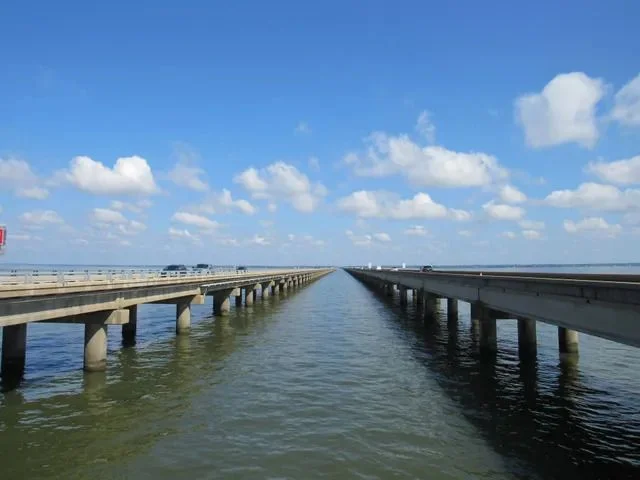
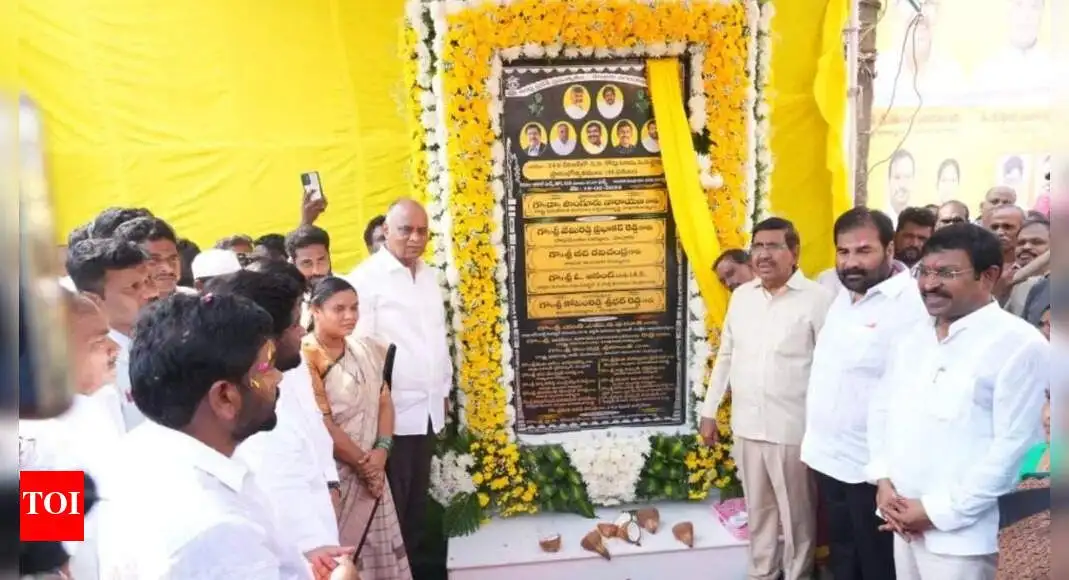
Construction has officially commenced on the bridge spanning the Mulumudi/Pottepalem spillway in Nellore, a project trailing thirty years of public demand. Nellore Rural MLA Kotamreddy Sridhar Reddy inaugurated the works, citing a total sanctioned investment of ₹370 crore for constituency-wide development. The bridge is projected to be completed within an 18-month timeframe.

| Project Metric | Status/Details |
|---|---|
| Primary Infrastructure | Bridge across Pottepalem/Mulumudi Spillway |
| Projected Timeline | 18 Months |
| Regional Reach | Nellore Rural, Kovur, Jonnawada, Minagallu, Penuballi |
| Total Constituency Funds | ₹370 Crore |
The project aims to finalize a decades-old logistical bottleneck, ostensibly serving both regional transit needs and access to the Jonnawada Temple.
Political Alignment and Local Utility
The execution of this work arrives under the current NDA alliance government. Rhetoric from the event suggests a push for "post-election" stability, with Kotamreddy Sridhar Reddy explicitly distancing his administration from prior cycles of political friction.
Unity Narrative: The foundation ceremony featured participation from leaders across party lines, framing the event as a departure from the gridlock that stalled the project for three decades.
Support Base: MLA Sridhar Reddy acknowledged contributions from Ministers Anam Ramanarayana Reddy and Ponguru Narayana, as well as MP Vemireddy Prabhakar Reddy and MLC Beeda Ravichandra.
Secondary Works: The inauguration coincided with the launch of the VPR Amrutha Dhara Water Plant, indicating a broader infrastructure package currently moving through the region.
Contextual Lag
The "long-cherished dream" of the local population refers to a bridge across the Nellore Tank sluice/spillway, an area that has functioned as a connectivity gap for nearly thirty years.
Read More: Two building collapses in India kill 6 people
Institutional Process: Following a "green signal" from the Finance Department in late 2025, the project transitioned from policy drafting to physical ground-breaking in early January 2026.
The Development Cycle: This project operates within the infrastructure development logic prevalent in the region, where legacy delays are increasingly used as metrics for "record development" speed in current cycles.
While officials frame the speed of these works as a triumph of modern governance, the project's multi-decade latency remains the most significant feature of its history—a persistent reminder of the slow gears of public works in the district.