Astronomers are observing a newly discovered planetary system that presents a peculiar arrangement of planets, challenging established scientific ideas about how solar systems form. The system, located around the star LHS 1903, features a rocky planet positioned farther from the star than two gas giants. This order is unusual because, in systems like our own Solar System, rocky planets are typically found closer to their star, while gas giants form in the cooler, outer regions. This discovery has prompted a re-evaluation of current astrophysical models.
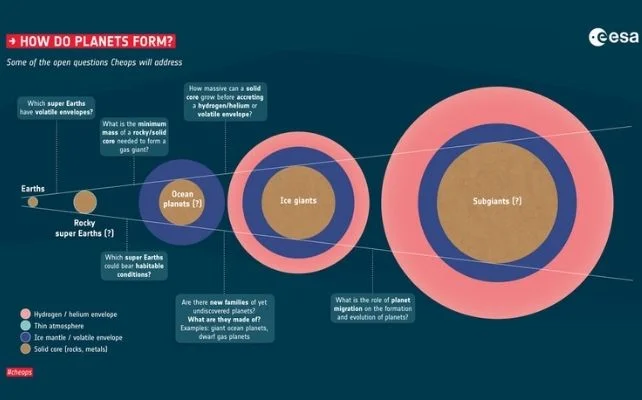
System Details and Observations
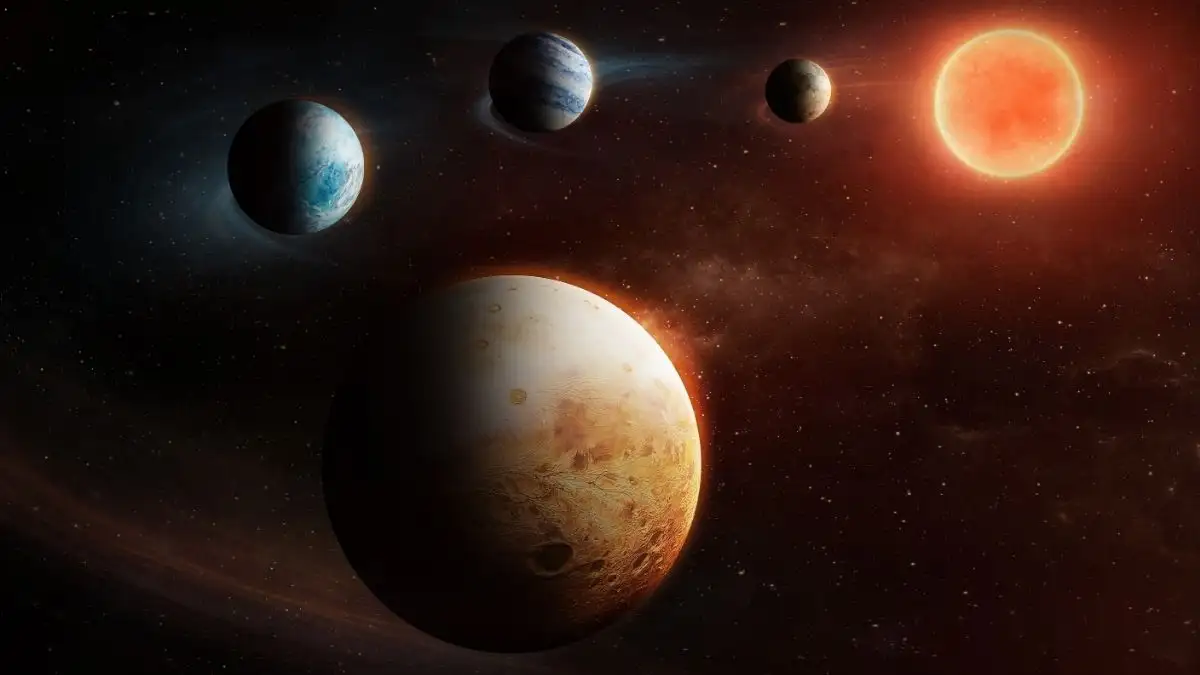
The system orbiting LHS 1903, a faint, cool M-dwarf star approximately 116 light-years from Earth, was observed using the European Space Agency’s CHEOPS satellite, alongside other telescopes. The team identified four planets within this system, each with distinct characteristics:
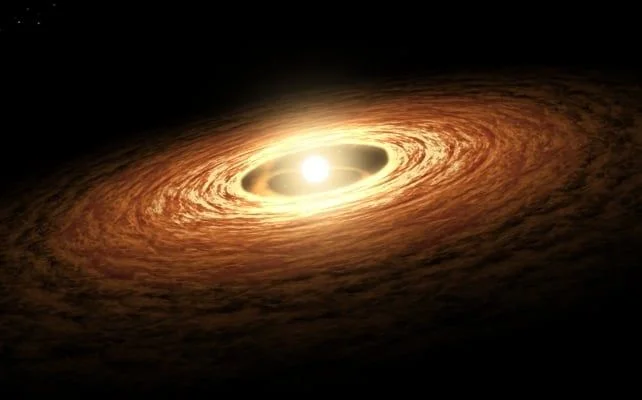
Innermost Planet: Described as a dense, rocky super-Earth.
Next Two Planets: Classified as sub-Neptunes, which are worlds with thick, gaseous atmospheres.
Outermost Planet: Surprisingly, this planet is also rocky.
This configuration – rocky, then gaseous, then rocky again – is considered a rare and unexpected occurrence in planetary science.
Read More: JWST Finds Oldest Barred Spiral Galaxy M1149-BSG-z5
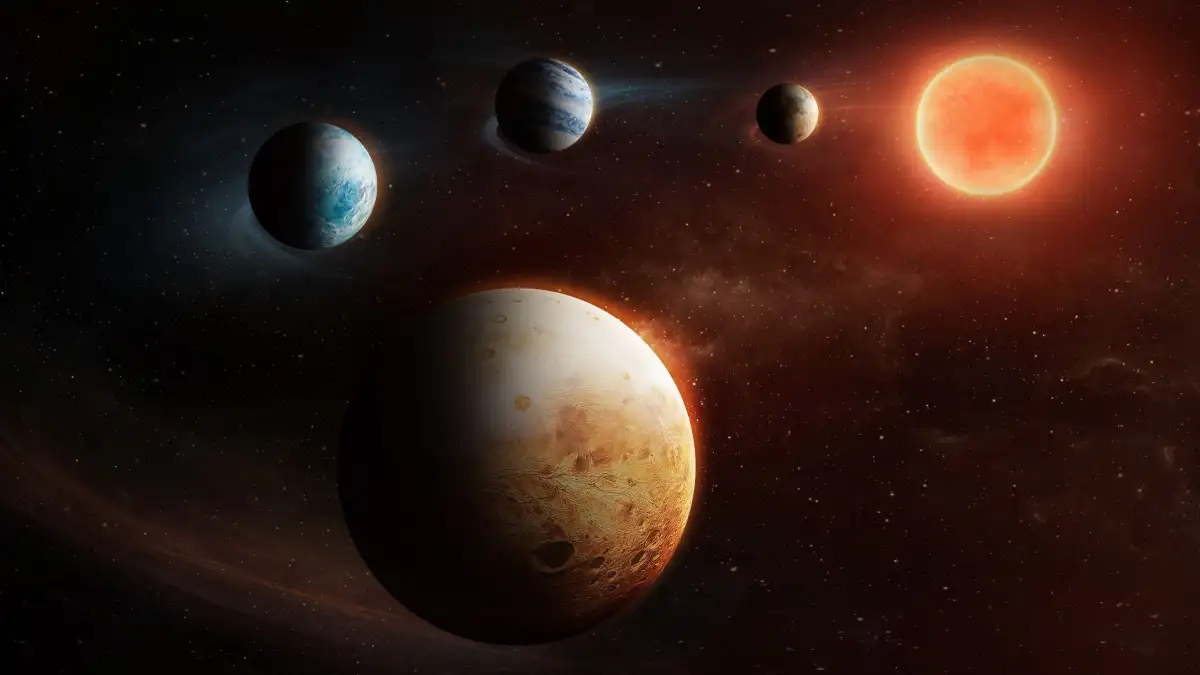
Challenging Conventional Planet Formation
The conventional understanding of planet formation suggests that planets develop from a disk of gas and dust surrounding a young star.
Proximity to Star: Near a star, temperatures are high, leading to the formation of smaller, rocky planets as lighter materials are driven away.
Outer Regions: In the colder, outer reaches of a stellar system, heavier elements can accumulate around cores, allowing for the formation of massive gas giants.
The arrangement in the LHS 1903 system, where a rocky planet orbits beyond gas giants, deviates significantly from this expected pattern.
"Scientists had thought this planetary order – rocky first, then gaseous – was consistent across the universe."
Potential Explanations and Ongoing Research
The unusual planetary order has led scientists to explore various hypotheses to explain this phenomenon.
Sequential Formation: One scenario suggests that planets might have formed one at a time, rather than simultaneously from a single disk. This could allow for different material compositions to dominate at different stages of formation.
Material Depletion: Another possibility is that much of the planet-forming material might have been depleted before the outer rocky planet could form, or perhaps it formed after the gas giants, leading to its rocky composition.
Researchers are keen to study this system further, with suggestions that the James Webb Space Telescope could provide deeper insights into the atmospheric properties of these distant worlds. The LHS 1903 system is seen as a valuable natural laboratory for understanding planet formation around stars different from our Sun.
"Could the rocky and gaseous planets have swapped places?"
Broader Implications for Astrophysics
This discovery is significant because it suggests that the patterns observed in our own Solar System, while seemingly logical, may not be universally applied. The existence of such an "inside-out" system prompts questions about the diversity of planetary formation processes throughout the galaxy.
Read More: US Space Force Victus Haze Mission Successfully Tests Orbital Intercepts
Rethinking Theories: The findings necessitate a re-examination and potential revision of existing astrophysical models that describe how planets aggregate around stars.
Understanding Our Solar System: By studying systems that differ from our own, scientists can gain a more nuanced perspective on the unique characteristics and formation history of our Solar System.
The observation of a rogue rocky planet in an unexpected position is prompting a global scientific discussion and further investigation into the complexities of planetary system architecture.
Sources
Scientific American: https://www.scientificamerican.com/article/inside-out-planetary-system-perplexes-astronomers/
ScienceAlert: https://www.sciencealert.com/discovery-of-an-inside-out-solar-system-puzzles-astronomers
Space.com: https://www.space.com/astronomy/exoplanets/scientists-have-found-an-inside-out-planetary-system-heres-what-it-looks-like
University of Warwick: https://www.warwick.ac.uk/news/pressreleases/astronomers-discover-inside-out-planetary-system/
BBC Sky at Night Magazine: https://www.skyatnightmagazine.com/news/lhs-1903-inside-out-system
The Hindu: https://www.thehindu.com/sci-tech/science/astronomers-puzzle-over-inside-out-planetary-system/article70634839.ece
CNN: https://www.cnn.com/2026/02/12/science/solar-system-inside-out-planets
Euronews: https://www.euronews.com/next/2026/02/13/esa-satellite-finds-inside-out-planetary-system-that-challenges-formation-theories
University of Birmingham: https://www.birmingham.ac.uk/news/2026/astrophysics-turned-upside-down-by-unique-inside-out-planetary-system