A recent High Court ruling found the UK government's ban on the activist group Palestine Action to be unlawful. Despite this judgment, Yvette Cooper, the former Home Secretary who implemented the ban, has publicly defended her decision, citing significant evidence and advice regarding public safety risks. The ruling's implications for over 2,500 individuals arrested in connection with the group remain unclear, as the current Home Secretary intends to appeal the High Court's decision.
Background of the Ban and Legal Challenge
In July last year, then-Home Secretary Yvette Cooper proscribed Palestine Action under anti-terrorism laws. This move followed incidents where activists protesting actions in Gaza broke into an air force base and targeted aircraft. The government argued this was a necessary national security measure.

However, Huda Ammori, a co-founder of Palestine Action, launched a legal challenge. Human rights groups and civil liberties campaigners argued that the ban constituted an overreach of government power, potentially criminalizing political dissent and setting a concerning precedent for the use of anti-terror laws against protest movements.
Read More: Andrew sublet Royal Lodge cottages for years, NAO report says
Court's Findings and Government's Response
The UK High Court ruled on Friday that the decision to ban Palestine Action was unlawful, with the judgment indicating the ban was disproportionate.

Despite this, Yvette Cooper, now the Foreign Secretary, has maintained her stance. Speaking to Sky News, she stated:
"I was given significant evidence and advice around risks of violence and risks from public safety, and that is what you take seriously."
She further emphasized the responsibility of the Home Secretary:
"If you ignore advice that you are given about risks to public safety then you’re really not taking seriously the responsibilities of home secretary."
The current Home Secretary, Shabana Mahmood, has indicated that the government will appeal the High Court's ruling. This means the ban on Palestine Action will remain in place for the time being, pending the outcome of the appeal. A consequential hearing is scheduled to address the ban's future status.
Impact on Arrested Individuals and Legal Precedents
The High Court's decision has cast doubt on the legal standing of more than 2,500 arrests made in connection with Palestine Action since the ban was enacted. The precise impact on these individuals is currently uncertain.
Read More: Turning Point USA Faces New Scrutiny After Charlie Kirk's Death

Legal experts suggest the ruling focuses attention on how Britain applies counterterrorism laws to domestic protests and the boundaries of executive power. Barrister Audrey Cherryl Mogan noted that the quashing of the ban would not affect ongoing criminal cases against Palestine Action-linked activists, including those facing charges related to incidents at an Elbit Systems plant and RAF Brize Norton airbase.
Palestine Action's Activities and Support
According to police, Palestine Action has conducted 385 direct actions since 2020, protesting the situation in Palestine and the actions of the Israeli government. The group's designation as a terror group drew criticism from organizations like Amnesty International and Jewish Voice for Labour.
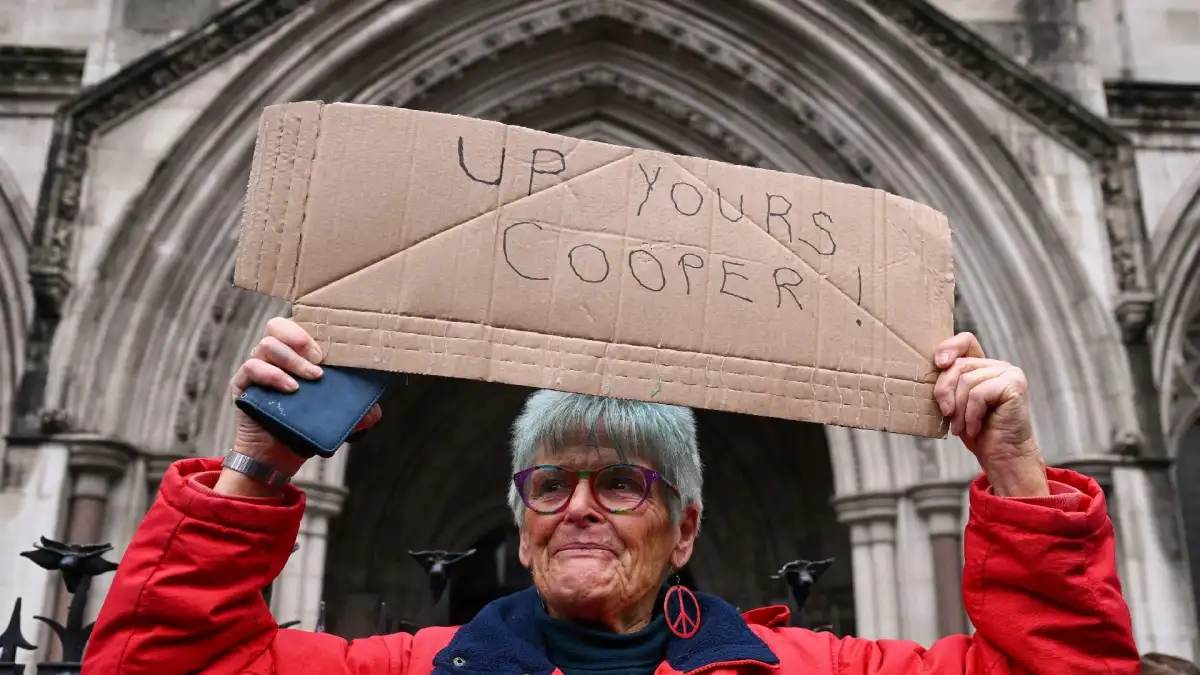
Following the High Court ruling, protesters displayed signs in support of Palestine Action outside the court, with a noticeable police presence. However, arrests did not occur during this demonstration.
Read More: Baroness Noakes asks why Prince Andrew's property income isn't checked
The High Court found the ban unlawful and disproportionate.
Yvette Cooper defends her decision, citing public safety advice.
The government plans to appeal, keeping the ban in effect for now.
The ruling has implications for over 2,500 arrests.
Sources:
The Guardian: https://www.theguardian.com/politics/live/2026/feb/15/yvette-cooper-navalny-palestine-action-starmer-labour-uk-politics-live-news-updates (Published 2 hours ago)
The Independent: https://www.independent.co.uk/news/uk/home-news/yvette-cooper-high-court-shabana-mahmood-priti-patel-peter-hain-b2920704.html (Published 18 minutes ago)
CNN: https://edition.cnn.com/2026/02/13/uk/uk-palestine-action-ban-gbr-uk-intl (Published 2 days ago)
Sky News: https://news.sky.com/video/yvette-cooper-defends-palestine-action-ban-despite-court-ruling-13507809 (Published 55 minutes ago)
TIME: https://time.com/7378449/uk-ban-palestine-action-terror-group-ruled-unlawful/ (Published 1 day ago)
Middle East Eye: https://www.middleeasteye.net/news/palestine-action-judicial-review-high-court-judgment (Published 2 days ago)