
Yvette Cooper, the UK Home Secretary, has defended the decision to ban the group Palestine Action, even after a High Court ruling declared the ban unlawful. This stance comes as Norfolk Police reported arresting 13 individuals for alleged support of the group during a protest. The Metropolitan Police also indicated that an additional 60 people would face charges for demonstrating support for Palestine Action.
The controversy centers on the government's decision to proscribe Palestine Action as a terrorist organization. The High Court found this ban to be an unlawful and disproportionate interference with fundamental rights, specifically freedom of expression and assembly. Despite this judgment, Cooper maintains the ban is necessary, citing the group's claimed responsibility for incidents involving criminal charges such as violent disorder and aggravated burglary. Civil liberties organizations and supporters of Palestine Action have voiced strong criticism, arguing the ban stifles legitimate protest and dissent.
Read More: Andrew sublet Royal Lodge cottages for years, NAO report says
Background to the Proscription and Court Challenge
The government's decision to ban Palestine Action was made by former Home Secretary Yvette Cooper last year. This action followed incidents where the group claimed responsibility for protests that led to arrests for various offenses. Palestine Action promotes videos of damage caused during these events but has not released footage of alleged assaults.

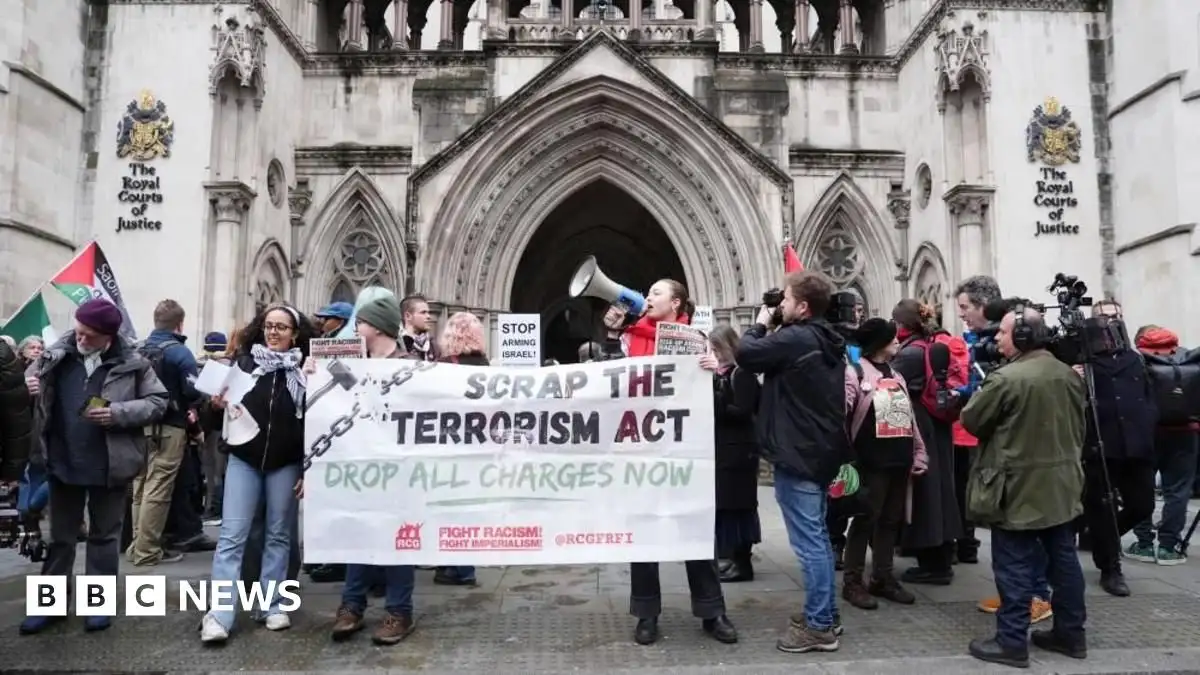
Following the ban, hundreds of individuals have been arrested for expressing support for the group. Palestine Action, along with rights groups and civil liberties organizations, challenged the ban in the High Court.
Key events:
July 2025 (approximate): Former Home Secretary Yvette Cooper proscribes Palestine Action.
August 2025: Norfolk Police arrest 13 people for supporting the group. Metropolitan Police announce 60 more prosecutions.
February 13, 2026: High Court rules the ban on Palestine Action unlawful.
The High Court's ruling stated that the government had not correctly applied the principle of proportionality, a key aspect of modern administrative law that prevents ministers from acting arbitrarily. The judges, Victoria Sharp, Jonathan Swift, and Karen Steyn, concluded that the scale and persistence of Palestine Action's activities did not justify proscription under terrorism laws.
Read More: Man Dies After Setting Fire Outside UN in Protest
Conflicting Perspectives on the Ban's Legality and Necessity
Government's Rationale for the Ban
Yvette Cooper has defended the proscription, emphasizing the alleged criminal activities associated with Palestine Action. She noted that individuals involved in incidents claimed by the group have faced charges for offenses including violent disorder and aggravated burglary. The government's argument appears to hinge on disrupting what it deems as criminal behavior facilitated by the group.

"The group has claimed responsibility for incidents that saw those allegedly involved subsequently charged with a range of crimes, including violent disorder and aggravated burglary."
The government intends to appeal the High Court's decision, indicating a strong commitment to maintaining the ban.
Palestine Action and Supporters' Arguments
Palestine Action has celebrated the High Court's ruling as a significant victory for fundamental freedoms. Huda Ammori, a co-founder, described the decision as a blow against "extreme attacks on free speech."
"This is a monumental victory both for our fundamental freedoms here in Britain and in the struggle for freedom for the Palestinian people, striking down a decision that will forever be remembered as one of the most extreme attacks on free speech in recent British history.”
Civil liberties groups, including Human Rights Watch, have also supported the ruling. Yasmine Ahmed, U.K. director of Human Rights Watch, stated that the British government had used anti-terror legislation to suppress legitimate criticism of Israel.
Read More: Baroness Noakes asks why Prince Andrew's property income isn't checked
"The British government had used antiterror legislation to stifle legitimate criticism of Israel."
These groups argue that the ban infringes upon the right to protest and freedom of expression, particularly when arrests are made for simply expressing support for the organization.
Judicial Scrutiny and Human Rights Implications
The High Court's judgment focused on the legality and proportionality of the government's decision to proscribe Palestine Action. The court found that the ban was an unlawful act because the Home Secretary had failed to conduct a proper proportionality assessment.
Proportionality Test: This legal principle requires ministers to balance the benefits of an action against its potential harms, particularly concerning fundamental rights. In this case, the court found that while the government focused on the benefits of disrupting criminal activity, it neglected to adequately consider the detrimental impact on the right to protest.
Human Rights Act: The ruling highlighted that the ban constituted a disproportionate interference with the Human Rights Act, specifically the rights to freedom of expression and freedom of assembly.
The judges noted that the scale and persistence of Palestine Action's activities did not meet the threshold required for such a severe measure as proscription under terrorism laws. Despite the ruling, the ban remains in effect temporarily pending a further hearing.
Ongoing Legal and Political Ramifications
The High Court's decision has immediate consequences for law enforcement's approach to supporters of Palestine Action. The Metropolitan Police have stated they will cease arresting individuals solely for expressing support for the group.
Read More: Manipur Voter List Changes Affect 59,000 Displaced People
Legal Proceedings: A consequential hearing is scheduled for February 20, 2026, to finalize the implications of the ruling. The government has confirmed its intention to appeal the decision to the Court of Appeal.
Political Fallout: Activists have called for Yvette Cooper's resignation over her role in proscribing the group. Cooper, however, continues to defend the ban, emphasizing the need to counter alleged criminal behavior.
The situation remains fluid, with the government pursuing an appeal and civil liberties groups advocating for the protection of protest rights.
Sources:
BBC News: https://www.bbc.com/news/articles/c4gj93j2r2go (Published: Aug 17, 2025) - Covers arrests and Cooper's defense.
Sky News: https://news.sky.com/story/palestine-action-wins-high-court-challenge-over-groups-ban-as-terrorist-organisation-13506220 (Published: Feb 13, 2026) - Details the High Court ruling and its implications for human rights.
The Guardian: https://www.theguardian.com/uk-news/live/2026/feb/13/high-court-to-rule-on-lawfulness-of-home-offices-decision-to-proscribe-palestine-action-live (Published: Feb 13, 2026) - Reports on the immediate aftermath of the ruling and calls for Cooper's resignation.
TIME: https://time.com/7378449/uk-ban-palestine-action-terror-group-ruled-unlawful/ (Published: Feb 12, 2026) - Explains the unlawfulness of the ban and the criticism it drew.
AP News: https://apnews.com/article/britain-palestine-action-high-court-2fbb7f5e2e090881193b9328323d2ec4 (Published: Feb 12, 2026) - Covers the court's finding of illegality and the temporary continuation of the ban.
BBC News: https://www.bbc.com/news/live/c8x90q9nyzyt (Published: Feb 13, 2026) - Focuses on the judicial reasoning behind the government's loss, specifically the lack of proportionality testing.