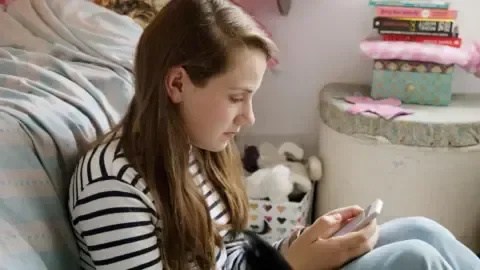
Prime Minister Keir Starmer announced plans to implement stricter regulations on social media and online platforms, focusing on protecting children. The proposed measures include a potential ban on social media use for individuals under 16 and controls on addictive online features, often termed "doomscrolling." These initiatives signal a significant shift in how the UK intends to manage digital risks for its younger population, aiming to expedite legislative responses to evolving technological threats.
The government's agenda centers on closing perceived loopholes in existing online safety laws. Key proposals include a public consultation on a social media ban for under-16s, set to commence in March, with the aim of enacting measures swiftly following its conclusion. The scope of these reforms extends to addressing issues like the preservation of children's digital data after their death and incorporating Artificial Intelligence (AI) chatbots under safety regulations. This push for faster legislative action contrasts with the extended timeline of previous digital safety legislation.
Timeline and Key Actors
Prime Minister Keir Starmer is the central figure advocating for these new online safety measures.
Technology Secretary Liz Kendall has been vocal in supporting the proposed reforms, emphasizing the need for swift action.
Ofcom, the UK's communications regulator, is expected to play a role in enforcing these new rules.
Bereaved parents and campaign groups, such as those advocating for "Jools' Law," have influenced the focus on data preservation for deceased children.
International examples, particularly Australia's social media age restrictions for under-16s, appear to be a significant point of reference.
The push for these reforms follows a period of increasing concern regarding the impact of social media on children's well-being. The government intends to fast-track legislation, aiming for some measures, such as a potential ban for under-16s, to be in place within months of the consultation's completion, possibly by the end of the year.
Read More: Andrew sublet Royal Lodge cottages for years, NAO report says

Proposed Measures and Regulations
The proposed online safety reforms encompass several key areas:
Social Media Ban for Under-16s: A central element of the plan involves a public consultation on whether to ban social media access for individuals under the age of 16. This mirrors an approach already adopted in Australia.
Restrictions on "Doomscrolling": The government is considering measures to curb "addictive design features" on social media platforms. This includes targeting functionalities like infinite scrolling, which contributes to prolonged engagement.
Data Preservation for Deceased Children: New plans aim to ensure that tech companies preserve all data belonging to a deceased child. This measure is partly in response to campaigning efforts, such as "Jools' Law," to provide answers for grieving families. Coroners will be required to notify Ofcom of child deaths (aged 5-18) to ensure data is not deleted if relevant to the circumstances of death.
Regulation of AI Chatbots: Artificial Intelligence chatbots are to be included within the scope of the Online Safety Act. This addresses concerns about AI's potential to generate harmful or illegal content, as highlighted by incidents involving AI chatbots producing fake explicit images.
Faster Legislative Processes: A core objective is to empower the government to update regulations more rapidly in response to technological advancements, moving away from lengthy primary legislation for each new risk.
The government plans to launch the public consultation in March. Technology firms will be expected to ensure their systems comply with British law, with the assurance that "no platform gets a free pass."

Concerns and Motivations
The stated motivations behind these proposed reforms are primarily to safeguard children and young people from online harms. Prime Minister Starmer has expressed significant concern about the amount of time children spend on social media, the content they are exposed to, and the addictive nature of many platforms. He emphasizes that "young people's sense of self depends on this algorithm."
The reforms are also driven by a desire to hold technology companies more accountable for the safety of their users, particularly minors. The government seeks to close legal loopholes that have allowed some AI chatbots to operate outside existing safety rules and potentially enable the creation of harmful content.
Read More: Chrome mimeHandler API lets extensions handle file types

The push for speed in enacting these measures is partly a response to the pace at which technology evolves. The government aims to be a leader in online safety rather than a follower, seeking to implement changes within months of consultations concluding, contrasting with the years it took to pass the Online Safety Act.
International Parallels
The proposed UK reforms align with a growing global trend of governments seeking to regulate online platforms to protect minors.

Australia: The UK's proposed ban for under-16s closely resembles Australia's model, which was the first country to implement a mandatory minimum age of 16 for accessing social media platforms.
European Union: Several European countries, including Spain, Greece, and Slovenia, are reportedly considering or implementing similar age-based restrictions and data protection measures for younger users.
These international precedents suggest a shared concern among nations about the pervasive influence of digital platforms on youth and a common approach to address these issues through regulatory intervention.
Expert Analysis and Commentary
Government Stance: Prime Minister Starmer and Technology Secretary Liz Kendall have presented a united front, emphasizing the need for decisive action to protect children online. Kendall stated that while consultation is essential, the government should act swiftly once a decision is made. The government reiterates its commitment to making Britain a "leader, not a follower" in online safety.
Industry Response: While not explicitly detailed in the provided summaries, the mention of a "consultation with tech firms" suggests an intention to engage with industry stakeholders. The statement "no platform gets a free pass" indicates a firm regulatory stance. The rapid pace of proposed legislative updates might present challenges for tech companies in terms of compliance.
Campaigner Influence: The efforts of bereaved parents and campaigning groups, particularly in relation to "Jools' Law" and access to children's data after death, have demonstrably shaped the government's agenda, influencing the inclusion of data preservation measures.
Internal Considerations: One report indicates a potential internal division within the Cabinet regarding the specifics of a full social media ban for under-16s, with the Prime Minister previously having reservations. Despite this, the commitment to fast-tracking powers suggests a political imperative to move forward.
Conclusion and Future Steps
The UK government, under Prime Minister Keir Starmer, is signaling a significant and expedited approach to regulating online platforms, with a particular focus on child protection. The core of this initiative involves a forthcoming public consultation on banning social media for under-16s and addressing "doomscrolling" through restrictions on addictive design features.
Read More: Baroness Noakes asks why Prince Andrew's property income isn't checked
The government's strategy appears to be multi-faceted:
Swift Implementation: A primary objective is to reduce the time it takes to enact new digital safety laws, moving away from the protracted process of passing primary legislation. Measures could be introduced within months of the upcoming March consultation concluding.
Broadened Scope: The reforms are not limited to age restrictions but also encompass the preservation of children's digital data post-mortem and the regulation of AI chatbots, reflecting a comprehensive view of online risks.
Accountability: The administration intends to enforce stricter compliance from tech companies, making it clear that platforms will be held accountable for their role in safeguarding young users.
The government's stated ambition is for Britain to lead in online safety, drawing inspiration from international precedents like Australia's age-based social media ban. The next concrete step involves the launch of the public consultation in March, after which the government plans to act with considerable speed to implement its chosen measures.
Sources Used
The Guardian: https://www.theguardian.com/politics/live/2026/feb/16/social-media-online-safety-act-keir-starmer-uk-politics-live-news-updates - Provides an overview of Starmer's statements on social media proposals, including potential "doomscrolling" restrictions and bans for under-16s.
BBC News: https://www.bbc.com/news/articles/cvg38x13x5yo - Details Starmer's pledge to crack down on "addictive elements" and outlines plans for preserving children's data, alongside the inclusion of AI chatbots in the Online Safety Act.
India Today: https://www.indiatoday.in/world/uk-news/story/keir-starmer-uk-online-safety-rules-children-social-media-ai-limits-glbs-2868768-2026-02-16 - Reports on Starmer's intention for more stringent rules and faster rule-making powers concerning children's use of social media and AI, referencing European countries' similar considerations.
LBC: https://www.lbc.co.uk/article/social-media-ban-for-under-16s-could-be-unveiled-in-months-starmer-5HjdSP62/ - Focuses on the potential for an under-16 social media ban within months and the government's announcement of new online safety measures.
The National (Scotland): https://www.thenational.scot/news/25857059.under-16s-ban-social-media-uk-force-year/ - Discusses the possibility of an under-16 social media ban being in force this year, with measures including phone curfews and restrictions on addictive features, linked to a consultation this summer.
NBC News: https://www.nbcnews.com/world/united-kingdom/uks-starmer-seeks-greater-powers-regulate-online-access-rcna259203 - Reports on the UK's consideration of an Australian-style ban for under-16s and closing AI chatbot loopholes, aiming for rapid legislative responses to digital risks.
Sky News: https://news.sky.com/story/government-announces-sweeping-crackdown-on-social-media-firms-13507847 - Covers Starmer's assurance that "no platform gets a free pass" and announces a crackdown on social media firms, referencing Australia's ban and addressing AI chatbot loopholes.
i News: https://inews.co.uk/news/politics/starmer-showdown-musk-online-safety-4238026 - Highlights Starmer's stance against tech giants and plans for greater child protections online, including curbs on social media and AI chatbots, while noting potential Cabinet divisions on a full ban.
The Telegraph: https://www.telegraph.co.uk/news/2026/02/15/starmer-fast-track-child-social-media-ban/ - States that Starmer will fast-track powers for a potential under-16 social media ban, aiming to introduce legislation resembling Australia's model as early as summer.
The Register: https://www.theregister.com/2026/02/16/starmersocialmedia/ - Discusses Starmer's desire for rapid powers to set social media age limits, citing concerns about harmful content and addictive platform design, and mentioning restrictions on features like infinite scroll.
Sky News (Politics latest): https://news.sky.com/story/politics-latest-mandelson-starmer-mcsweeney-epstein-files-labour-leader-12593360 - Includes commentary from Technology Secretary Liz Kendall about options including banning sites, following campaigning efforts concerning child safety online.
The Mirror: https://www.mirror.co.uk/news/politics/plans-ban-social-media-under-36719524 - Provides an exclusive update on plans for an under-16 social media ban and other measures like overnight app curfews, to be published within months following a four-month consultation.
The Mirror (Major changes): https://www.mirror.co.uk/news/politics/major-changes-kids-social-media-36725662 - Reports on impending significant changes to children's social media access, with warnings to tech giants from the Prime Minister.