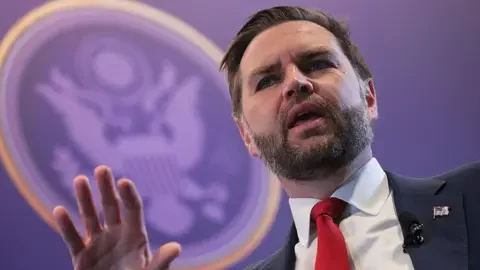
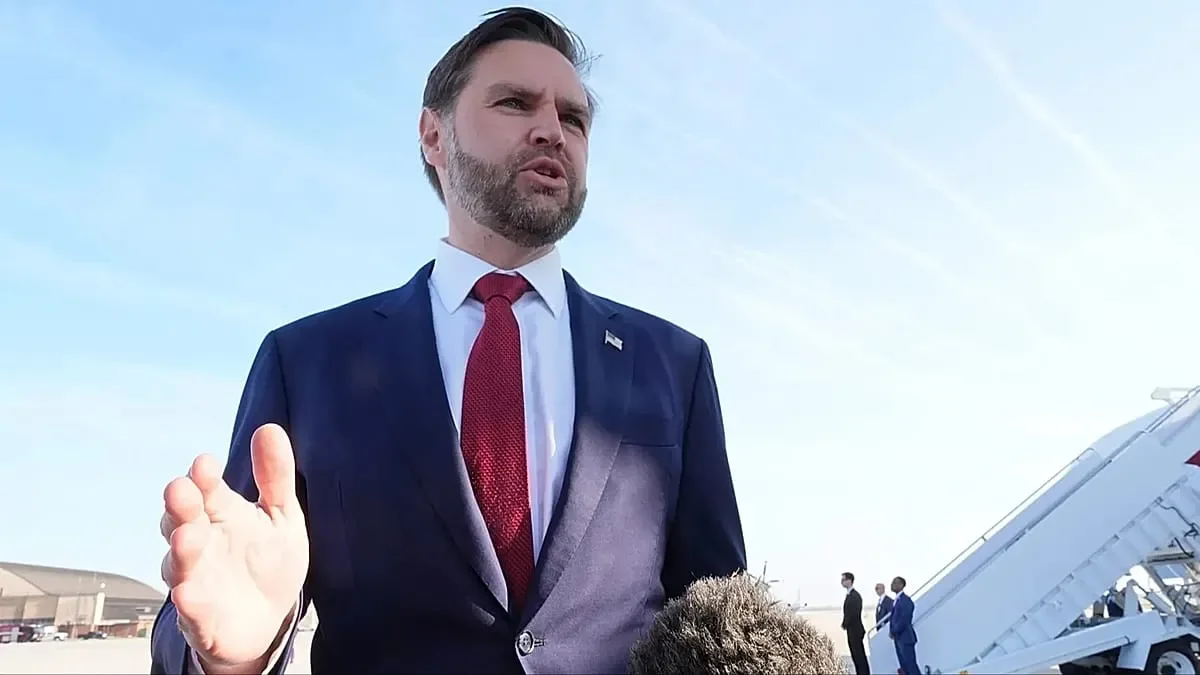
Vice President JD Vance has arrived in Islamabad, Pakistan, to lead a U.S. delegation in critical negotiations aimed at ending the protracted conflict with Iran. The talks, commencing Saturday, are described as a "make or break" moment for the administration, with President Donald Trump expressing a mix of support and uncertainty about the outcome. Vance departed for Pakistan on Friday, warning Iran not to attempt to "play" the U.S. during the proceedings.
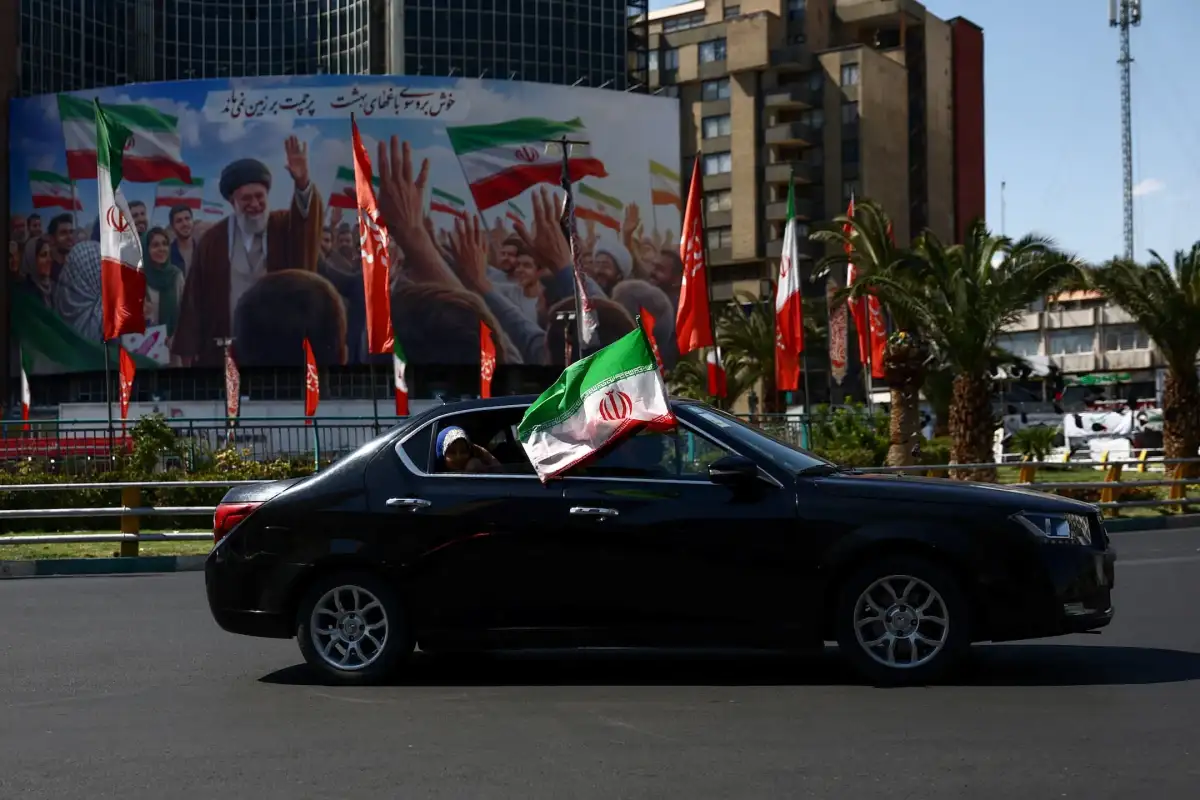
The primary U.S. objective is to secure Iran's commitment to reopening the Strait of Hormuz, a vital waterway that Iran has previously warned ships against transiting. White House Press Secretary Karoline Leavitt stated that Iran had agreed to this measure, despite their prior warnings. The U.S. has also demanded that Iran cease charging ships for passage through the strait. These negotiations occur against a backdrop of a fragile, two-week ceasefire that both sides have accused the other of violating.
Read More: US Vice President Vance in Pakistan for Iran Peace Talks on Saturday
Vance's prominent role in these talks is a deliberate strategy by the Trump administration. White House officials indicated that Vance's stature and President Trump's trust in his ability to convey specific demands lend credence to the negotiations. Trump personally tasked Vance with leading these renewed discussions, seeking to broker an end to the conflict. This assignment comes after Vance spent the preceding month largely out of the public eye, reportedly concerned about the war's potential escalation.

Diplomatic Maneuvers and Regional Tensions
Pakistan's role as host has been acknowledged by British Prime Minister Keir Starmer, who praised Prime Minister Shehbaz Sharif's diplomatic efforts in facilitating the ceasefire and mediating the peace talks. The Iranian delegation has reportedly already arrived in Islamabad, which has seen heightened security measures in anticipation of the high-stakes discussions.
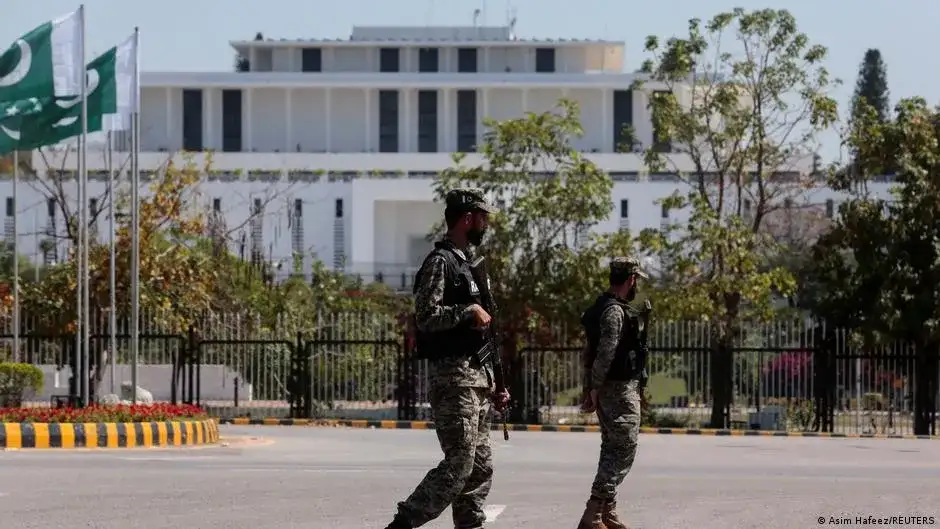
The geopolitical landscape surrounding these talks is complex. Israel, a key U.S. ally in the conflict, is not represented at the negotiations. Meanwhile, Israeli forces have reportedly destroyed significant numbers of rocket launchers and launch tubes, while Hezbollah has claimed responsibility for missile attacks on an Israeli naval base. In a related development, Israeli Prime Minister Benjamin Netanyahu has expelled Spain from a U.S.-led international monitoring body for Gaza.
Read More: Eric Swalwell California Governor Campaign Hit by Sexual Assault Claims
Vance's Political Calculus
This diplomatic endeavor is also being viewed through the lens of Vance's own political future. Analysts suggest that any outcomes from these negotiations, positive or negative, will inevitably be linked to the administration's record and could influence Vance's potential presidential aspirations. His decision to significantly reduce his social media activity, a platform he frequently used to engage with critics, is seen as a strategic shift to focus on his current responsibilities.
Background to the Conflict
The current conflict, now in its sixth week, has involved substantial military actions. The White House has indicated that the primary military objectives of "Operation Epic Fury," which included the destruction of Iran's naval, drone, and ballistic missile programs, have been achieved. However, President Trump has previously voiced criticism of NATO, suggesting the alliance did not offer sufficient support to the U.S. during the conflict or in efforts to reopen the Strait of Hormuz. He is scheduled to meet with NATO Secretary-General Mark Rutte soon. Iran, for its part, has signaled that internal dynamics may have influenced its apparent preference for engaging with Vance.
Read More: US-Iran Talks Fail: Ceasefire Scope and Regional Demands Cause Disagreement