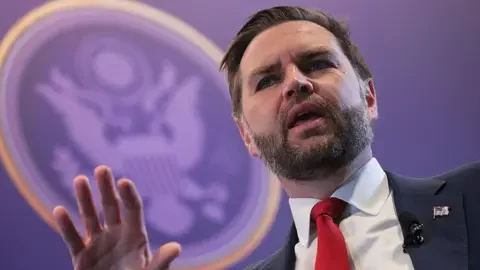
ISLAMABAD, Pakistan – U.S. Vice President JD Vance arrived in Pakistan Saturday, commencing critical peace negotiations with Iran. The talks aim to cement a fragile ceasefire that has been tested by recent military actions, specifically following the U.S. launch of 'Operation Epic Fury' on February 28th, a campaign targeting Iran's military infrastructure. The success of these discussions is framed by President Donald Trump as a 'make or break' moment, potentially averting a wider regional conflict.
Vance leads the U.S. delegation, which also includes special envoy Steve Witkoff and Jared Kushner. The Iranian side is represented by Foreign Minister Abbas Araghchi and Speaker of Parliament Mohammad Bagher Ghalibaf. These are not Vance's first interactions; he met Saturday with Pakistani Prime Minister Shehbaz Sharif to shore up support for the peace efforts. Pakistan's government has established a dedicated media center to facilitate reporting on the crucial discussions.
Read More: US Vice President Vance leads Iran talks in Pakistan to reopen Strait of Hormuz
Crucial Juncture in Conflict
The arrival in Pakistan marks a significant point for Vance's political career. President Trump offered Vance his public backing, stating, "He has nothing to prove." Vance himself adopted a cautious stance prior to departure, warning Iran against testing U.S. resolve during the negotiations. The stakes are demonstrably high, with Trump indicating that U.S. warships are being restocked for potential renewed strikes should the talks falter.
The urgency is underscored by the volatile situation on the ground. A two-week ceasefire, announced by President Trump, has faced challenges, particularly concerning Israeli attacks on Lebanon, which a statement from Israeli Prime Minister Benjamin Netanyahu's office clarified were not included in the ceasefire terms. Iran has responded by reportedly closing the Strait of Hormuz on Wednesday, allegedly in retaliation for bombardments on Lebanon.
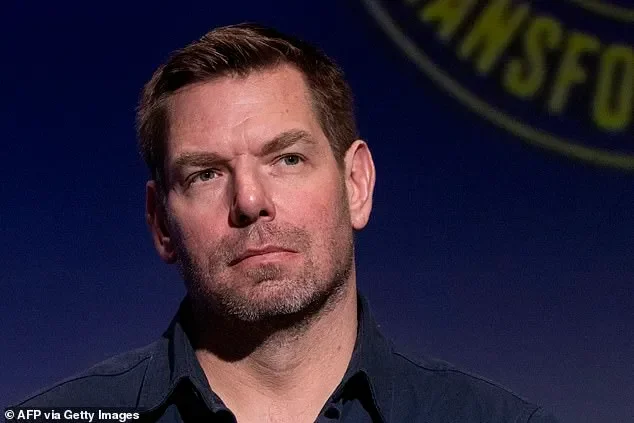
Read More: Eric Swalwell California Governor Campaign Hit by Sexual Assault Claims
Strategic Positioning and International Involvement
The choice of Pakistan as the venue highlights the country's role as a mediator. Backchannel talks have been gaining momentum, with Pakistan actively facilitating indirect engagement between the U.S. and Iran. Iran's ambassador to Pakistan, Reza Amiri Moghadam, had previously signaled potential progress.
Vance's involvement in these talks appears to be a deliberate strategic move. White House officials indicated that Trump personally requested Vance to lead the renewed negotiations, aiming to lend credibility to the process given Vance's standing within the administration and Trump's trust in his ability to convey specific U.S. demands. Vance had reportedly privately expressed concerns about the conflict escalating, leading him to seek a role in the diplomatic efforts.
Background of Tensions
These high-stakes talks come over a month after the U.S. initiated 'Operation Epic Fury'. The operation followed the collapse of nuclear negotiations. Public sentiment in Iran's capital reportedly reflects a hope for a breakthrough, although Iranian officials, such as Parliament Speaker Ghalibaf, have emphasized that the U.S. must accept Iran's "rights" to achieve a deal. There have also been Iranian claims, denied by the White House, regarding the "unfreezing" of assets.
Read More: US-Iran Talks Fail: Ceasefire Scope and Regional Demands Cause Disagreement
Vance's public engagement has seen a notable shift, with a reduction in his activity on the social media platform X. This has been attributed by White House communications director Steven Cheung to Vance's decision to abstain from social media during Lent. Trump's public remarks have included veiled threats, such as suggesting the killing of Iranian leaders if negotiations fail, a stance that contrasts with the diplomatic mission led by Vance.