Precision Strike, Deliberate Restraint Emphasized
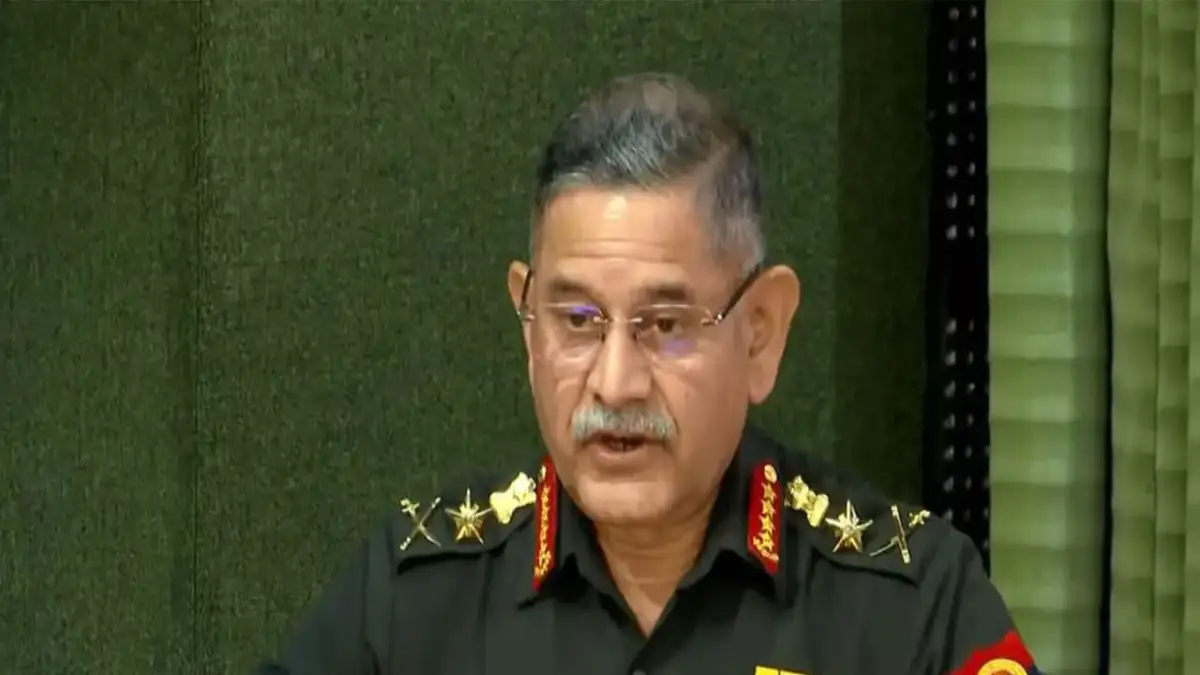
Operation Sindoor, executed on the intervening night of May 6 and May 7, has been characterized by Army Chief General Upendra Dwivedi as a demonstration of "military precision, information control, diplomatic signalling, and economic resolve" — presented as a singular, coordinated national act. The operation, lasting a distinct 22-minute window, successfully targeted terror infrastructure and, according to the Army Chief, challenged entrenched strategic assumptions. A key point of emphasis was India's decision to cease operations after this limited duration, framed not as an endpoint but as an instance of "calculated restraint" rather than escalation.
A Multifaceted Strategic Doctrine
The Army Chief articulated that 'Operation Sindoor' serves as a precedent for India's evolving strategic approach, wherein military actions are integrated with diplomatic messaging, information management, and economic leverage. This synergy, he suggested, represents a "unified national response." The operation reportedly struck deep, dismantling targets and subsequently stopping "deliberately and purposefully." The post-strike deliberation, occurring after 88 hours, was described as "smart power in its most complete expression," denoting the precise application of specific instruments of power at exact junctures.
Read More: Ukraine gets 100 Patriot missiles with $1 billion EU loan for defense

Context of Contemporary Conflict and Global Reorganization
General Dwivedi addressed a seminar titled ‘Security to Prosperity: Smart Power for Sustained National Growth,’ suggesting that contemporary conflicts place continuous demands not only on armed forces but also on industrial output, research mechanisms, and governance structures. He cautioned that understanding the current global landscape requires an objective assessment, "not as one wishes it to be." The Army Chief also touched upon a perceived shift where power politics are now being employed to "reorganize prosperity across the world," signaling widespread distrust and a fragmentation of alliances.
Details of the Operation
Sources indicate that during 'Operation Sindoor', the Indian Armed Forces successfully engaged nine terror targets. Four of these were located in Pakistan, specifically identified as Bahawalpur, Muridke, and Sialkot. An additional five targets were situated in Pakistan-occupied Jammu and Kashmir (PoJK). The engagement reportedly utilized "special precision munitions."
Read More: India IVF Costs And Social Barriers Limit Access In April 2026
Keywords: Operation Sindoor, Army Chief General Upendra Dwivedi, Smart Power, Terror Infrastructure, Strategic Restraint