
Global markets experienced a significant shift, with oil prices plummeting and Wall Street staging a strong rebound. This broad positive sentiment is now anticipated to lift the Australian Securities Exchange (ASX).
On Tuesday, May 5, 2026, the yield on the 10-year US Treasury dropped to 4.42 per cent, down from 4.45 per cent late Monday. In Europe, the CAC 40 in Paris gained 1.1 per cent, while the FTSE 100 in London saw a decline of 1.4 per cent.
The Dow Jones Industrial Average was up 300 points, or 0.6 per cent, and the Nasdaq Composite was also heading towards a record, climbing 1.1 per cent. This upward movement in US equities follows a period of strength, bolstered by resilient economic growth and solid corporate earnings, which has lifted overall market sentiment. Major currencies have also strengthened against the US dollar.
Read More: Solaris Energy SEI Stock Price Forecast Reaches $91.98 by July 2027
Australian shares are expected to open higher, tracking the positive lead from Wall Street and buoyed by upbeat US economic data. Futures for the ASX pointed to modest gains, up 6 points to 8,541, reflecting a global relief rally.
Factors Influencing the Market Shift
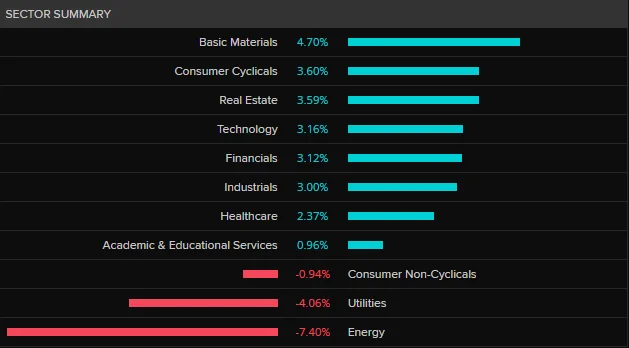
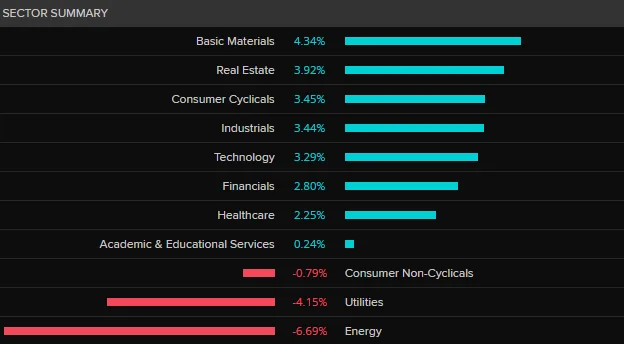
Oil prices experienced a significant decline for the second consecutive day. US crude dropped 6 per cent, and Brent crude fell 6.1 per cent, adding to a prior 7 per cent decline. This slide in oil prices has been a key driver of the broader market uplift, positively impacting sectors like airlines and technology.
"Oil plunges again, airlines and tech climb."
Investors are also watching for upcoming economic indicators. Monthly inflation data for May is due for release, with the consumer price index (CPI) basket offering a broader coverage of services. The market will be assessing this data for insights into inflationary trends.
Read More: Gold Prices Rise Faster Than US Bonds in April 2026
Regional Performance and Local Pressures
While many Asian markets were closed for holidays, Hong Kong’s Hang Seng index fell 0.8 per cent.
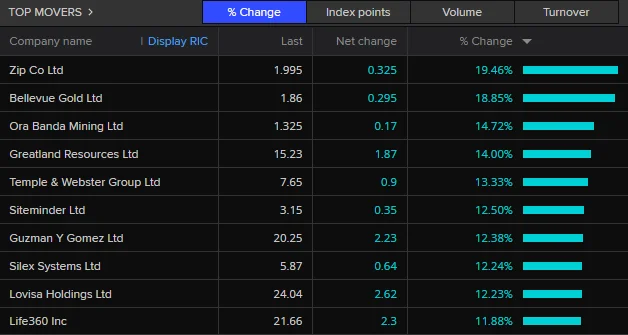
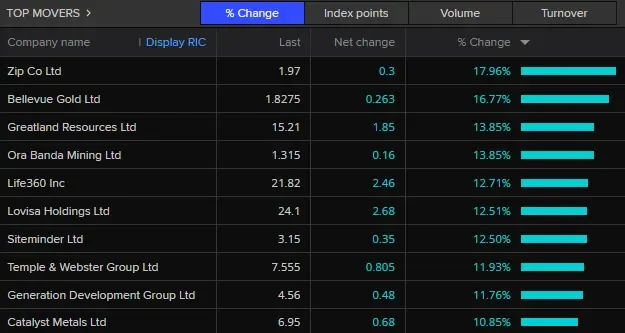
On the local Australian front, recent performance has shown some pressure. Materials stocks, including BHP, Lynas, and Northern Star, saw a dip. Consumer discretionary stocks also retreated, with Wesfarmers, JB Hi-Fi, and Eagers Automotive underperforming. This follows confirmation of a Reserve Bank of Australia (RBA) rate hike, which has weighed on consumer confidence. The Australian dollar has weakened against the US dollar, falling from 71.97 US cents to 71.44 US cents. This slip has been attributed, in part, to escalating geopolitical tensions, which have dampened risk sentiment.
"Consumer staples led losses after Woolworths warned higher fuel costs would impact earnings."
Underlying Influences
Several factors are consistently shaping market direction. These include corporate earnings, evolving inflation trends, currency movements, and geopolitical developments. The technology, banking, and resources sectors are identified as key areas influencing the market's trajectory, alongside consumer and energy-linked stocks.
Read More: Rocket Companies brand update in April 2026 changes logos and names
"Improved global sentiment, strong US earnings, and positive offshore market trends are supporting Australian equities."
The yield on the 10-year Treasury, at 4.42 per cent, is noted as being well above its pre-war level of 3.97 per cent. This historical context is part of the broader economic landscape influencing investor decisions.