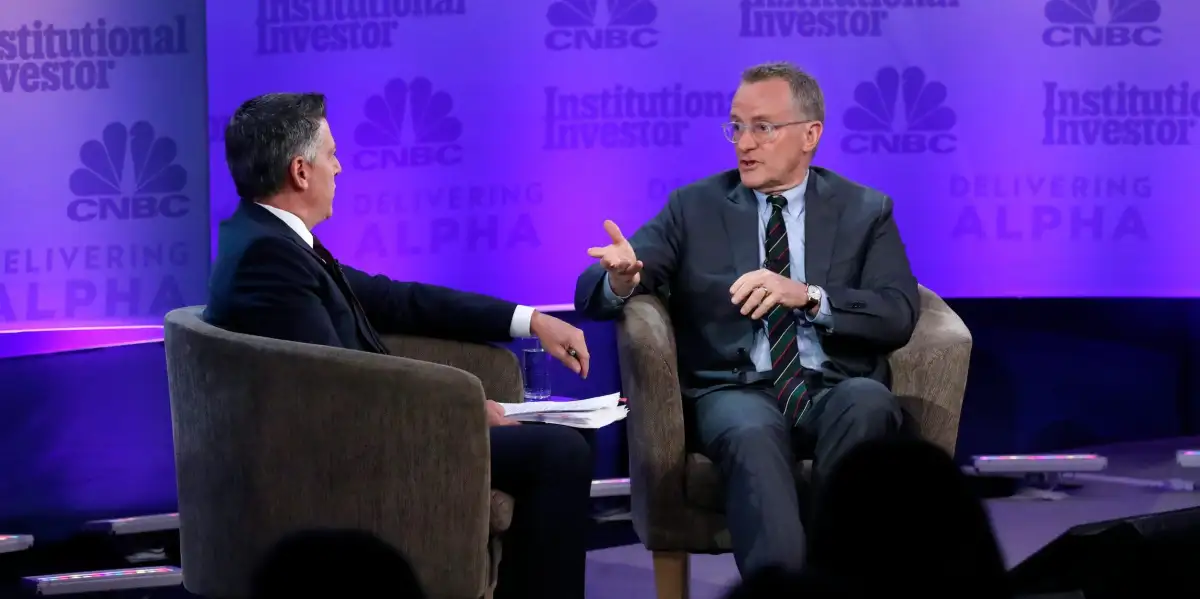
Howard Marks, the influential co-founder of Oaktree Asset Management, has been advocating for a significant shift in investment strategy, favoring fixed income over equities. His stance, articulated in recent communications and interviews, suggests a belief that higher interest rates have fundamentally altered the risk-reward landscape, making bonds a more attractive proposition than in recent memory.
Marks' core argument rests on the notion that current bond yields offer returns comparable to equities, a stark contrast to the pre-pandemic era characterized by "easy money." This observation is particularly pronounced in high-yield bonds, senior loans, and private credit, where "contractual returns" are increasingly appealing. He reportedly joked that investors should "sell all their stock" to buy high-yield bonds, underscoring the magnitude of this perceived shift.

The Discipline of Contrarianism
Marks' investment philosophy, which has guided Oaktree to manage $224 billion in assets, is deeply rooted in a contrarian approach and a profound understanding of market psychology. He doesn't seek to predict the future but rather to grasp the current state of risk and opportunity, often by going against prevailing sentiment. This involves a disciplined approach to identifying value, which he argues often lies not in universally loved assets, but in those that are feared, misunderstood, or simply ignored by the broader market.
Read More: Solaris Energy SEI Stock Price Forecast Reaches $91.98 by July 2027

"Bargains don’t come from things everyone loves. They come from things people are scared of, don’t understand, or just ignore."
This philosophy has been honed over decades, including navigating market crashes and periods of excess. Marks emphasizes that success in investing, particularly achieving "above average" returns, requires deviating from consensus behavior and doing something different. He also stresses the importance of patience and conviction, but crucially, the ability to recognize when one is wrong.
Key Tenets of Marks' Approach:
Second-Level Thinking: Moving beyond surface-level analysis to understand deeper implications and relationships.
Risk Management: A paramount focus on preserving capital and understanding downside potential.
Investor Psychology: Recognizing how emotions and herd behavior drive market irrationality, creating opportunities.
Value Assessment: Prioritizing what one pays for an asset over its perceived quality alone.
Cyclical Awareness: Understanding the inherent ebbs and flows of market sentiment and economic conditions.
A Shift Fueled by Interest Rates
The recent shift in Marks' emphasis towards fixed income is directly linked to the Federal Reserve's (and other central banks') moves to increase interest rates. This has pushed bond yields higher, making them more competitive with stocks. Marks sees this as a significant departure from the prolonged period of near-zero interest rates that characterized the post-financial crisis decade.
Read More: Michael Burry Bets Against Micron Stock
"Bonds should make up a larger part of portfolios than in the pre-pandemic era."
This perspective is not new to Marks. He has previously built a reputation on shrewd calls regarding distressed assets and high-yield debt, particularly during times of market stress. His memos, widely read and respected—even by figures like Warren Buffett—often detail his "latest thinking" on market patterns and risk. While Oaktree has also invested in stocks, Marks' recent communications suggest a recalibration, acknowledging that "you may not get back all the money that you invest" in equities and that "credit deserves a bigger seat at the table."