New Processor Aims to Challenge Established Players, Integrate AI Capabilities
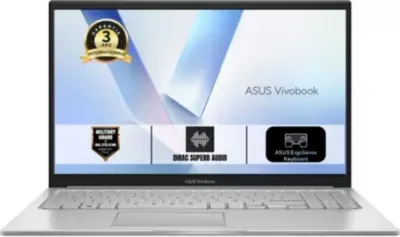
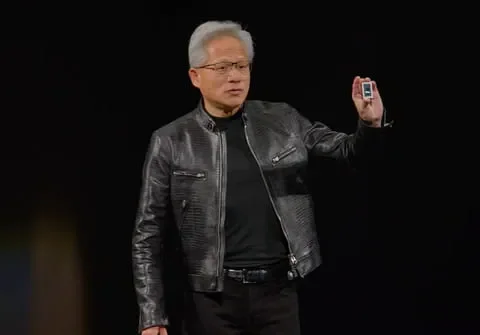
Nvidia has unveiled a new line of processors, branded RTX Spark, intended for Windows computers. The chip aims to fundamentally alter the personal computer market, a sector historically dominated by Intel. The launch, announced on Monday, June 1st, signals Nvidia's ambition to not only compete but to "reinvent the PC" for the current era of artificial intelligence (AI).

Nvidia's new RTX Spark processor, a collaboration with MediaTek and Microsoft, is built on an ARM architecture and is slated for release in PCs from major manufacturers this autumn. This move represents a significant departure from the traditional x86 architecture, positioning Nvidia as a direct competitor to Intel, AMD, and even Apple and Qualcomm.

AI Integration as a Core Feature
The central promise of the RTX Spark is its deep integration with AI. Nvidia CEO Jensen Huang stated that these new computers will be capable of running "agents" – AI systems designed to perform tasks on behalf of users. Huang also suggested the processors would handle demanding computational tasks across various scientific fields, including "digital biology, seismic processing, or astrophysics." This suggests a shift towards personal devices with capabilities previously confined to specialized workstations.
Read More: Chrome mimeHandler API lets extensions handle file types

The technological underpinnings of the RTX Spark include a Grace CPU and Blackwell GPU, paired with up to 128GB of unified LPDDR5X memory offering a bandwidth of 300 GB/s. This specification is reported to be derived from Nvidia's existing compact AI workstation, the DGX Spark.
Market Dynamics and Financial Context
The timing of this announcement coincides with substantial global investment in AI infrastructure by both governments and corporations. Nvidia's market valuation has reportedly surged past $5 trillion, a figure exceeding the Gross Domestic Product (GDP) of countries like Japan or India. This financial ascent underscores the perceived economic importance of AI technologies. The company’s positioning as a key player in the AI boom is further emphasized by remarks from its CEO, suggesting that employees involved in AI development should be compensated "as much as possible."
Read More: CPU GPU Bottleneck Today: How to Check Your PC's Slowdowns
The introduction of the RTX Spark processor is expected to provide a substantial challenge to Intel's long-standing dominance in the PC processor market. Historically, Intel chips have been the default choice for most Windows-based personal computers. Nvidia's strategy appears to be drawing inspiration from architectures used in smartphones and Apple's own Mac computers, which have adopted ARM-based designs for improved efficiency and performance.
Nvidia's venture into direct PC processor manufacturing for Windows devices marks a notable escalation in its market strategy. Previously, Nvidia has been primarily known for its high-performance graphics processing units (GPUs), which have become essential components for AI development and high-end computing. This expansion into central processing units (CPUs) for mainstream consumer PCs indicates a broader ambition to control more of the personal computing hardware ecosystem.