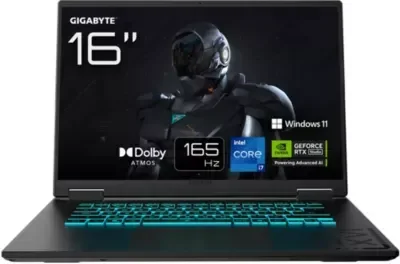
Gigabyte is signaling an impending shift in portable computing, revealing a concept that squeezes forty of their new 'Lunar Lake' powered PCs into a package no larger than a standard pizza box. The demonstration, a stark visual of miniaturization and density, raises immediate questions about thermal management and user accessibility for the new hardware.
Extreme Density, Unclear Utility
The core of Gigabyte's announcement centers on the sheer volume of devices housed within a single, conventional-sized box. This display appears to be less about immediate product availability and more about a conceptual statement on the potential form factors enabled by Intel's latest 'Lunar Lake' processors. The company's history includes pioneering advancements, such as the first motherboard with 60A integrated circuits, suggesting a willingness to push technological boundaries.
The initiative, a striking departure from traditional PC packaging, emphasizes a move towards hyper-compact computing solutions.
Details remain scant regarding the specific models of these 'Lunar Lake' PCs, or if they are fully functional units or merely chassis.
This extreme packing hints at a future where computing power is delivered in a more modular or condensed fashion, challenging conventional notions of personal computing hardware.
Beyond the Box: Software and Legacy
While the 'pizza box' concept grabs headlines, Gigabyte's broader ecosystem includes ongoing software development. The Gigabyte Control Center (GCC), updated recently, integrates features like RGB lighting control, a departure from its standalone predecessor, RGB Fusion 2. The center also addresses specific hardware issues, such as fixing memory SPD information errors for DDR5 motherboards. This indicates a focus on refining the user experience alongside hardware innovation.
Read More: Chrome mimeHandler API lets extensions handle file types
Gigabyte Technology, a Taiwanese firm with production facilities in Taiwan and China, has a varied past. The company has seen leadership changes in its laptop division, following unspecified controversies. This latest venture into extreme PC density, however, positions Gigabyte as a player not just in established markets but also in exploring potential new frontiers for personal computing devices.