

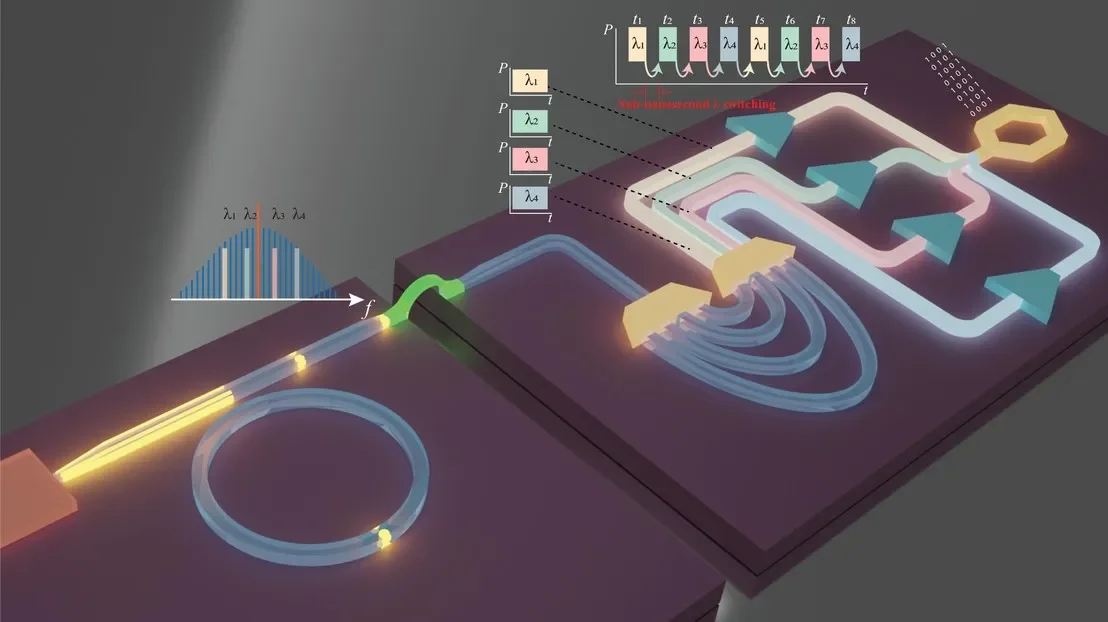
As of May 19, 2026, recent developments in hardware engineering indicate a shifting bottleneck in computing architecture. The fundamental challenge remains: current AI hardware relies on converting light-based signals back into electrical forms, a process that creates heat and consumes significant energy. Emerging research into optical switching is now focusing on bypassing these conversion losses through specialized material physics.

Recent trials have demonstrated successful switching at the scale of 4 quadrillionths of a joule using exciton–polaritons. By moving away from electron-heavy movement—which generates thermal waste—scientists are attempting to finalize a bridge between photon-based calculation and current electronic standards.
Technical Progression of Switching Materials
The move toward efficient, ultrafast computation has relied on several distinct material approaches over the last five years:
| Method | Focus | Performance Insight |
|---|---|---|
| Soliton Microcombs | Data Centers | Sub-nanosecond switching; reduces bandwidth congestion. |
| Phase-Change Materials | Nonvolatile switching | 4.5 picosecond speed; replaces inefficient plasmonic structures. |
| Exciton–Polaritons | Ultra-low energy | Uses minimal joules (4 quadrillionths) to toggle states. |
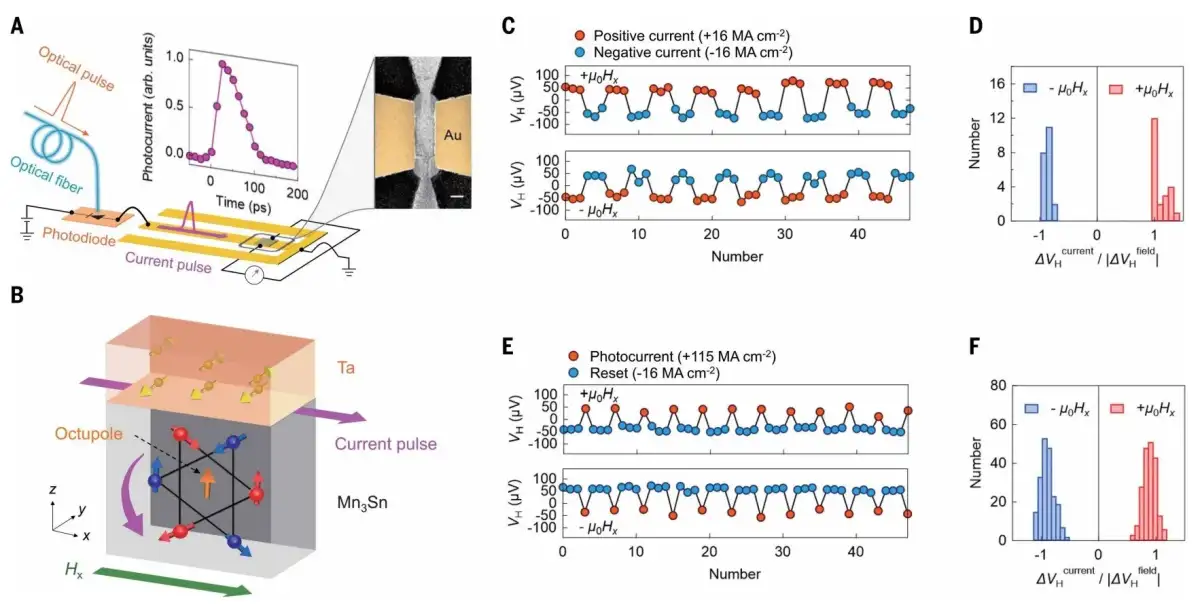
| Antiferromagnetics | Power density | Recent experiments (May 2026) targeting picosecond operation. |
Current Limitations and Industrial Context
The Conversion Tax: Present-day photonic AI chips can perform basic calculations, yet their reliance on electrical interfaces creates a power-consumption "ceiling" that traditional copper or silicon wires cannot address.
Material Hurdles: While older designs utilized plasmonic metamaterials, newer studies favor all-dielectric structures. These offer lower signal loss, allowing for higher speeds without the parasitic energy drain typical of standard metal-based components.
Scaling Requirements: For this technology to leave the lab, manufacturing must shift from experimental photonic crystals to platforms compatible with commercial foundries. The transition requires maintaining these ultrafast speeds across billions of switches simultaneously.
Background: The Physics of Signaling
In conventional computing, moving electrons through metal traces generates resistance-based heat. This thermal limit is why clock speeds for traditional processors hit a plateau decades ago. Light-based—or "photonic"—signaling eliminates the resistance factor, but it has historically been hindered by the difficulty of switching a beam of light on and off as quickly as an electrical transistor.
Read More: Chrome mimeHandler API lets extensions handle file types
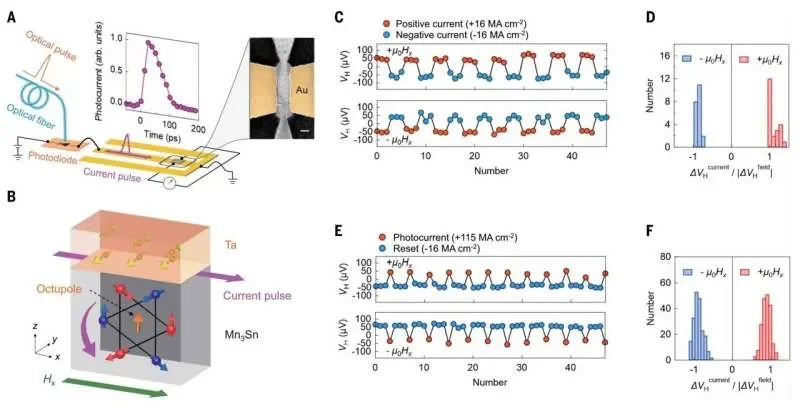
The integration of exciton-polaritons and antiferromagnetic devices represents a narrow path forward: if a device can switch states at a picosecond frequency using almost zero energy, it allows for the possibility of dense, high-performance architectures that do not require massive active cooling systems. The current focus of the research community is on consolidating these gains into scalable, reliable information technology components.





.png)

