

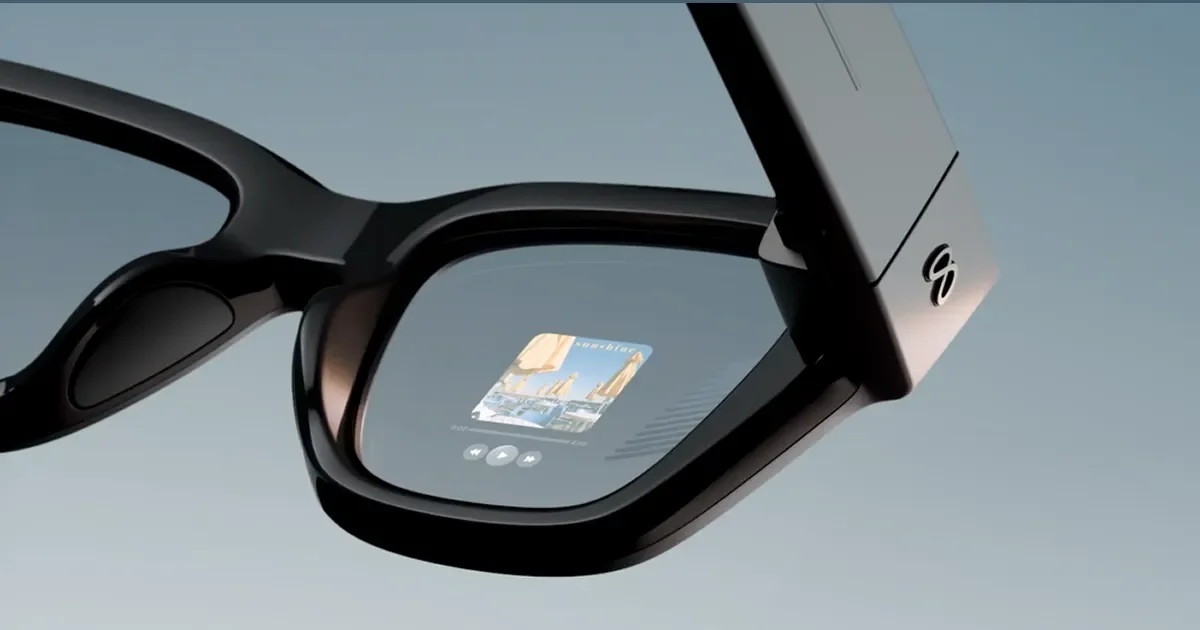
The company is now allowing third-party developers to create applications for its Ray-Ban Display smart glasses, a move that significantly broadens the device's potential uses beyond Meta's own services. This initiative grants access through both mobile and web app development paths, using familiar tools for iOS and Android developers. Previously, the display's content was largely limited to Meta's integrated features, such as AI responses and message notifications.
The new framework permits developers to extend existing mobile applications or build entirely new experiences for the glasses' in-lens display. This opens the door for a range of applications, from real-time data feeds like sports scores or order statuses to media streams and even mini-games. A notable addition is a display recording feature, which captures both the user's point-of-view and what's shown on the glasses' screen simultaneously, allowing for shared experiences. The "neural writing" function, enabling message replies by tracing letters, is also now universally available.
Read More: Chrome mimeHandler API lets extensions handle file types
While Meta has previously offered third-party app support for its non-display smart glasses, many of those applications have yet to materialize. The approach for the Ray-Ban Display glasses involves accessing new tools via a URL, rather than a traditional app store download. This method might circumvent the hardware limitations inherent in the smart glasses, such as constraints on processing power, thermal management, and battery life. The system utilizes a permission-on-demand model, akin to location services on mobile phones, placing a significant trust element on the user.
The company's push into augmented reality glasses also comes as Android XR devices gain traction. Meta is leveraging existing platforms, suggesting that Android apps could seamlessly extend to these new hardware forms. Insights from Meta indicate that visual AI answers are seeing increased user engagement, with more follow-up questions being posed. The limited 20-degree field-of-view of the glasses' display means it is not fully immersive, unlike some standalone AR headsets. Mark Zuckerberg has also alluded to a potential next iteration of the Ray-Ban Display frames.
Read More: GPU Power Growth 2009-2025: RTX 5090 vs Radeon HD 5870 Analysis





.png)

