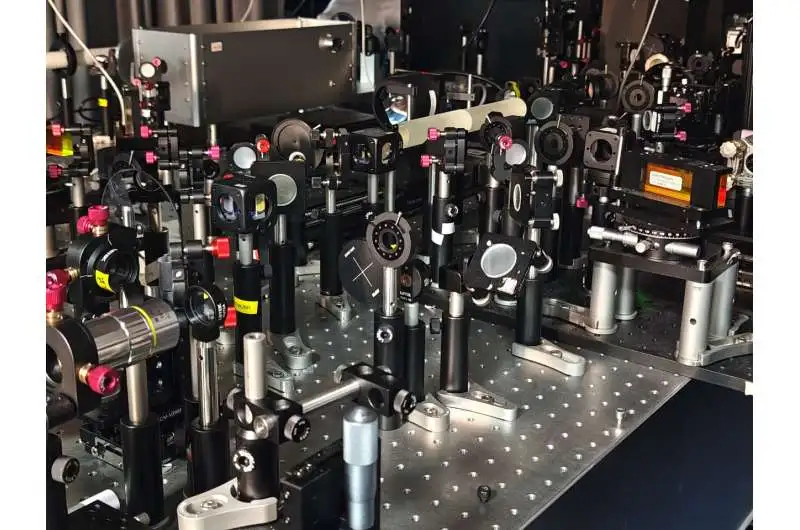
Researchers have engineered a novel imaging method, dubbed compressed spectral-temporal coherent modulation femtosecond imaging (CST-CMFI), capable of capturing an unprecedented breadth of information from extremely rapid microscopic occurrences. This breakthrough, detailed in Optica, allows for a more complete understanding of processes that unfold on timescales far too brief for conventional observation. The technique leverages the scattered light from an ultrafast event to extract spatial, spectral, and phase data, compressing it all into a single captured image.
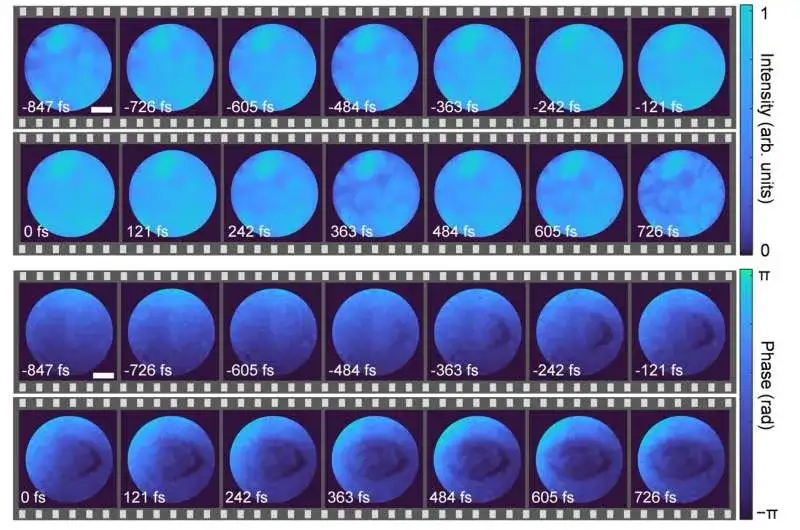
This advanced approach synthesizes the strengths of several existing technologies: time-spectrum mapping, compressive spectral imaging, and coherent modulation imaging. By integrating these principles, scientists can now simultaneously record very fast changes, gather more data within a single observation sequence, and obtain detailed image information. The work builds upon a foundation of rapid imaging advancements, including techniques that have demonstrated speeds of up to 70 trillion frames per second.
Read More: New Embryo Models Need Stronger Ethics Rules for Scientists
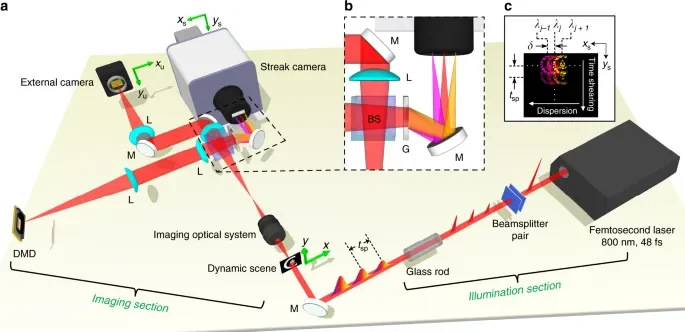
The CST-CMFI method was developed to overcome limitations in observing ultrafast phenomena, where traditional imaging struggles to keep pace. The goal is to provide a more comprehensive snapshot of these events, offering insights into their intricate dynamics.

Advancing Ultrafast Observation
The quest for enhanced single-shot ultrafast imaging has seen various approaches. A review of techniques categorizes these into multishot and single-shot passive and active photography. Single-shot active ultrafast photography, in particular, is noted for its advantages: a lower setup cost, high spatial resolution, rapid imaging speeds, and enhanced dimensional control through light field detection.
Past efforts in this field have explored diverse methods. These include techniques for ultrafast single-shot diffraction imaging of nanoscale dynamics, single-shot real-time femtosecond imaging via temporal focusing, and even single-shot ultraviolet compressed ultrafast photography. Other avenues have investigated single-shot ultrafast phase retrieval photography and acousto-optically driven lensless single-shot ultrafast optical imaging.
Read More: AI and IoT Make Air Quality Tracking Faster in Cities
Further refinements are on the horizon. Researchers are aiming to integrate CST-CMFI principles with compressed ultrafast photography to develop a method that can distinctly resolve spectral and temporal information. This suggests a future where the fine details of even the most fleeting microscopic interactions can be laid bare.