Lunar Transit Marks Deep Human Connection Amidst Cosmic Isolation
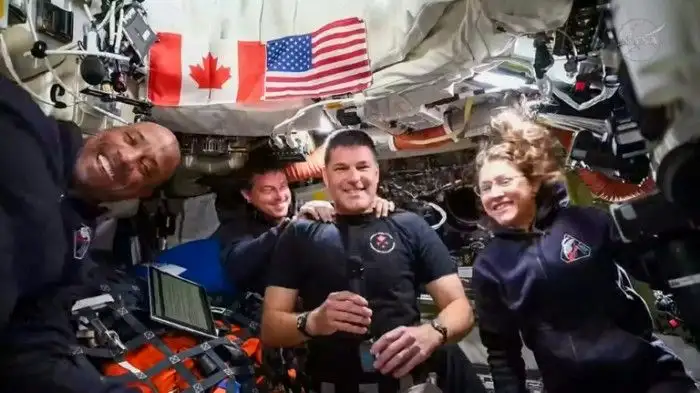
The Artemis II mission, now a week into its celestial journey around the Moon, has broadcast messages of love and reflection that have resonated deeply with families waiting on Earth. As the spacecraft ventured behind the Moon, enduring a 40-minute communications blackout, astronauts conveyed poignant sentiments. Mission pilot Victor Glover, before the signal was lost, spoke of love as a fundamental human mystery, irrespective of cosmic distances. Similarly, Canadian astronaut Jeremy Hansen echoed themes of universal love, drawing parallels to historic spaceflights like Apollo 8, which also transmitted messages of faith and humanity from lunar orbit.
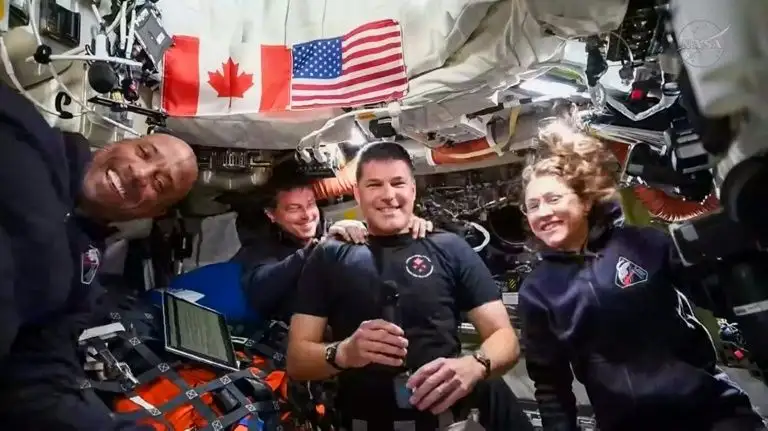
The mission’s transit around the far side of the Moon has served as a powerful focal point, not just for scientific observation, but for the profound emotional connection between the crew and their loved ones. The planned communication blackout, a necessary consequence of the lunar body’s obscuring presence, underscored the vast gulf between the explorers and their terrestrial anchors. Yet, it was precisely within this enforced silence that messages of deep human value, particularly love and unity, were delivered, seemingly amplified by the cosmic void.
Read More: NASA Robot Mission Launched to Raise Swift Telescope Orbit, Add 10 Years
Families Under Strain: Anxiety and Anticipation
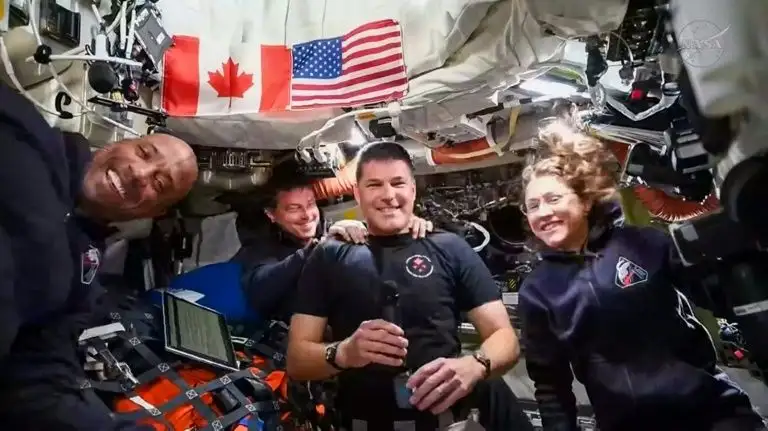
For families like that of astronaut Jeremy Hansen, the mission represents a complex tapestry of emotions. His wife, Catherine Hansen, a Canadian obstetrician-gynecologist, recounted the anxiety and thrill of watching her husband embark on this historic voyage. The Artemis II, marking the first human circumnavigation of the Moon in over five decades, was naturally viewed as a high-stakes endeavor, especially for Hansen's initial foray into space.
The launch itself was a moment of intense collective emotion, with families gathered near the launchpad in Florida.
Throughout the mission, updates from NASA mission control and family phone calls became crucial anchors, a lifeline for those tracking the crew's progress.
The moment the spacecraft disappeared behind the Moon, plunging into radio silence, was described as particularly anxiety-inducing.
Cosmic Spectacle and Scientific Endeavor
While the human element dominates the narrative from Earth, the astronauts themselves are engaged in scientific observation. During their time on the far side of the Moon, the crew witnessed a solar eclipse, a rare celestial event where the Sun vanished behind the lunar disk. Their mission agenda also includes the study of massive lunar craters, adding a layer of scientific discovery to this landmark human return to lunar proximity.
Read More: Indigenous Data Rights Now Key in Conservation Genomics

The Artemis II mission, beyond its familial echoes and existential reflections, is a crucial step in humanity's renewed push towards the Moon. The successful circumnavigation and the data gathered contribute to the broader objectives of understanding our celestial neighbor and preparing for future deep-space exploration. The juxtaposition of cutting-edge technology and deeply human expression, observed across thousands of miles, frames this mission not merely as a technical feat, but as a profound testament to enduring human connection.