A Glimpse into Southeast Asia's Gigantic Past
A newly identified species of long-necked, plant-eating dinosaur, named Nagatitan chaiyaphumensis, has been unearthed, reshaping our understanding of prehistoric Southeast Asia. Analysis of its fossilized remains indicates this creature was an imposing presence, measuring approximately 88 feet (27 meters) in length and tipping the scales at an estimated 27 tonnes. This immense size places it as the largest dinosaur discovered to date within the region.
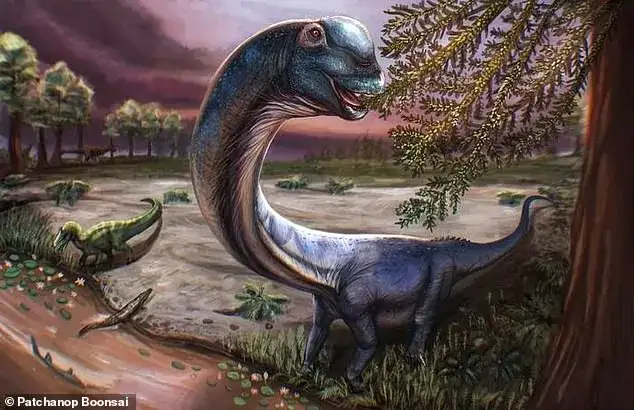
The creature's sheer scale suggests it occupied the niche of a 'mega herbivore', feeding on treetop foliage with minimal concern for predators. Its dietary habits are thought to have involved consuming vast quantities of vegetation with little need for extensive chewing, a common trait among similar long-necked sauropods.
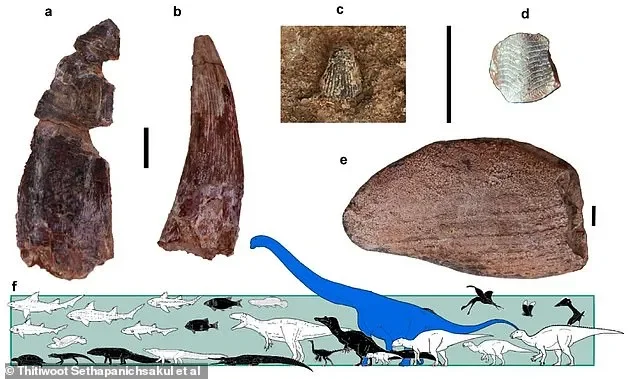
Tracing a Titan's Footsteps
The fossil evidence suggests Nagatitan roamed the Earth between 100 and 120 million years ago, a period when the landscape of what is now Thailand would have presented a vastly different environment. Scientists infer, from the presence of teeth and scales found alongside the Nagatitan fossils, that it shared its world with a diverse array of other dinosaurs, as well as fish, crocodiles, and sharks. The name "Nagatitan" itself draws a parallel to the 'Naga', a mythical serpent prevalent in Southeast Asian folklore, often associated with water bodies.
Read More: New 43-Foot Mosasaur Found in Ancient Oceans

Broader Implications for Dinosaur Evolution
The discovery of Nagatitan chaiyaphumensis contributes to a larger narrative surrounding the evolution of exceptionally large dinosaurs. Researchers note that while Nagatitan achieved its colossal size independently, its existence and the period it inhabited, the warm Cretaceous, coincide with an era that proved conducive to the development of enormous dinosaur species. Comparisons with other giant sauropods from Asia suggest that dinosaurs continued to grow even larger in subsequent periods. The physical characteristics of these long-necked behemoths, such as their extended necks, are also theorized to have played a role in heat regulation, with the increased surface area aiding in shedding excess warmth.
A World of Giants
The emergence of Nagatitan follows a series of discoveries highlighting the immense scale of certain dinosaur species:
Chucarosaurus diripienda, found in Patagonia, Argentina, was estimated to weigh around 50 tonnes and was notably larger than a Tyrannosaurus Rex. The significant weight of its bones presented logistical challenges during excavation.
Patagotitan mayorum, identified in Argentina, is recognized as one of the largest dinosaurs known, stretching 115 feet and weighing approximately 60 tonnes.
In Europe, Abditosaurus kuehnei, discovered in Spain's Pyrenees, also reached considerable proportions, estimated at 14 tonnes and twice the length of a London bus, roaming the region about 70.5 million years ago when Europe was a fragmented archipelago.
These findings underscore the global presence of these massive herbivores, with titanosaur fossils found on every continent except Antarctica, representing a diverse group of some 40 species.
Read More: Grab App Update 5.410.0 Fixes Glitches for Southeast Asia Users