Earliest Evidence of Egg-Laying Ancestors Unearthed
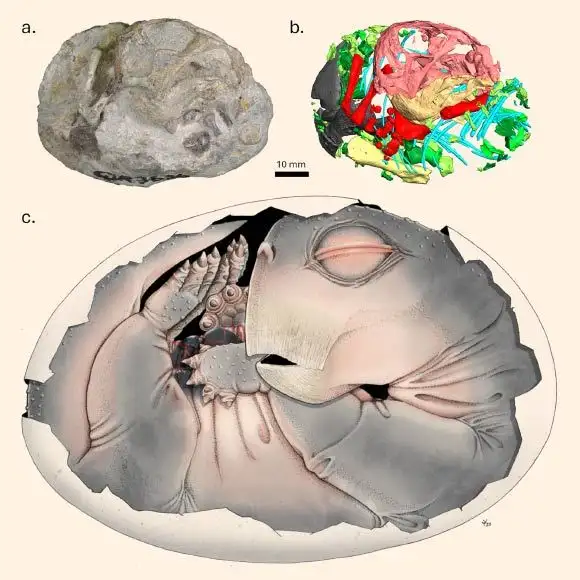
A remarkably preserved fossil found in South Africa's Karoo Basin provides the first direct evidence that early ancestors of mammals laid eggs. The discovery, dating back 250 million years to the Early Triassic period, centers on an embryonated egg containing a Lystrosaurus embryo. This find resolves a protracted debate and fills a 150-year gap in understanding the reproductive habits of synapsids, the group that includes mammal ancestors.

The fossil confirms that therapsids, the group of animals ancestral to mammals, reproduced by laying eggs (oviparous), challenging earlier assumptions that they might have given birth to live young (viviparous) like most of their later mammalian descendants. Advanced imaging techniques, including high-resolution CT and synchrotron scanning, were crucial in confirming the presence of the Lystrosaurus embryo within the partially preserved shell. Researchers suggest these eggs were likely soft-shelled, which explains their rarity in the fossil record compared to the hard-shelled eggs of dinosaurs.
Read More: New 43-Foot Mosasaur Found in Ancient Oceans
Survival Strategies and Evolutionary Links
The larger size of the Lystrosaurus eggs is believed to have offered a critical advantage in surviving harsh environmental conditions, particularly in the aftermath of Earth's most devastating mass extinction event. These larger eggs likely contained substantial yolk reserves, enabling embryos to develop independently without post-hatching parental feeding, a strategy vital for survival in a radically altered world. The study of this fossil not only reshapes our understanding of mammalian origins but also offers insights into the resilience and adaptive strategies that allowed life to rebound after global ecological collapse.

A Century-Long Scientific Pursuit
The identification of fossilized therapsid eggs has been a long-standing challenge for paleontologists. While dinosaur eggs were first described over 150 years ago, based on South African fossils, no definitive therapsid egg had been conclusively identified until now. Previous finds of fossilized dinosaur eggs did not resolve the question of therapsid reproduction. Doubts had even arisen, with some scientists postulating that these mammal ancestors might have already been viviparous.
Read More: New Off-Grid Solar EV Charger in South Africa Starts Helping Drivers
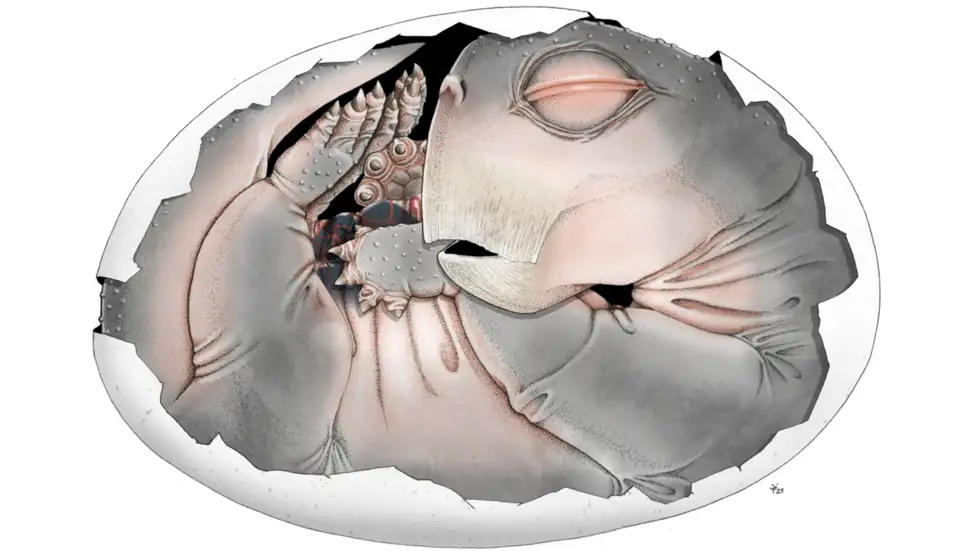
The newly analyzed Lystrosaurus fossil, discovered in the Karoo Basin in 2008, finally provides this long-sought direct proof. The research, published in journals like PLOS ONE, involved multiple institutions and utilized sophisticated technology to overcome the delicate nature of the specimen. The finding underscores the importance of preservation conditions, as soft-shelled eggs are far less likely to fossilize than their mineralized counterparts. Unlike modern mammals, Lystrosaurus did not produce milk, and its young likely hatched at an advanced stage, equipped for self-sufficiency.