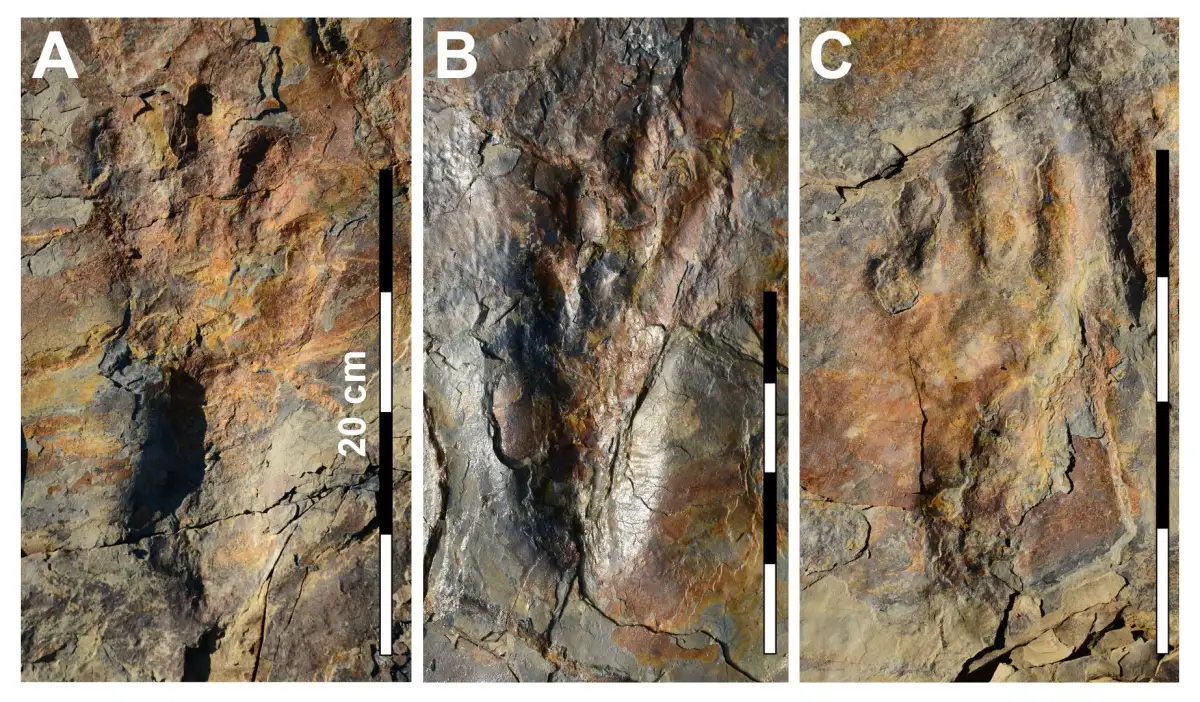
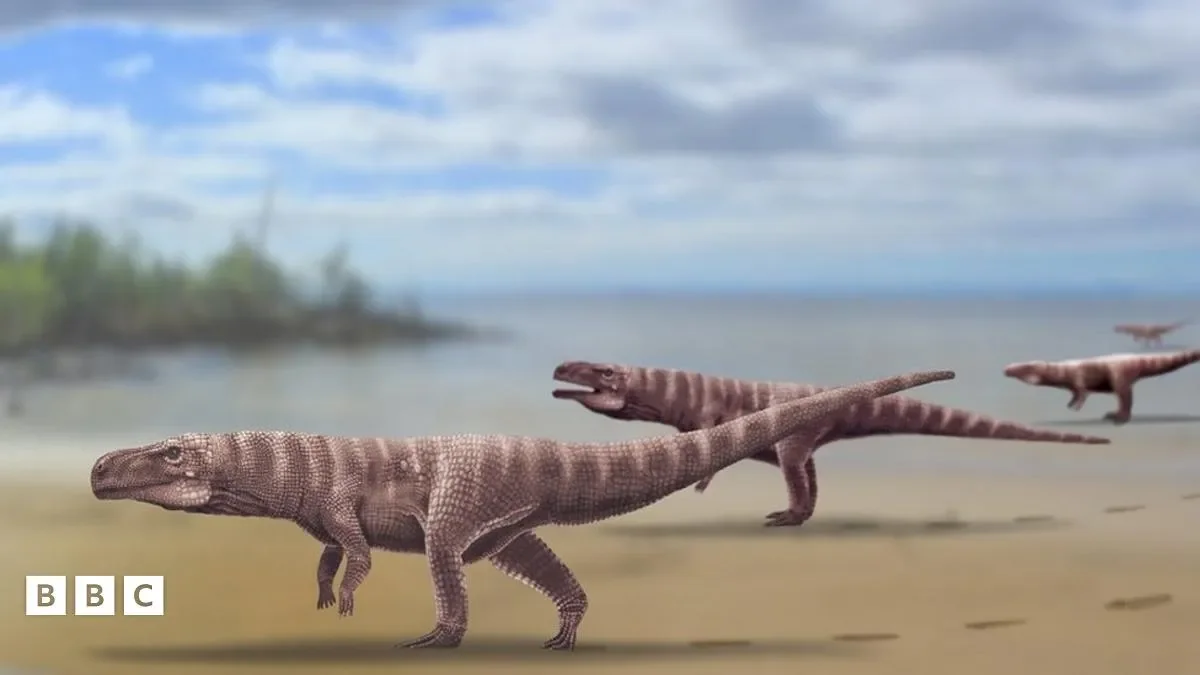
A newly described ancient relative of crocodiles, named Sonselasuchus cedrus, exhibited a peculiar developmental shift in its mode of locomotion, beginning life on four legs before transitioning to bipedalism as it matured. This discovery, based on fossil analysis from the Upper Triassic Chinle Formation in Arizona's Petrified Forest National Park, suggests that certain archosaur lineages explored diverse locomotive strategies independently of their dinosaur cousins.
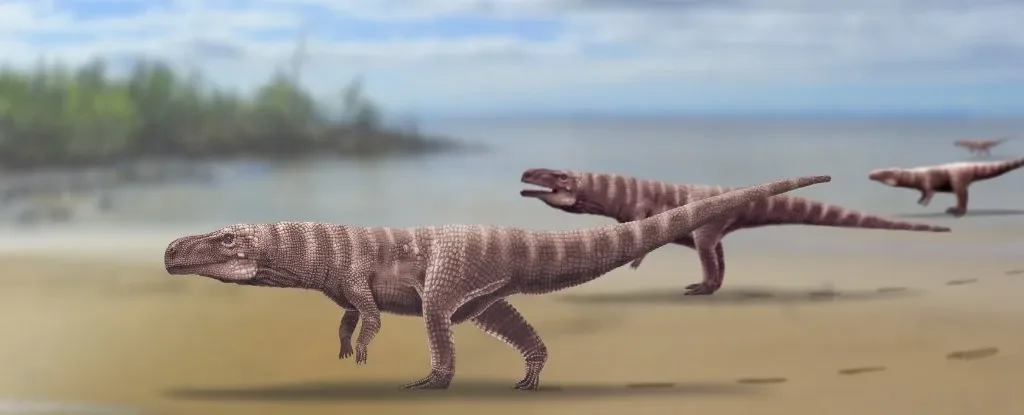
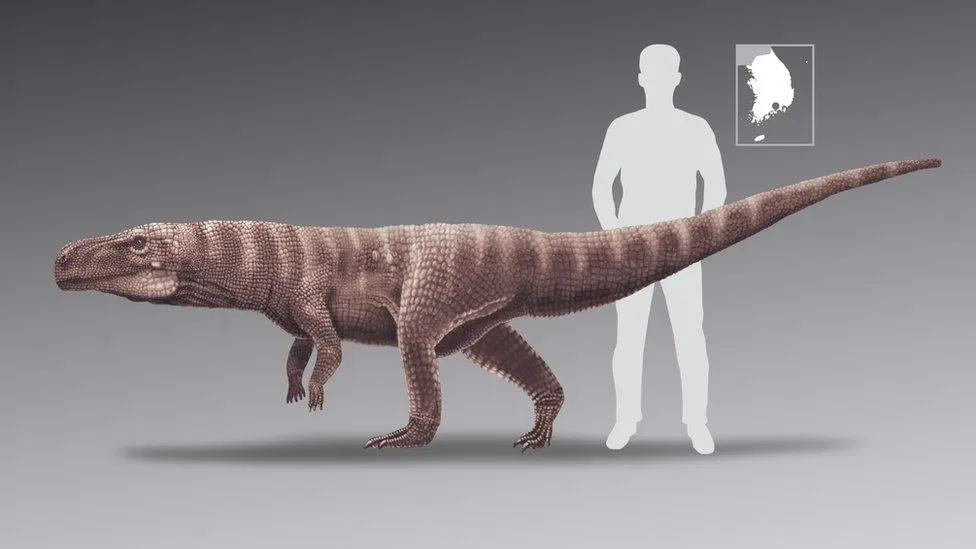
The fossils indicate that Sonselasuchus cedrus, a creature roughly 25 inches tall, possessed anatomical features that pointed to an ontogenetic shift from quadrupedal to bipedal movement. This finding challenges conventional views of archosaur evolution and highlights how traits previously thought to be exclusive to certain dinosaur groups, like ornithomimid theropods, also emerged within the croc-line.
Developmental Plurality in Archosaur Evolution
The research, published in the 'Journal of Vertebrate Paleontology,' involved significant contributions from students and volunteers at the University of Washington's Department of Biology and the Burke Museum. The analysis of limb proportions and other skeletal characteristics of Sonselasuchus cedrus provides evidence for a developmental plasticity in locomotor adaptation within this ancient archosaur group. This suggests that evolutionary pathways for movement were more varied and less strictly defined than previously assumed, with environmental factors likely playing a role in these adaptive shifts.
Read More: Indigenous Data Rights Now Key in Conservation Genomics
Convergent Evolution and Bipedal Ancestors
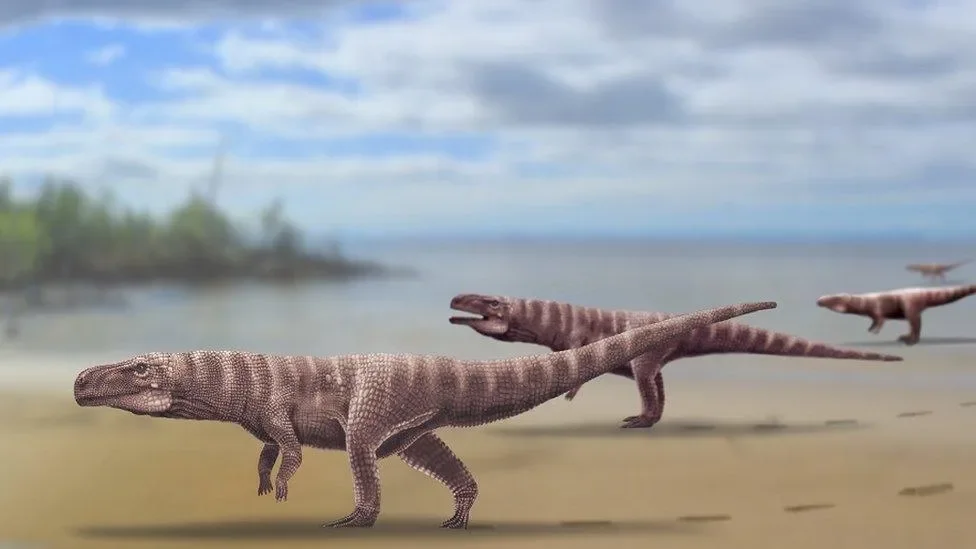
The discovery of Sonselasuchus cedrus's developmental bipedalism adds to a growing body of evidence suggesting that upright walking was not confined to dinosaurs. Past research, including studies on fossilized footprints from South Korea, has indicated that some ancient crocodile relatives may have also adopted bipedal gaits. These findings underscore instances of 'convergent evolution,' where similar traits, like bipedalism, arise independently in unrelated lineages due to similar environmental pressures or ecological opportunities. This contrasts sharply with the predominantly sprawling, quadrupedal stance of modern crocodiles, which have since adapted to semi-aquatic environments over millions of years.
Read More: New 43-Foot Mosasaur Found in Ancient Oceans
Context and Naming
Sonselasuchus cedrus lived during the Late Triassic period. Its name reflects the environment it inhabited—forests containing cedar-like conifers. The 'shuvosaurid' classification places it within a group of pseudosuchian archosaurs. The fossils themselves were found within the Sonsela Member of the Chinle Formation, a geological stratum noted for its rich preservation of Late Triassic archosaur remains. The involvement of over 30 individuals in the excavation and study process over several years highlights the collaborative nature of paleontological research.