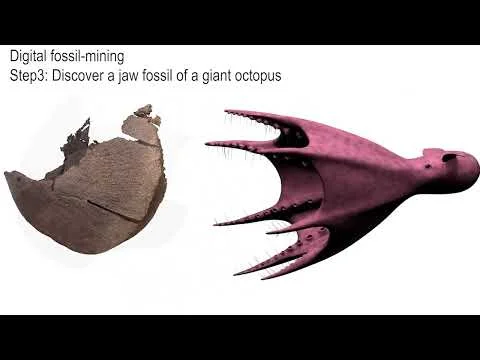
Fossil evidence suggests giant, octopus-like cephalopods, potentially reaching 19 meters (62 feet) in length, patrolled the seas approximately 72 million years ago. These creatures, significantly larger than any modern octopus and rivaling the size of sperm whales, dwarfed contemporary marine life, including the now-famous Megalodon precursor.
The analysis of over two dozen fossils, primarily chitinous jaws, points to the existence of Nanaimoteuthis haggarti, an early finned octopus species. This discovery places these colossal invertebrates as significant predators during the Late Cretaceous period, a time when dinosaurs still dominated the land.
A New Apex Predator Emerges from the Depths
These ancient cephalopods may have been the largest invertebrates known to have existed. Their sheer size suggests they competed with, and possibly preyed upon, large marine reptiles of the era, such as mosasaurs. Unlike many marine vertebrates of the time which possessed armor or scales, these cephalopods were largely soft-bodied, having minimized or lost their external shells. This physical characteristic would have aided in their maneuverability and likely their predatory success.
Read More: Indigenous Data Rights Now Key in Conservation Genomics
The discovery, detailed through analyses of fossils from Japan and other locations, highlights the evolution of cephalopods towards greater size and predatory prowess. Modern finned octopuses, like the deep-sea dumbo octopus, share characteristics with these ancient giants, albeit on a vastly reduced scale.
Echoes in Folklore
The sheer scale and potential predatory nature of these creatures resonate with historical myths. While the Kraken legend, often attributed to giant squids, has fascinated for centuries, the findings about Nanaimoteuthis haggarti provide a tangible, ancient precedent for gargantuan cephalopods lurking in the ocean's abyss. Earlier fossil discoveries, such as those suggesting an octopus-like creature attacking ancient marine reptiles like ichthyosaurs, also contribute to this historical tapestry of fearsome, large cephalopods.