Dual Facets of a Formula 1 Titan Emerge
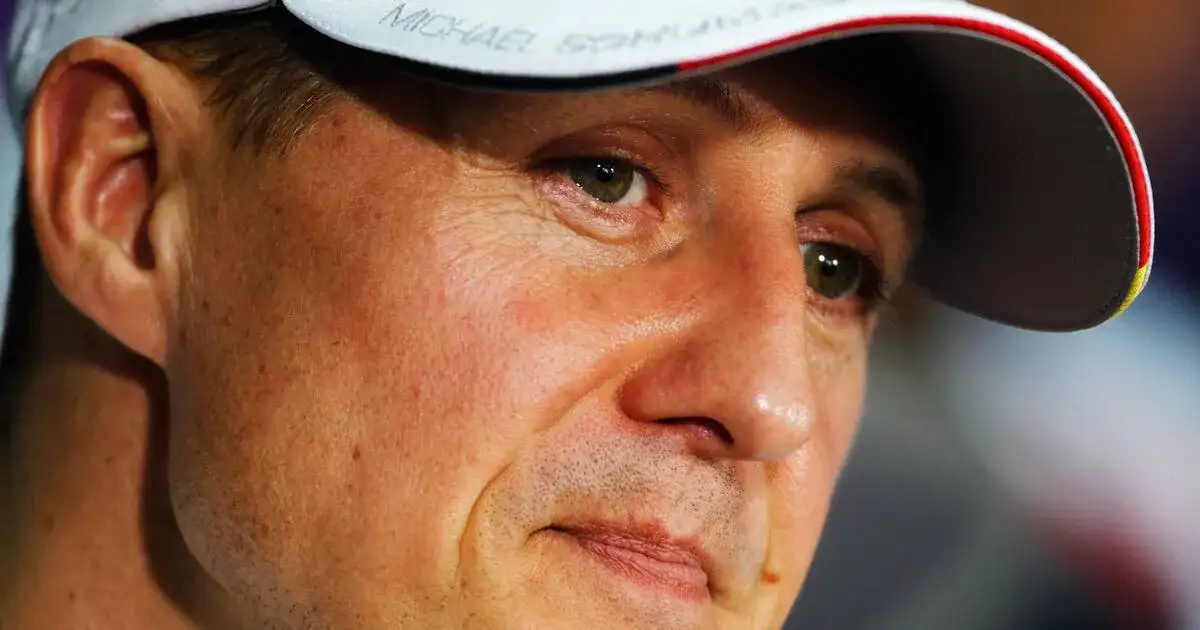
Recent accounts from those who worked closely with Michael Schumacher present a man of stark contrasts, a figure whose immense talent on the track was intertwined with a complex, often abrasive, personal demeanor. This nuanced portrayal challenges the simple narrative of sporting genius, revealing moments where Schumacher’s actions and perceived persona veered sharply from universally admired sportsman to a more formidable, and at times, unsympathetic competitor.
The Competitive Edge and Its Cost
Jock Clear, a former race engineer for Schumacher at Mercedes, highlighted this duality, stating that while "everybody wanted Michael to be their best mate," there were instances where "he could be not a very nice guy." Clear elaborated that Schumacher possessed a "very edgy side to his character when he wanted to," a trait that manifested "in the cockpit a few times." This suggests a deliberate deployment of a harder edge, a calculated approach to racing that sometimes translated into interactions off-track.
Read More: Christian Horner to Attend 2026 British Grand Prix

This edginess, and the very nature of his pursuit of victory, appears to have extended to his on-track conduct. Reports recall incidents, such as the 1997 Japanese Grand Prix, where Schumacher’s maneuvers, specifically hitting Damon Hill, secured him a championship, but not without condemnation and consequences, including the deletion of qualifying times at other events. Motorsport Magazine details a particularly stark example from qualifying where Schumacher "deliberately stopped his car on the circuit," a move that led to the stewards concluding he had no other choice but to disqualify his fastest lap times. Such actions fueled criticism and branded him with "dirtiest tricks."

Persona vs. Reality: The Engineer's Perspective
The assertion of a deliberate, almost manufactured, persona is echoed by former Ferrari boss Jean Todt. Todt, who worked with Schumacher for many years, revealed that what fans saw publicly was not the entirety of the man. Todt suggested that Schumacher's perceived "arrogance was a persona," implying a conscious effort to project a certain image. He claimed to have seen "behind Schumacher’s public mask early in their relationship," indicating a disconnect between the celebrated driver and the private individual. This implies a calculated management of his public image, distinct from his inner disposition.
Read More: C.S. Lewis's Change From Atheism to Christianity Explained

Further insight into Schumacher's mindset suggests that his public presentation was intrinsically linked to his performance. Sportbible quotes an associate who noted that Schumacher's demeanor shifted significantly with his results: "If he’d won, he was confident. If he hadn’t, you saw a different side." This indicates that his outward projection was not static but fluid, reacting to the pressures and outcomes of his intensely competitive career.
A Lingering Silence and Legacy
Beyond the racing circuit, the intense privacy surrounding Schumacher since his skiing accident in 2013 has become a defining aspect of his public narrative. Pleine Vie reports that a limited circle of approximately 20 individuals have contact with him, a measure taken by his family to preserve his privacy and well-being. This guarded existence, as noted by the publication, has frozen his image in time for many, preserving a myth while obscuring the present reality.
Read More: McLaren's 1,000th F1 Race: Is the Number Correct?
Schumacher’s return to Formula 1 with Mercedes between 2010 and 2012 also remains a point of discussion, with some analyses deeming it a "failure." The Sports Rush suggests that while he was able to master the car at Ferrari, adapting to the Mercedes proved more challenging, preventing him from achieving the same level of dominance. This period, viewed retrospectively, adds another layer to the complex legacy of a driver who consistently pushed boundaries, both on and off the track.
Contextualizing the Competitor
Early Career: Schumacher first entered Formula 1 with Jordan in 1991, moving to Benetton the same year, where he secured his first world championships in 1994 and 1995.
Ferrari Era: His highly successful tenure at Ferrari from 1996 to 2006 saw him win five consecutive titles (2000-2004), solidifying his status as a legend.
Mercedes Comeback: He returned to the sport in 2010 with Mercedes, retiring definitively after the 2012 season.
Accident: In December 2013, Schumacher sustained severe head injuries in a skiing accident in Méribel, France, and has been out of the public eye since.