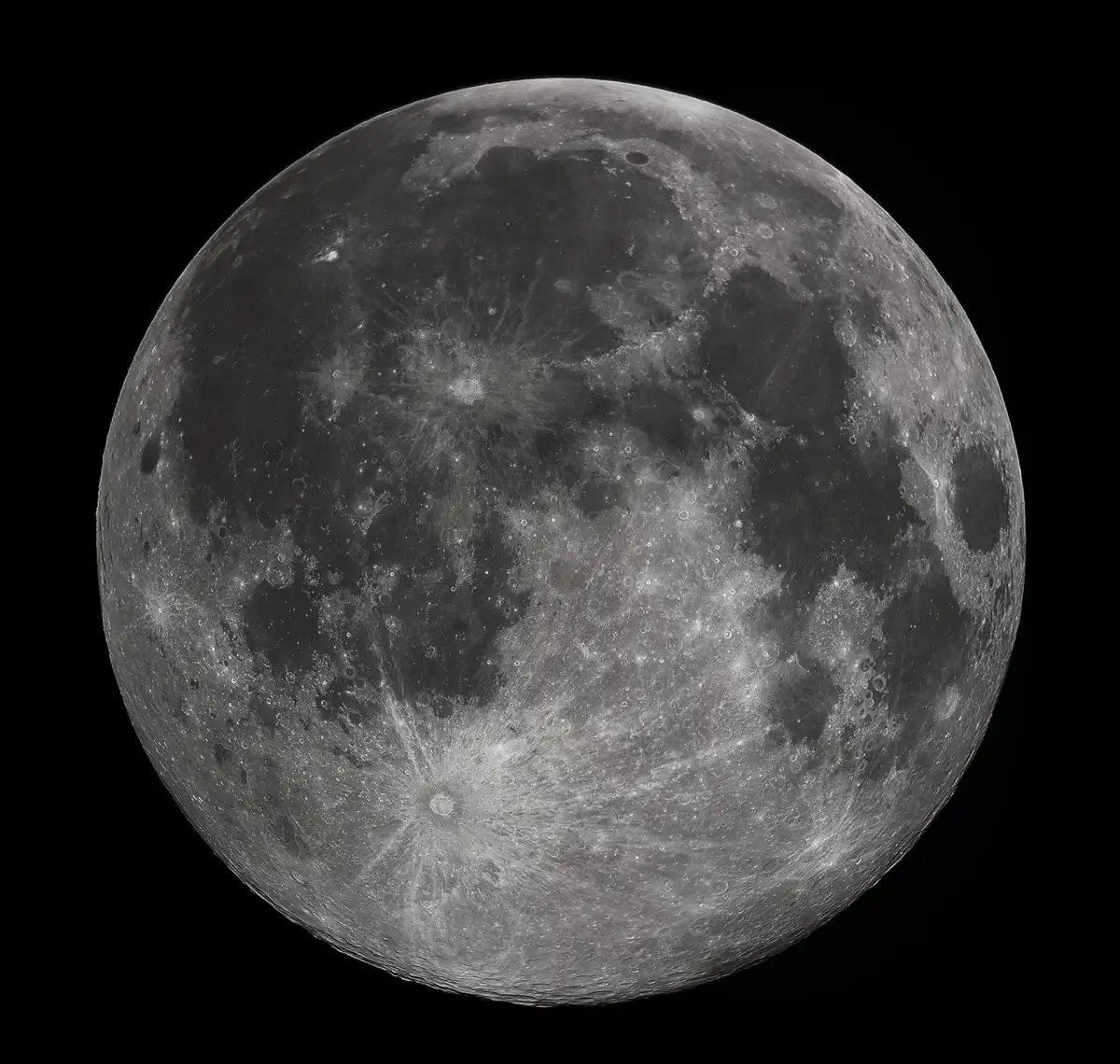
The prevailing scientific narrative of the Moon's creation, a cataclysmic collision between the early Earth and a Mars-sized body known as Theia, faces persistent challenges and emerging alternative theories, underscoring the profound uncertainties surrounding our celestial neighbor's origins.
Chemical Clues and Collisional Conundrums
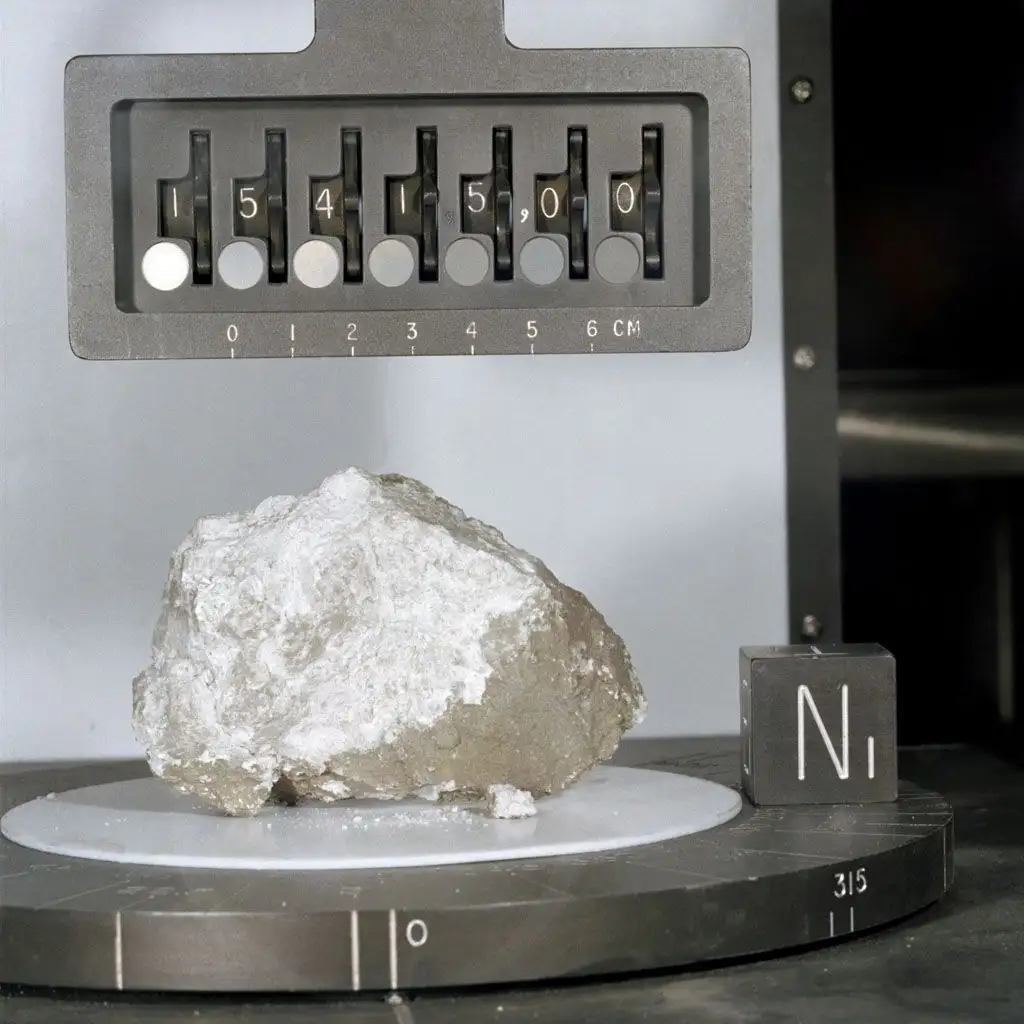
Recent analysis of lunar samples, notably those brought back by the Apollo missions, reveals striking chemical similarities between Earth and the Moon. This unexpected kinship, particularly concerning basaltic rocks from their respective mantles and identical oxygen isotopes, has long supported the giant impact hypothesis. The theory posits that such an impact would vaporize parts of Earth's mantle, ejecting debris into orbit that would eventually coalesce into the Moon. However, the precise mechanics of this colossal event remain elusive.
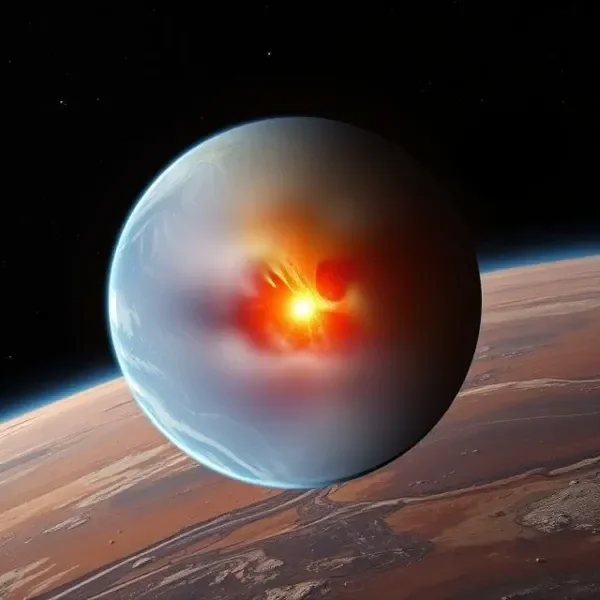
Compositional Convergence: The near-identical chemical makeup, especially oxygen isotopes (Δ17O identical to ±0.016‰ between Earth and Moon), implies a common source reservoir for both Earth and Theia. This suggests that Theia and proto-Earth shared similar isotopic compositions.
Impact Improbabilities: Current models for the classic giant impact struggle to account for the Moon's specific composition. One theoretical framework suggests Theia would need to strike Earth in a glancing blow, with a significant portion missing Earth, while the Moon forms from a mix of Theia and Earth debris. This implies a secondary impact or a complex accretion process to bring Earth to its current mass.
Chronological Refinements: Using advanced techniques on rare minerals within Apollo samples, researchers have recently pinpointed the Moon's crystallization timeline, suggesting a violent, molten beginning.
Alternative Narratives Emerge
Beyond the giant impact, competing ideas propose alternative scenarios for the Moon's genesis, challenging the established dogma.
Read More: US Space Force Victus Haze Mission Successfully Tests Orbital Intercepts
The Binary-Exchange Capture Theory: This model suggests the Moon was not formed from Earth's debris but was rather captured from a binary system—two celestial bodies orbiting each other. This theory posits the Moon as an independent entity, acquired through a complex gravitational interaction with Earth.
Captured Intruder: Another hypothesis proposes the Moon was initially a separate celestial body that Earth captured. This idea also grapples with explaining the pronounced chemical similarities observed between the two bodies.
Broader Implications and Enduring Enigmas
Regardless of its tumultuous birth, the Moon's presence has indelibly shaped Earth's evolution and the development of life. Its gravitational influence stabilizes Earth's axial tilt, a crucial factor in maintaining our planet's climate stability.
Cosmic Violence: The Moon's origin story is inherently tied to the violent processes that characterized the early solar system.
Unwritten History: Despite decades of research and numerous missions, the precise narrative of how the Moon came to be remains an active area of scientific inquiry, a testament to the enduring mysteries of planetary formation.
Ongoing Gravitational Dance: The Moon continues to recede from Earth, a slow but constant gravitational exchange that shapes their celestial ballet.