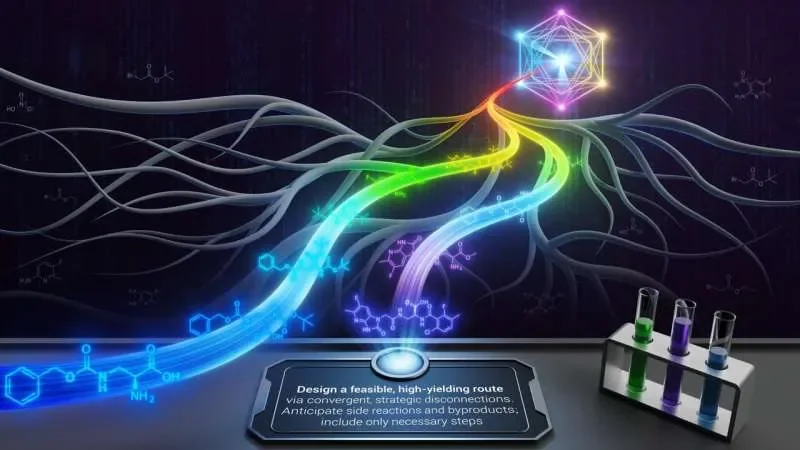
A new artificial intelligence system, dubbed CoCoGraph, is now capable of churning out millions of novel molecular structures. Developed using a diffusion model, similar to techniques employed in image generation, CoCoGraph aims to overcome a significant hurdle in chemical research: the laborious process of finding new atomic combinations with useful properties. This computational feat, published recently, promises to accelerate endeavors ranging from the development of new medicines to the creation of more sustainable materials.
The core breakthrough lies in CoCoGraph's ability to ensure chemical validity, a stark contrast to other AI models that might produce nonsensical compounds. It respects fundamental chemical rules like correct valency and bonding patterns, ensuring each generated molecule is, at least on paper, sound. While still in its nascent stages, researchers have already conducted promising tests, identifying molecules with properties akin to existing compounds like paracetamol. The system also boasts efficiency, requiring fewer computational resources and generating molecules at a faster pace than some previous approaches.
Read More: New lead iodide material speeds up terahertz circuits on 5 May 2026
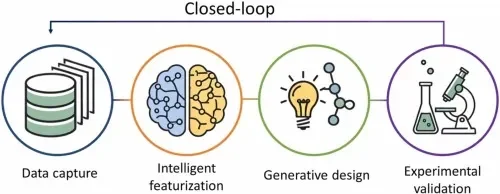
However, the grand vision of AI systems that can ideate molecules tailored to precise specifications remains a future pursuit. CoCoGraph, at this stage, cannot yet design molecules with a specific function in mind. This limitation underscores a broader challenge within the field of 'AI in Chemistry': the reliance on often "data-hungry" machine learning models.
Broader AI Currents in Chemical Discovery
The push for AI in chemistry isn't confined to molecule generation. Other recent developments highlight different facets of this technological integration:
Experimental Procedures: The MOSAIC framework, for instance, generates experimental procedures for chemical synthesis, even for compounds that haven't been synthesized before. This system has been instrumental in successfully synthesizing over 35 previously unreported compounds, drawing expertise from numerous distinct chemical reaction niches.
Synthesis Planning: Synthegy, another recent AI initiative, uses natural language processing to assist chemists in planning molecular synthesis. By combining search algorithms with AI capable of interpreting chemical strategies expressed in plain language, it tackles the complex, experience-reliant task of mapping out synthetic routes.
Predictive Chemistry: Large language models are also being augmented with chemistry tools, enhancing their ability to predict chemical reactions and properties. This represents a move towards 'autonomous chemical research'.
Challenges and Uneven Ground
Despite these advances, significant challenges persist. A critical concern is the training data used for these AI models. Deep learning models, when trained on insufficient or skewed datasets, can produce dramatically flawed predictions for molecules that deviate from their training set. Standardizing the evaluation of these AI chemistry tools across the field also remains an ongoing struggle. The field grapples with how to quantitatively measure the attention research articles receive, as seen with the Altmetric Attention Score, hinting at the nascent and still-defining nature of this research area. Ultimately, the promise of AI-driven molecular discovery, from property prediction to drug generation, is intertwined with these computational and data-related hurdles.
Read More: AI Could Replace 100% of Code in 1 Year, Says Expert