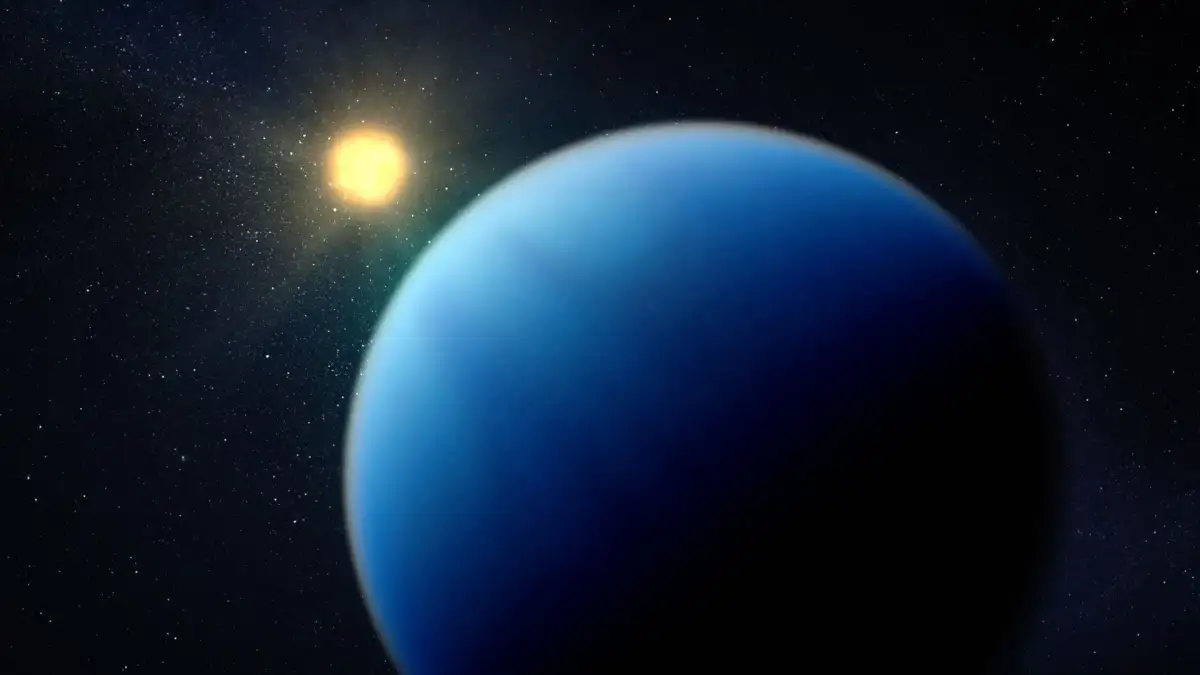
Recent observations suggest that many of the universe's "mini-Neptune" exoplanets may be fundamentally different from what was previously assumed. New data, particularly from the James Webb Space Telescope (JWST), indicates that vast clouds of soot, akin to exhaust from a diesel engine, could be a dominant feature in the atmospheres of these abundant worlds. This finding challenges existing models of exoplanet composition and formation.
A Soot-Obsessed Universe?
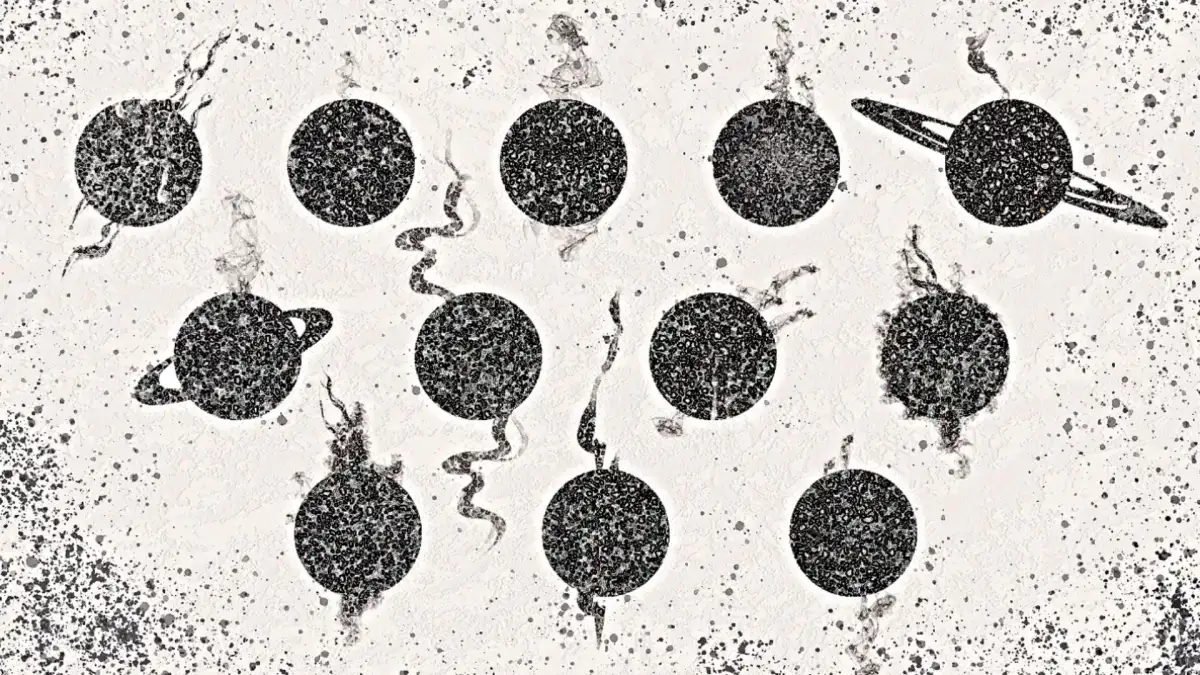
The prevailing idea, as detailed in recent reports, is that mini-Neptunes – exoplanets with sizes falling between Earth and Neptune and often found orbiting close to their stars – might be massive "soot factories." This atmospheric soot is thought to be composed of polycyclic aromatic hydrocarbons (PAHs), which are complex carbon molecules. The formation and density of these soot clouds appear to mimic the combustion processes seen in terrestrial internal combustion engines.
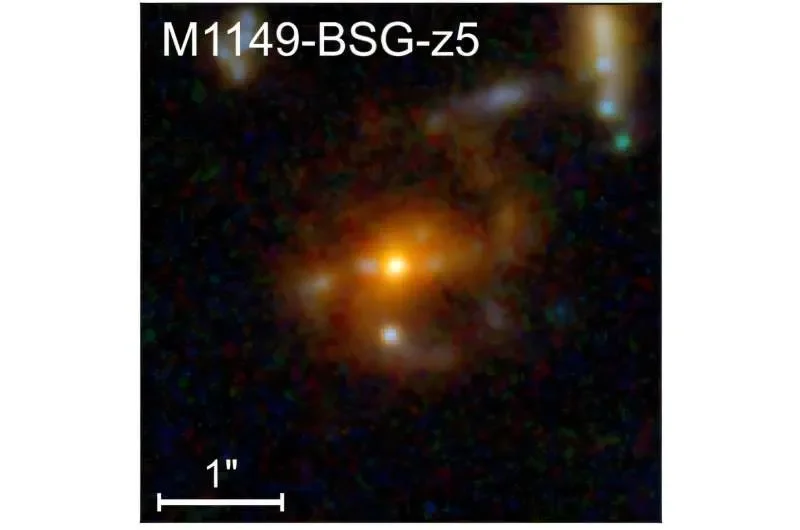
Read More: JWST Finds Oldest Barred Spiral Galaxy M1149-BSG-z5

Researchers are drawing parallels between the spectral absorption curves observed in mini-Neptune atmospheres and the signals emitted by diesel engine exhaust.
This unexpected similarity stems from the way these soot particles absorb light, creating a characteristic spectral signature.
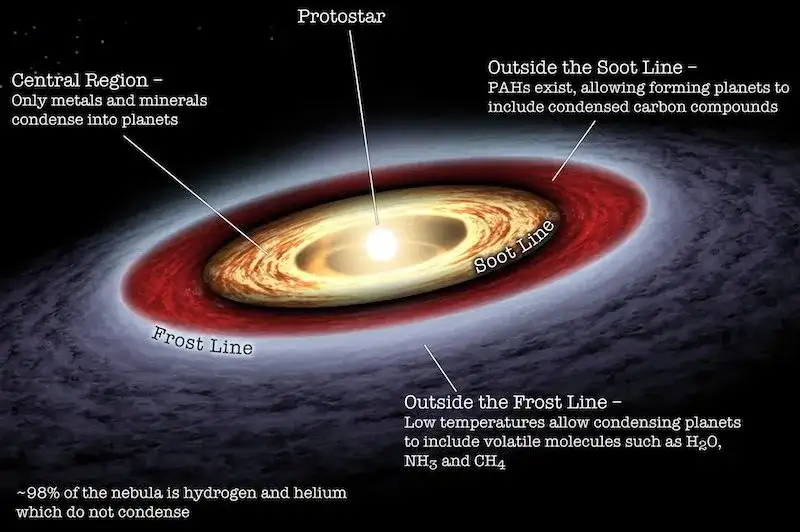
The implications of this "soot zone" extend to understanding planetary origins. The ratio of carbon to oxygen within these soot clouds could potentially serve as an indicator of how far from their host star a mini-Neptune initially formed. Planets that coalesced farther out in their stellar systems, beyond what's termed the "frost line," are expected to incorporate different materials compared to those forming closer in.
Rethinking Planetary Ingredients
The notion that exoplanets, particularly mini-Neptunes, could be heavily laden with soot forces a re-evaluation of what constitutes a "typical" planet.
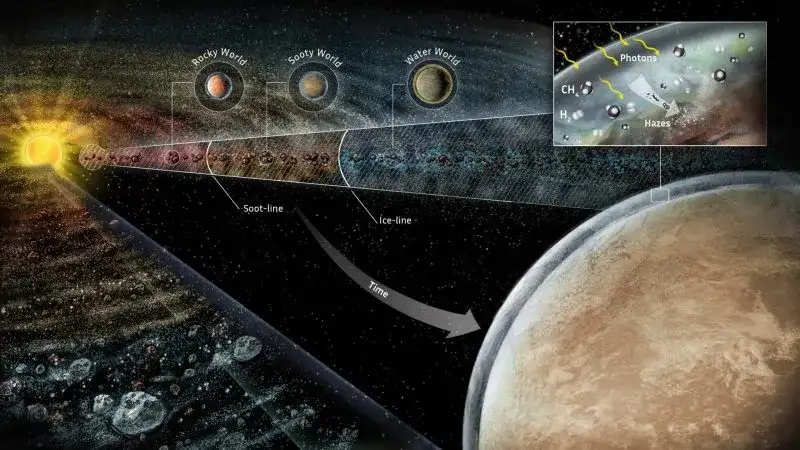
This challenges earlier hypotheses about mini-Neptune atmospheres, which leaned towards water-dominated or methane-dominated compositions, or simpler photochemical hazes.
The presence of significant amounts of astrophysical soot could also redefine concepts like "water worlds." Some research now questions whether what we might envision as water-rich planets could, in fact, be largely composed of soot, with varying amounts of water ice.
Earth itself, often considered carbon-rich, is thought to be comparatively poor in volatile carbon compounds, which are crucial for life as we understand it. The potential abundance of carbon in other forms on exoplanets opens new avenues for astrobiological consideration.
Background and Broader Context
The study of exoplanets, particularly mini-Neptunes, has been a focus due to their prevalence in our galaxy. Their intermediate size and proximity to stars make them prime targets for atmospheric characterization. While these planets are numerous, their exact formation and evolution have remained a puzzle.
Read More: US Space Force Victus Haze Mission Successfully Tests Orbital Intercepts
The use of advanced instruments like the JWST has been pivotal in gathering detailed atmospheric data, pushing the boundaries of our understanding. Alongside these developments, other recent space news includes the decommissioning of NASA's MAVEN Mars orbiter after a decade of service, the back-to-back launches of SpaceX Starlink satellites, and observations of an interstellar comet emitting methane. Separately, the study of noctilucent clouds and potential "habitable exoplanets in the soot zone" also points to ongoing, diverse investigations in astronomy.