For centuries, the celestial sphere has been a canvas for human curiosity, a vast expanse charted by dedicated observers. Their work, spanning discoveries from elusive comets to the faint hum of the universe's earliest moments, forms the bedrock of our current cosmic understanding.
The persistent cataloging of the heavens, a grand endeavor that spans generations, has brought forth luminaries whose work continues to resonate. These figures, driven by an unyielding gaze towards the stars, have pieced together a more complete picture of the cosmos.
Unraveling the Universe's Fabric
The journey through astronomical discovery is marked by several key advancements:
Foundational Observations: Early pioneers meticulously charted star positions and cataloged celestial bodies. Their efforts, often requiring ingenious optical designs, laid the groundwork for future research.
Cosmic Background Radiation: The discovery of the cosmic microwave background radiation, a relic of the Big Bang, provided crucial empirical support for the prevailing cosmological model. This faint signal, detected through dedicated radio astronomy, offered a direct glimpse into the universe's nascent stages.
The Dark Matter Enigma: The observation of galaxy rotation curves, revealing unexpectedly uniform speeds at their outer edges, pointed towards the existence of unseen mass – what we now refer to as dark matter. This finding profoundly altered our understanding of galactic structure and evolution.
Celestial Wanderer Trackers: The identification and tracking of comets, from those now bearing the names of their discoverers to others proven correct only after their predicted return, showcases both diligent observation and the long arc of scientific verification.
Optical Innovations: Advances in optics, including efforts to correct for lens imperfections, enabled clearer views of distant objects and the discovery of phenomena like infrared radiation, observed during sunspot studies.
Echoes of Discovery
The history of astronomy is rich with individuals who pushed the boundaries of knowledge:
Radio Astronomy Pioneers: Key figures established radio astronomy as a field, detecting persistent emissions from our own Milky Way and co-discovering the cosmic microwave background radiation.
Observational Giants: Those who measured galaxy rotation curves provided compelling evidence for dark matter. Others founded significant observatories, equipping them with powerful telescopes that facilitated groundbreaking research.
Comet Hunters and Asteroid Discoverers: Several astronomers distinguished themselves by discovering numerous comets, and identifying asteroids like Pallas and Vesta. They also made significant discoveries such as Saturn's moon Titan and were among the first to observe the Orion Nebula.
Precession and Planetary Motion: One astronomer's precise measurements of star positions revealed celestial precession, a shift in the orientation of celestial bodies. His meticulous observations of Mars were instrumental in allowing Kepler to formulate his laws of planetary motion.
Cataloging and Navigation: Contributions included the development of precise timekeeping devices, like the pendulum clock, and the creation of comprehensive astronomical catalogs.
A Legacy of Inquiry
The pursuit of understanding the cosmos is an ongoing narrative, enriched by a diverse array of contributors. From the detailed mapping of the night sky to the theoretical underpinnings of the universe's origins, these individuals, through their persistent observations and groundbreaking theories, have shaped our perception of the universe. Their work, whether it was detecting faint cosmic signals or charting the paths of celestial bodies, continues to inspire and inform scientific endeavors today.
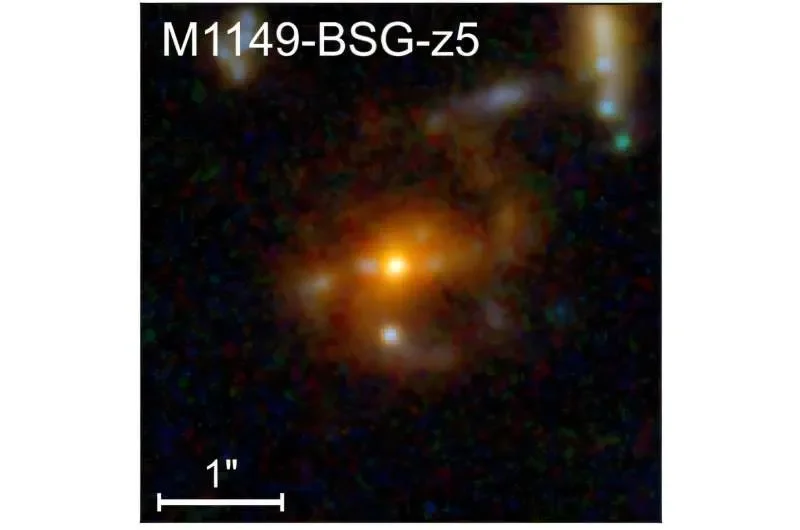
Read More: JWST Finds Oldest Barred Spiral Galaxy M1149-BSG-z5
Famous Astronomers | Cosmic Microwave Background | Dark Matter