Astronomers, poring over intricate stellar cartography, posit the Milky Way galaxy may have consumed a smaller galactic neighbor, codenamed 'Loki'. Evidence suggests the remains of this ancient cosmic meal are now discernible within the sprawling structure of our own galaxy. The discovery stems from observing distinct patterns in the motion and composition of stars, deviating from the expected galactic ebb and flow.
Stellar Scraps
The findings, detailed in recent astrophysical observations, point to a cluster of stars exhibiting peculiar orbital paths and chemical signatures. These characteristics are not consistent with the typical stellar populations found throughout the Milky Way's familiar arms. Instead, they exhibit traits indicative of a separate, perhaps dwarf, galaxy that has been subjected to gravitational forces and stretched over vast timescales.

The proposed victim, 'Loki', is theorized to have been significantly smaller than the Milky Way, its stars now spread like cosmic detritus within our galactic halo. Researchers are meticulously tracing these stellar remnants, attempting to reconstruct the narrative of this ancient galactic collision and assimilation. The implications suggest our galactic home has a more violent and dynamic history than previously appreciated.
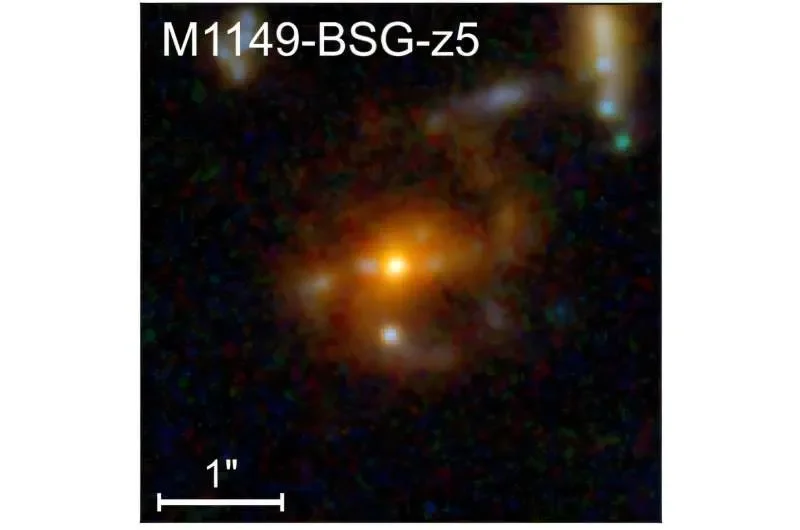
Read More: JWST Finds Oldest Barred Spiral Galaxy M1149-BSG-z5
Contextualizing Cosmic Cannibalism
Galactic mergers are not uncommon events in the universe. Larger galaxies, through their immense gravitational pull, can attract and absorb smaller ones over eons. These events sculpt the shape and characteristics of galaxies, influencing their stellar populations, gas content, and overall structure. The Milky Way itself is known to have merged with other, smaller galaxies in its past, and is currently on a collision course with the Andromeda Galaxy. This latest hypothesis regarding 'Loki' adds another chapter to this ongoing cosmic saga, suggesting even smaller, more transient encounters leave their indelible mark.
Read More: US Space Force Victus Haze Mission Successfully Tests Orbital Intercepts
The study of galactic archaeology, as this field is often termed, relies on analyzing the distribution, age, and metallicity of stars. By understanding these properties, scientists can infer the formation history of galaxies, including periods of growth through accretion. The identification of features like those attributed to 'Loki' helps refine models of galactic evolution and our place within this vast cosmic narrative.