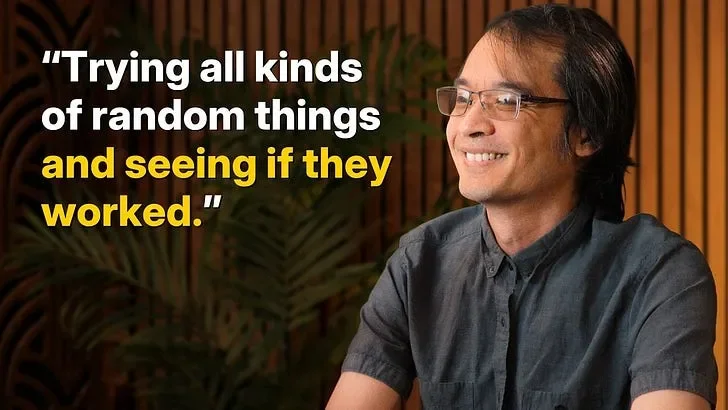
Terence Tao, a renowned mathematician, has articulated a nuanced perspective on the evolution of mathematical discovery, positing that foundational breakthroughs may become scarcer as the field matures. This assertion suggests a fundamental change in the mechanisms of mathematical advancement, moving from broad, landscape-altering insights to more incremental, specialized elaborations.
Tao, speaking on the Dwarkesh podcast, did not frame this as a decline in mathematical vitality, but rather a natural progression akin to established scientific paradigms. His discussion, touching upon figures like Kepler and Newton, implicitly highlights eras where broad, unifying principles were unearthed, setting the stage for subsequent generations to refine and expand upon them.
THE NATURE OF BREAKTHROUGHS
The implication is that the "low-hanging fruit" of grand mathematical theories may have largely been picked. Modern mathematical progress, according to this framing, increasingly relies on deep dives into specialized subfields, building complex structures upon established foundations rather than forging entirely new ones.
This does not preclude innovation, but rather reorients its form.
The scale of discoveries might shrink, but their intricate detail could increase.
HISTORICAL PARALLELS
The references to Kepler and Newton serve as historical anchors, representing periods of profound, paradigm-shifting conceptualization. Their work provided frameworks that subsequent scientific and mathematical endeavors could then explore and substantiate. The current mathematical landscape, by contrast, appears to demand a different kind of intellectual engagement.
Read More: Philosophers Rethink Zero's Meaning in Math and Logic
The challenge, then, lies not in a lack of mathematical talent or effort, but in the inherent structure of a field that has, over centuries, explored its most expansive territories.
IMPLICATIONS FOR THE FIELD
This perspective carries weight for how mathematical research is conceptualized and pursued.
Education: Curricula might need to adapt to emphasize deep specialization alongside foundational understanding.
Funding: The pursuit of incremental advances might require different support structures than the hunt for foundational breakthroughs.
Recognition: The nature of celebrated mathematical achievements may evolve, valuing intricate specialization as much as sweeping generalization.
The discussion, as presented across various podcast summaries, suggests a philosophical examination of intellectual frontiers and the changing contours of human knowledge acquisition. The underlying data, though fragmented across different podcast listing sites, consistently points to Tao's contemplation of these significant shifts in the landscape of mathematical thought.