Recent mathematical breakthroughs have unveiled a new classification of shapes, tentatively named "soft cells," that possess unique properties allowing them to tessellate — or tile — surfaces without gaps or overlaps. This discovery appears to bridge abstract geometric principles with observable patterns in nature, from cellular structures to broader biological forms. The development has significant implications for fields ranging from pure mathematics to applied sciences, including biology and materials science.
A New Geometric Framework Emerges
The central innovation lies in identifying shapes that can perfectly cover a plane or space, a concept known as tiling or tessellation. For centuries, mathematicians have studied how geometric figures can fit together. This new class of shapes challenges previous understandings, particularly in their ability to achieve seamless tiling without sharp angles or edges.

Tiling without Gaps: The core of the discovery is the ability of these shapes to cover surfaces without leaving any empty space and without overlapping.
Absence of Sharp Corners: A defining characteristic is the absence of sharp corners, a feature previously thought to be necessary for certain types of tiling, especially in two dimensions.
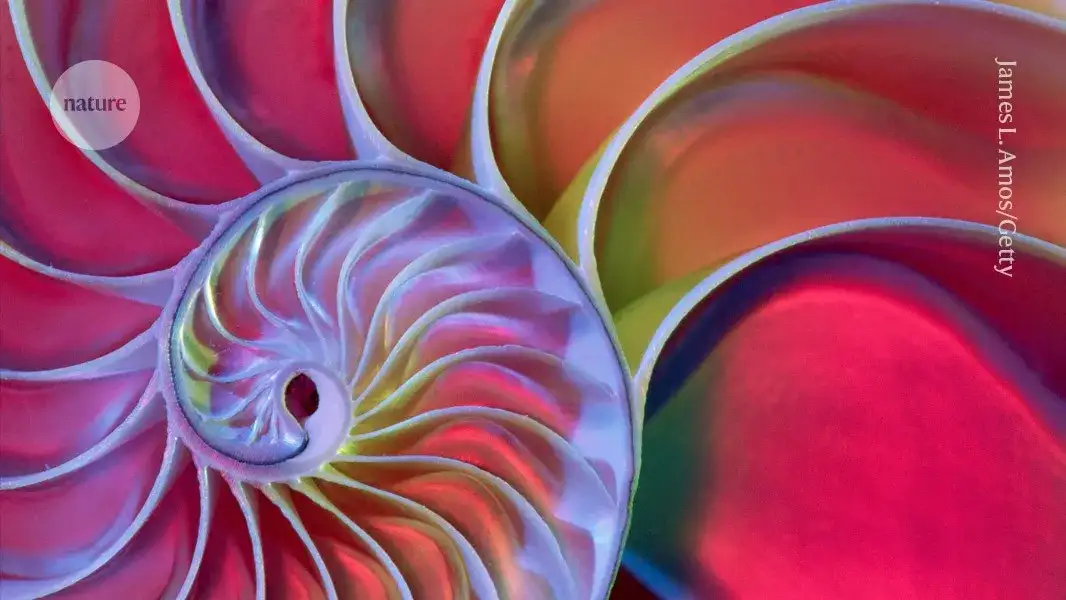
Natural Parallels: These shapes have been observed to mirror forms found in the natural world, suggesting a fundamental geometric principle underlying biological structures.
Properties of "Soft Cells"
The newly identified shapes, termed "soft cells," exhibit distinct characteristics depending on the dimension being considered.
Read More: Philosophers Rethink Zero's Meaning in Math and Logic
Two-Dimensional Forms: In two dimensions, these shapes feature curved boundaries with precisely two corners. These corners are described as "cusps," which are sharp points between curves. Examples have been likened to the shape of an onion or certain types of cells.
Three-Dimensional Forms: In three dimensions, the "soft cells" are characterized by bent edges and a complete absence of corners, allowing them to fill space seamlessly.
Historical Context and Problem Solving
This discovery addresses long-standing problems in geometry. The concept of tiling has been a subject of study for many years, with mathematicians seeking to understand the limits and possibilities of shape arrangements.

Solving Old Puzzles: The new findings offer solutions to decades-old geometry problems, particularly concerning shapes of constant width and how they can be arranged.
Formalizing Existing Observations: While shapes resembling these "soft cells" have been observed in nature for a long time, the current work marks the formal mathematical definition and classification of this class of shapes.
Scientific Scrutiny and Validation
The findings have been published in several scientific journals, undergoing peer review and attracting attention within the mathematical community.
Publication in Peer-Reviewed Journals: Research detailing these discoveries has appeared in publications such as PNAS Nexus and Nature.
Collaborative Efforts: The work involves collaboration between mathematicians from different institutions, including the University of Oxford and the Budapest University of Technology and Economics.
Confirmation of Minimum Vertices: One aspect of the research, focusing on polyhedral tori, identified that a minimum of eight vertices is required for such a shape to be "intrinsically flat," resolving a specific geometric challenge.
Applications and Future Directions
The identification of "soft cells" has broad potential applications, particularly in understanding and replicating natural phenomena.

Biological Forms: The shapes are seen as crucial for explaining complex biological forms, suggesting a deeper connection between mathematical structures and life processes.
Materials Science: The ability of these shapes to tile space without gaps could lead to new developments in material design and engineering.
Art and Architecture: Tessellations, the mathematical principle behind tiling, have long been used in art and architecture, and this discovery may offer new patterns and possibilities.
The exact mathematical definition and properties of these shapes are complex and subject to ongoing research and refinement.
Further investigation is required to fully explore the implications of this new shape class across various scientific disciplines.
Expert Insights
"Nature not only abhors a vacuum, she also seems to abhor sharp corners." — Professor Alain Goriely, University of Oxford.
This statement highlights a key observation driving the research: natural forms often tend towards smoothness and roundedness, a characteristic now mathematically captured by the "soft cell" classification.
Conclusion
The discovery of the "soft cell" shape class represents a significant advance in geometry, providing a formal framework for shapes that tile space without sharp corners. This finding not only resolves long-standing mathematical problems but also offers a powerful new lens through which to view and understand the prevalence of such forms in nature. The interdisciplinary nature of this research, connecting abstract mathematics with biological and material sciences, suggests a fertile ground for future exploration and innovation.
Read More: Indigenous Data Rights Now Key in Conservation Genomics
Sources:
Mathematicians discover new ways to make round shapes
Published: September 29, 2024 (Note: The provided input states "20 minutes ago," which is inconsistent with the publication date implied by other sources referring to recent discoveries.)
Link: https://www.scientificamerican.com/article/mathematicians-discover-new-ways-to-make-round-shapes/
Context: This article discusses the specific problem of intrinsically flat polyhedral tori and the requirement of eight vertices.
Mathematicians discover new class of shape seen throughout nature
Published: September 20, 2024
Context: This Nature News article provides a high-level overview of the discovery and its connection to natural forms.
Mathematicians discover new universal class of shapes to explain complex biological forms | University of Oxford
Published: September 12, 2024
Link: https://www.ox.ac.uk/news/2024-09-12-mathematicians-discover-new-universal-class-shapes-explain-complex-biological-forms
Context: This university news release focuses on the biological relevance of the shapes, quoting Professor Alain Goriely.
Mathematicians Discover New Shapes to Solve Decades-Old Geometry Problem | Quanta Magazine
Published: September 20, 2024
Link: https://www.quantamagazine.org/mathematicians-discover-new-shapes-to-solve-decades-old-geometry-problem-20240920/
Context: This article delves into the geometry problem related to shapes of constant width in higher dimensions.
We officially have a new shape, say mathematicians | BBC Science Focus Magazine
Published: September 25, 2024
Link: https://www.sciencefocus.com/news/new-shape-discovered
Context: This piece announces the formalization of the "soft cell" concept and its ability to tile space.
Mathematicians discover a new class of shapes - The Stute
Published: October 4, 2024
Link: https://thestute.com/2024/10/04/mathematicians-discover-a-new-class-of-shapes/
Context: This student newspaper article provides a brief overview of the tiling research and its biological connections.
Mathematicians discovered a new class of mathematical shapes; Soft Cells
Published: September 22, 2024
Link: https://www.inceptivemind.com/blurb/mathematicians-discovered-a-new-class-of-mathematical-shapes-soft-cells/
Context: This article specifically introduces the "Soft Cells" designation and their properties in 2D and 3D tiling.