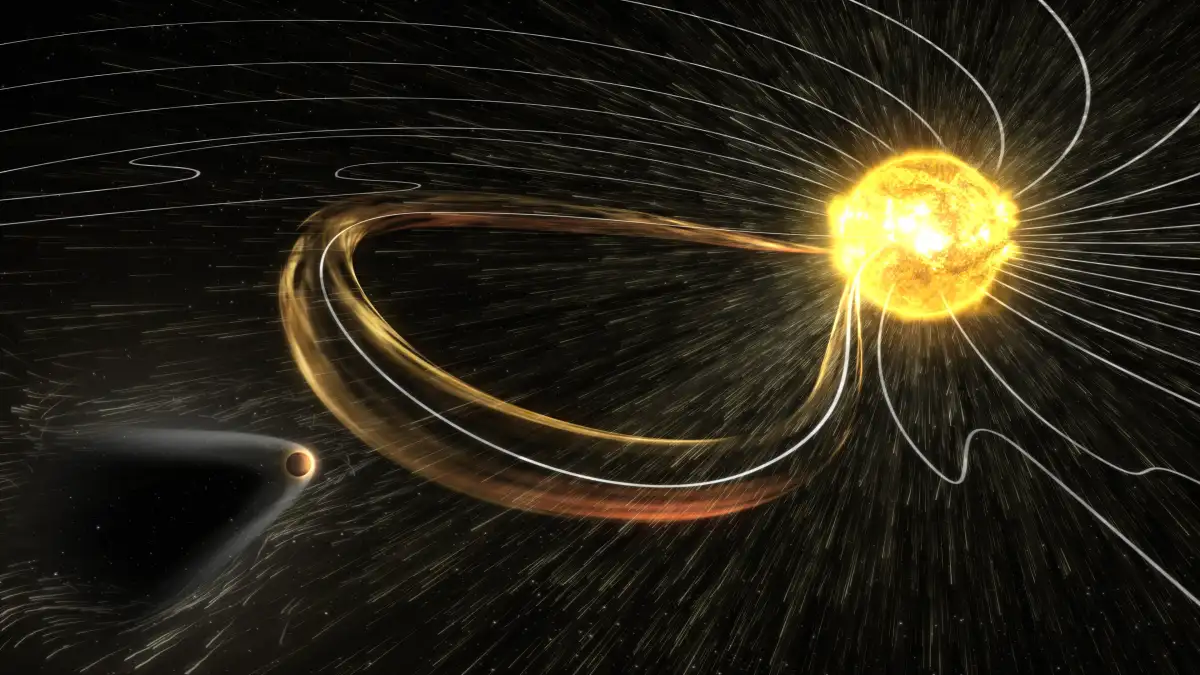
MAVEN, NASA's Mars Atmosphere and Volatile Evolution mission, has detected the 'Zwan-Wolf effect' deep within the Martian atmosphere. This phenomenon, previously observed only in Earth's magnetosphere, involves charged particles being compressed along magnetic structures. == The findings, published in Nature Communications, mark the first comprehensive observations of this effect on Mars. The study details the response of Mars' plasma system to solar wind disturbances, noting a depletion of solar wind plasma near the planet's boundary during periods of low solar activity.
Solar Storms Amp Up Martian Ionosphere

Recent solar activity has significantly impacted Mars' upper atmosphere, causing electron density to surge dramatically. In one instance, an X-class solar flare, the most powerful category, on May 15, 2026, triggered an electron surge nearly threefold in the Martian ionosphere. This surge represents the largest recorded increase in Martian atmospheric electrons. European spacecraft, Mars Express and Trace Gas Orbiter (TGO), captured these changes in the ionosphere during a radio linkup just ten minutes after the flare struck. This rapid observation captured the ionosphere's heightened state following the solar event.
Read More: Indigenous Data Rights Now Key in Conservation Genomics
Deeper Understanding Through Spacecraft Collaboration
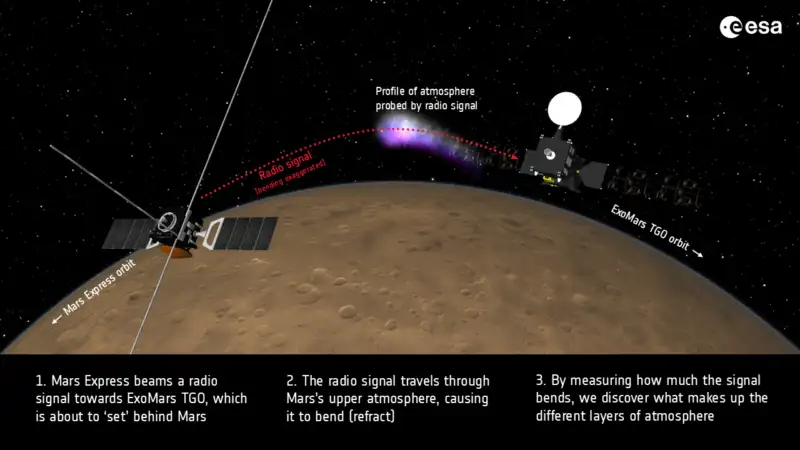
The observations were made possible through a specialized measurement technique involving orbiter-to-orbiter radio occultation. Mars Express transmitted a radio signal to TGO as it disappeared behind the planet's horizon. This method, developed by the European Space Agency (ESA), allowed scientists to gather data on the storm's impact on the ionosphere. While ESA typically conducts only two such observations per week at Mars, the timing of this event with a major solar flare proved fortuitous.
A Planet's Turbulent Past
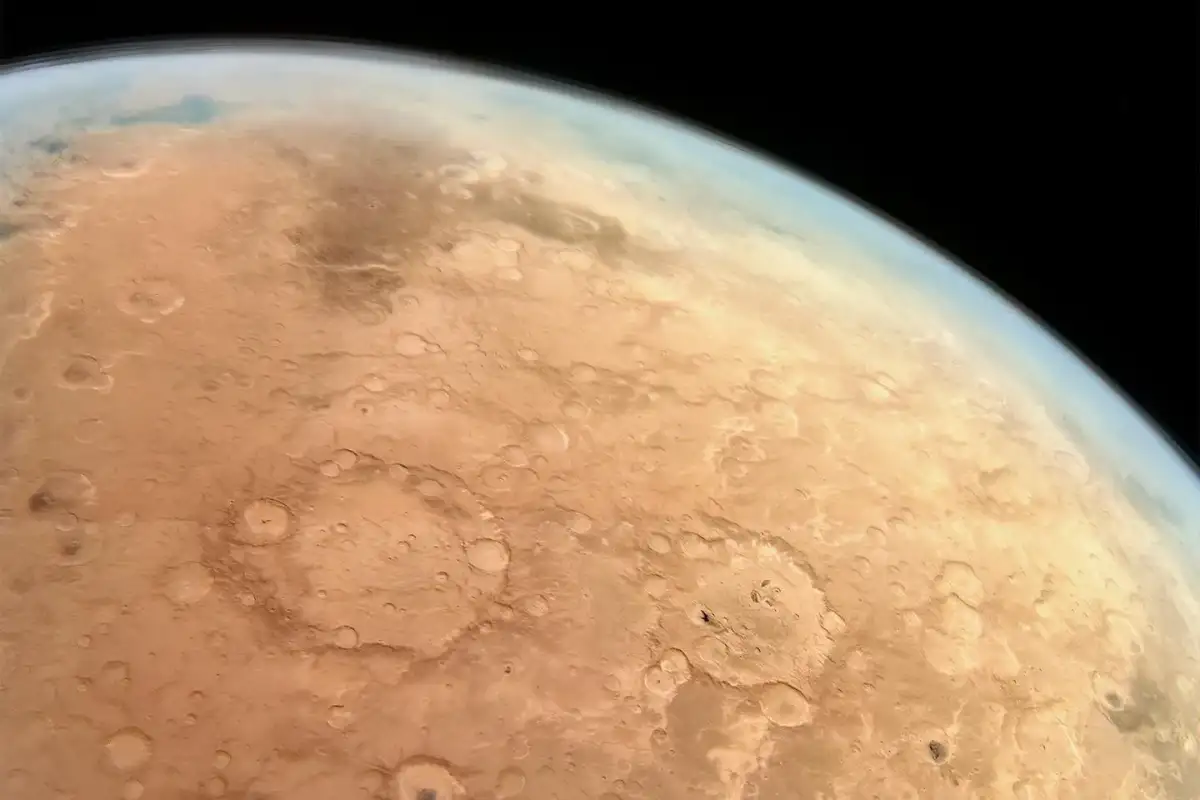
Scientists are keen to understand how Mars' ionosphere responds to solar flares to shed light on the planet's early history. "Observing how the Mars ionosphere responds to solar flares will tell us more about how it responded to ambient conditions in the Sun’s early history, which were more like flare conditions today," noted a researcher. Mars, once possessing liquid water and a much denser atmosphere, has undergone significant atmospheric erosion over eons, a process heavily influenced by the solar wind. The current atmospheric pressure on Mars is a mere 0.6% of Earth's.
Read More: US Space Force Victus Haze Mission Successfully Tests Orbital Intercepts
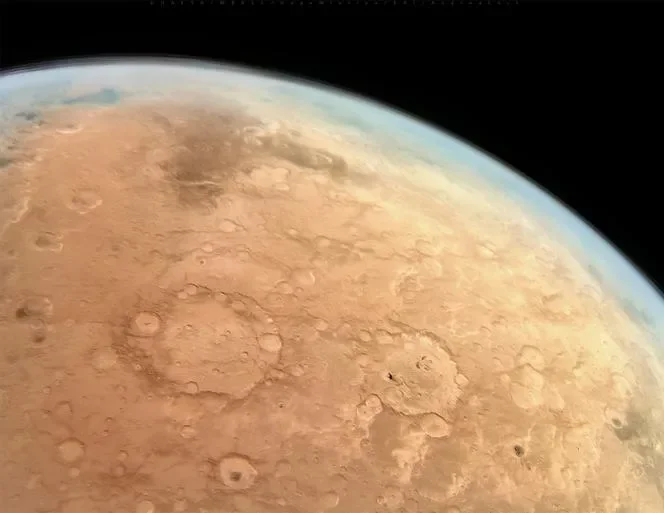
MAVEN, managed by NASA's Goddard Space Flight Center, is part of the Mars Exploration Program. NASA's Jet Propulsion Laboratory provides navigation and Deep Space Network support for the mission. Lockheed Martin Space constructed the spacecraft.Mars Express and TGO are European spacecraft contributing to our understanding of the Martian environment. ESA is considering a future mission, M-MATISSE, comprising two orbiters to conduct extensive occultation experiments daily.