ORBITAL DANCE CONFIRMS CENTURIES-LONG CO-ORBIT
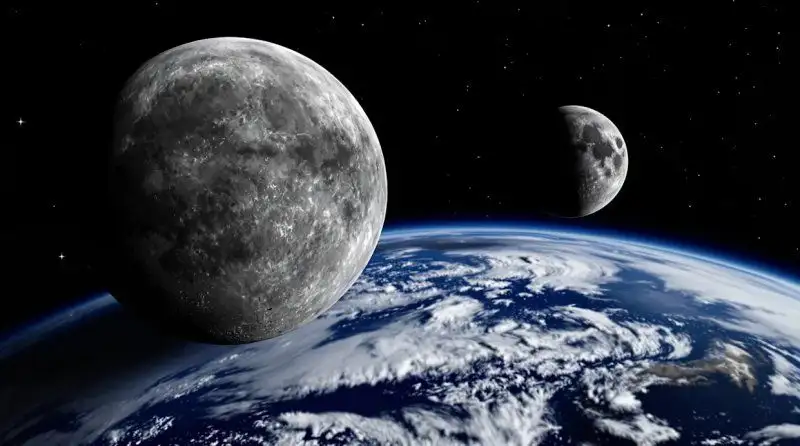
A small asteroid, identified as 2016 HO3, has been confirmed to be in a stable orbit that will keep it near Earth for hundreds of years. This celestial body is not a true moon, as it does not orbit Earth directly. Instead, it functions as a quasi-satellite, meaning its orbit around the sun is synchronized with Earth's, creating a persistent, albeit distant, companionship.
This asteroid's orbital path is characterized by a slow, oscillating twist over decades, enabling a perpetual game of leapfrog with our planet. This unique configuration marks it as the most stable example to date of a near-Earth companion object.

THE NATURE OF A QUASI-MOON
The designation "quasi-moon" or "quasi-satellite" describes an object that primarily orbits the sun but maintains a specific orbital relationship with a planet. Unlike a natural satellite, such as our own Moon, these bodies do not circle Earth directly.
Read More: US Space Force Victus Haze Mission Successfully Tests Orbital Intercepts
A recent confirmation, published October 24, 2025, indicated Earth acquired a temporary celestial companion fitting this description. However, the terminology can be misleading, and it's crucial to understand that these objects do not possess a gravitational tether to Earth in the way a moon does.
HISTORICAL CONTEXT
The initial discovery and characterization of 2016 HO3 were detailed in a publication on June 15, 2016. At that time, researchers highlighted its unusual orbit and its long-term potential to remain a companion. The asteroid was described as "locked onto us" in its orbital path. The term quasi-satellite was used to explain this unique dynamic, distinguishing it from objects that might be captured and held in a more direct orbit.