New research, bolstered by NASA's investigations into asteroid samples, proposes that crucial elements for life, specifically phosphorus and nitrogen, predominantly originated from the inner regions of our solar system. This challenges prior assumptions that these vital components might have been delivered from more distant, outer reaches. The findings, which incorporate analysis of samples from asteroid Bennu and geochemical modeling, suggest that the formation of Jupiter played a significant role in shaping the chemical landscape that ultimately facilitated Earth's habitability.

This recalibration of understanding impacts the broader scientific endeavor to locate potentially habitable planets beyond our solar system. By pinpointing the terrestrial origins of life's fundamental ingredients, the study provides new markers in the ongoing search for extraterrestrial life.

Asteroid Bennu Yields Key Components
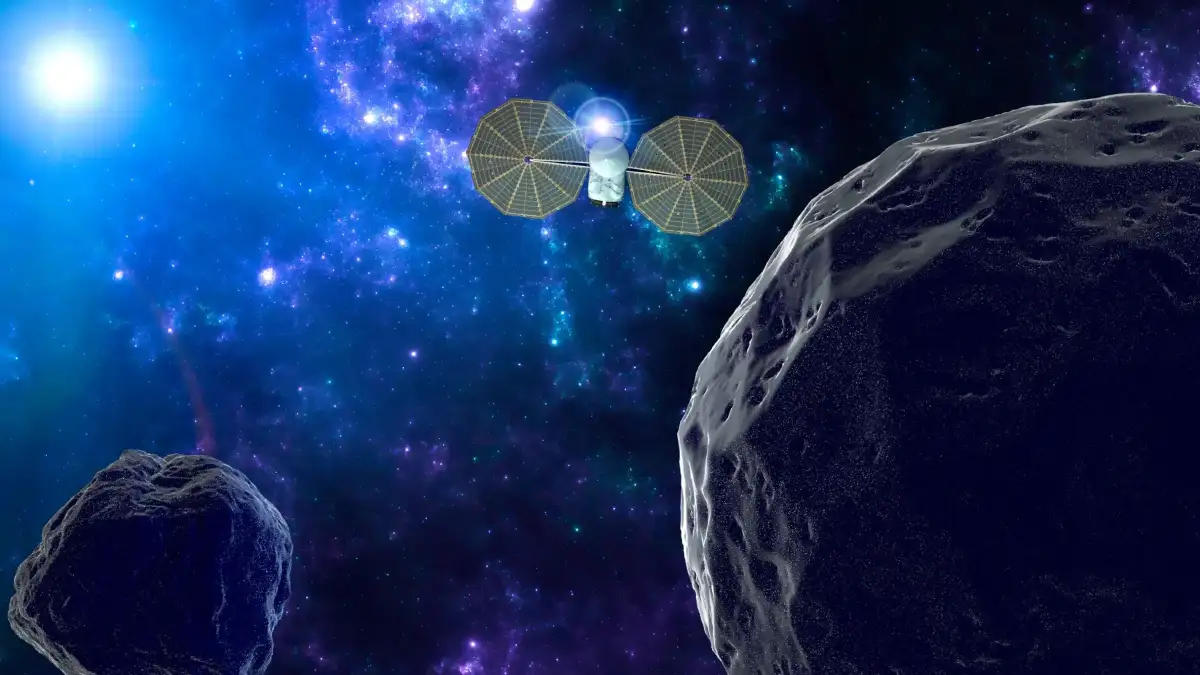
Investigations into samples retrieved from asteroid Bennu have offered tangible evidence supporting this new hypothesis. Previous analyses of Bennu, a relic from the early solar system, had already uncovered 14 of the 20 amino acids essential for life on Earth, alongside all five nucleobases that form DNA and RNA. More recent examinations of these samples have identified tryptophan, a crucial amino acid, increasing the tally of protein-building amino acids found to 15 out of 20. The asteroid also contained ammonia and various minerals, presenting a rich mix of ingredients that could contribute to the formation of life's basic molecular structures, though not life itself.
Read More: Indigenous Data Rights Now Key in Conservation Genomics

Furthermore, sugars such as deoxyribose and ribose, fundamental to DNA and RNA, have been detected in the asteroid samples. The presence of ribose, in particular, suggests it may have been more prevalent in the early solar system's environments than previously believed.

Rethinking Planetary Formation and Distribution
The study employed laboratory experiments and geochemical models to reconstruct the distribution of phosphorus-nitrogen (P/N) ratios across the early solar system. These reconstructions revealed distinct patterns between early-forming planetesimals (iron meteorites) and later ones (chondrites). While the initial generations showed a higher P/N ratio in the outer solar system, this trend reversed in the second generation, with higher ratios observed in the inner solar system.
Read More: US Space Force Victus Haze Mission Successfully Tests Orbital Intercepts
This chemical mapping provides a framework for understanding how Earth accumulated its essential elemental budget. The findings propose that Earth acquired its necessary phosphorus and nitrogen primarily from the inner solar system, potentially negating the need for significant contributions from outer solar system chondrites. The gravitational influence of Jupiter's formation is posited as a key factor in this redistribution of materials.
The research continues to explore the complex dynamics of early solar system chemistry. An ongoing question remains whether a life-supporting elemental composition, similar to Earth's, could arise in planetary systems lacking a gas giant like Jupiter.