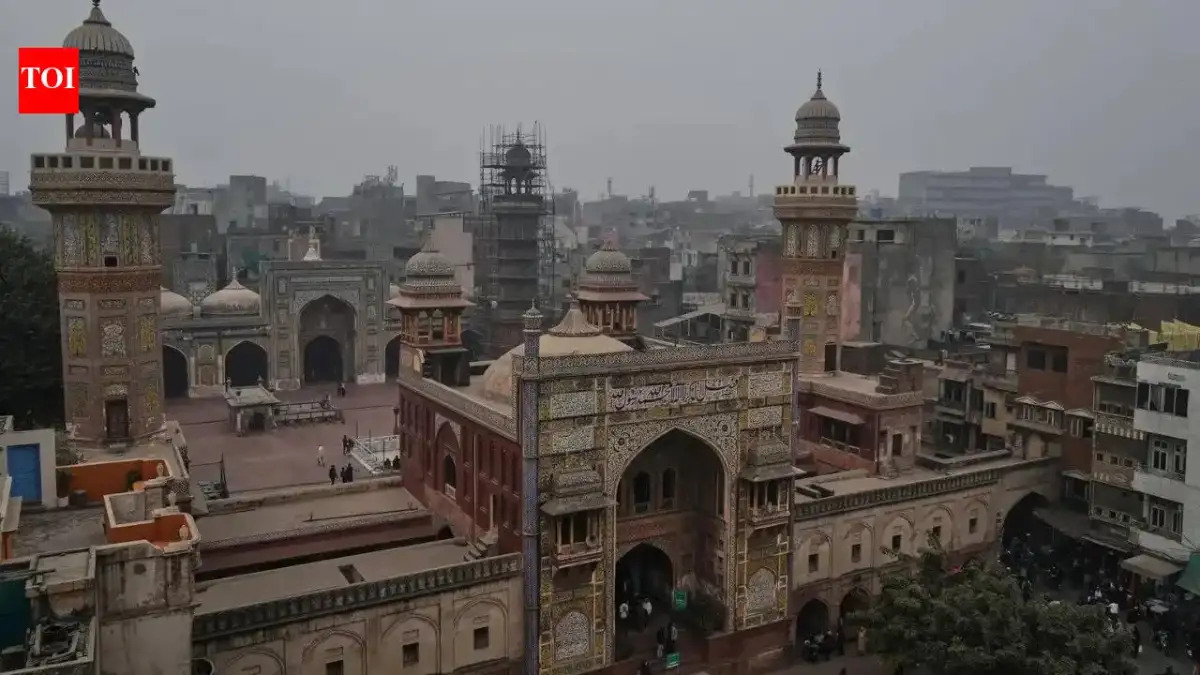
ISLAMABAD – In a significant cultural recalibration, the Punjab government in Pakistan has sanctioned a plan to reinstate a raft of pre-partition street and locality names across Lahore. The move signals a deliberate effort to reconnect with the city's multi-layered history, reclaiming designations that were altered in the decades following the 1947 division of British India.

The official decision, announced Monday, will see numerous areas and thoroughfares revert to their original Hindu, Sikh, Jain, and colonial-era titles. This initiative, framed as a 'Lahore Heritage Area Revival' (LHAR) project, aims to counter the extensive renaming that followed Partition, which often replaced these historical markers with Islamic or nationalistic appellations.
Key Reclamations Across Lahore
The revitalized naming scheme encompasses prominent intersections, commercial hubs, and residential districts:
Islampura is officially designated to revert to Krishan Nagar.
Sunnat Nagar will once again be known as Sant Nagar.
Mustafabad is set to reclaim its original name, Dharampura.
Maulana Zafar Ali Khan Chowk will officially transition back to Laxmi Chowk.
Babri Masjid Chowk is slated to regain its former title, Jain Mandir Road.
Several major roads also feature in this historical restoration:

Fatima Jinnah Road will be renamed Queen’s Road.
Allama Iqbal Road will revert to Jail Road.
Sir Aga Khan Road will once again be Davies Road.
Bagh-i-Jinnah Road is set to become Lawrence Road.
Shahrah-i-Abdul Hameed bin Badees will be renamed Empress Road.
Further adjustments include:
Read More: Why the New Atheism movement lost public influence by April 2026
Nishtar Road will revert to Brandreth Road.
Rehman Gali is scheduled to become Ram Gali.
Ghaziabad will return to Kumharpura.
Jeelani Road is being restored as Outfall Road.
Hameed Nizami Road will once again be known as Temple Street.
Heritage Sites and Sporting Echoes
Beyond street names, the Punjab government has proposed restoring three cricket grounds and a traditional ‘akhara’ (wrestling arena) at Minto Park, now part of Greater Iqbal Park. This site held significance before Partition, serving as a venue for Dussehra celebrations by Hindu communities and as a training ground for cricketers, including the pre-division era’s Lala Amarnath, and later Pakistani cricketers like Inzamam-ul-Haq.
The revival project is presented as an acknowledgment of Lahore's multifaceted cultural tapestry, encompassing Muslim, Sikh, Hindu, Christian, and colonial influences. Fresh signboards bearing the old names have reportedly begun appearing across various parts of the city in recent months, reflecting a gradual return to these historical designations.