New Optical Processor Overcomes Depth-of-Field Limits
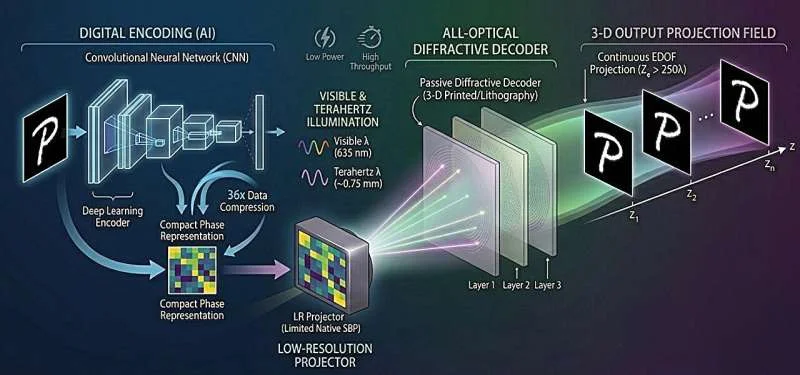
A novel hybrid projection system, detailed in a recent study, generates super-resolution images that remain sharp across a significantly extended depth range. The core innovation lies in a diffractive decoder that reconstructs high-resolution images from phase patterns generated by a projector. This entirely passive optical component, once fabricated, requires no additional power for its function, effectively offloading computational tasks to pre-deployment optimization.
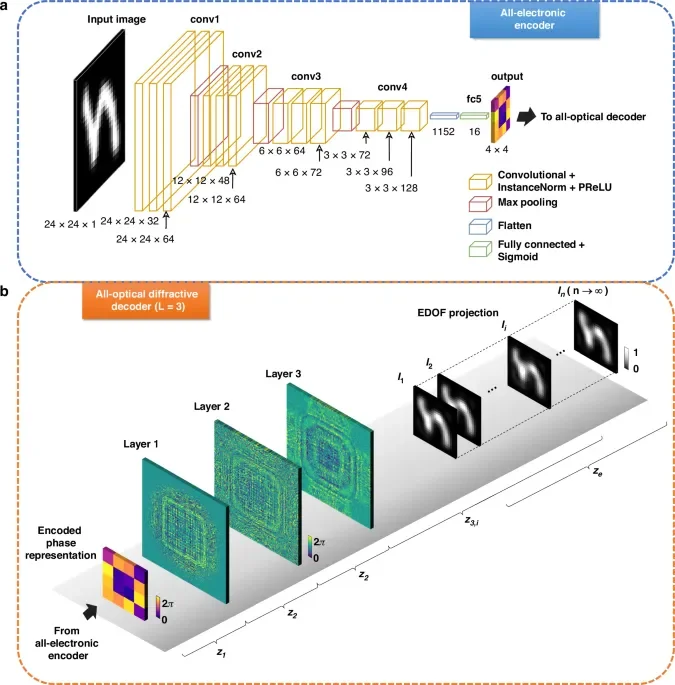
The system has demonstrated the ability to produce high-fidelity images over an extended depth of field, a feat that challenges conventional projection technologies. Tests confirm the system's resilience, as it successfully projected images of previously unseen object classes and maintained quality even with minor structural misalignments or imperfections in the phase patterns. Researchers also report a 16-fold improvement in the space-bandwidth product at each lateral plane, a key metric for image detail and data capacity.
Read More: Chrome mimeHandler API lets extensions handle file types
Technical Details and Performance
The diffractive layers, crucial to the decoder, are constructed with fine features, measuring approximately 0.667 wavelengths per dimension, arranged in a grid of 66.7 wavelengths by 66.7 wavelengths, spanning 50mm by 50mm. The low-resolution wavefront modulator used in the setup has a pixel pitch of 8 wavelengths by 8 wavelengths, resulting in a super-resolution factor of 6. The experimental results showcase sharp image reconstruction at various output plane distances, including positions at 135mm, 160mm, and 185mm.
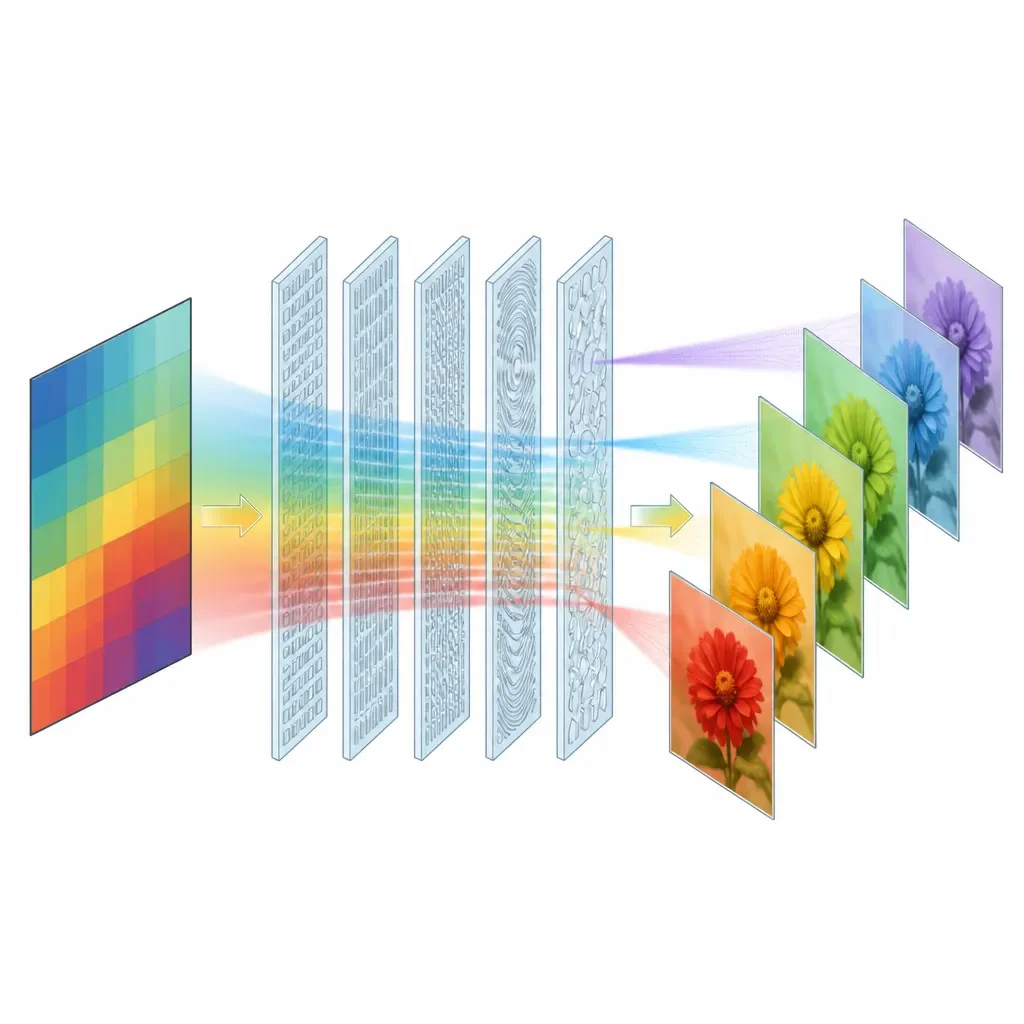
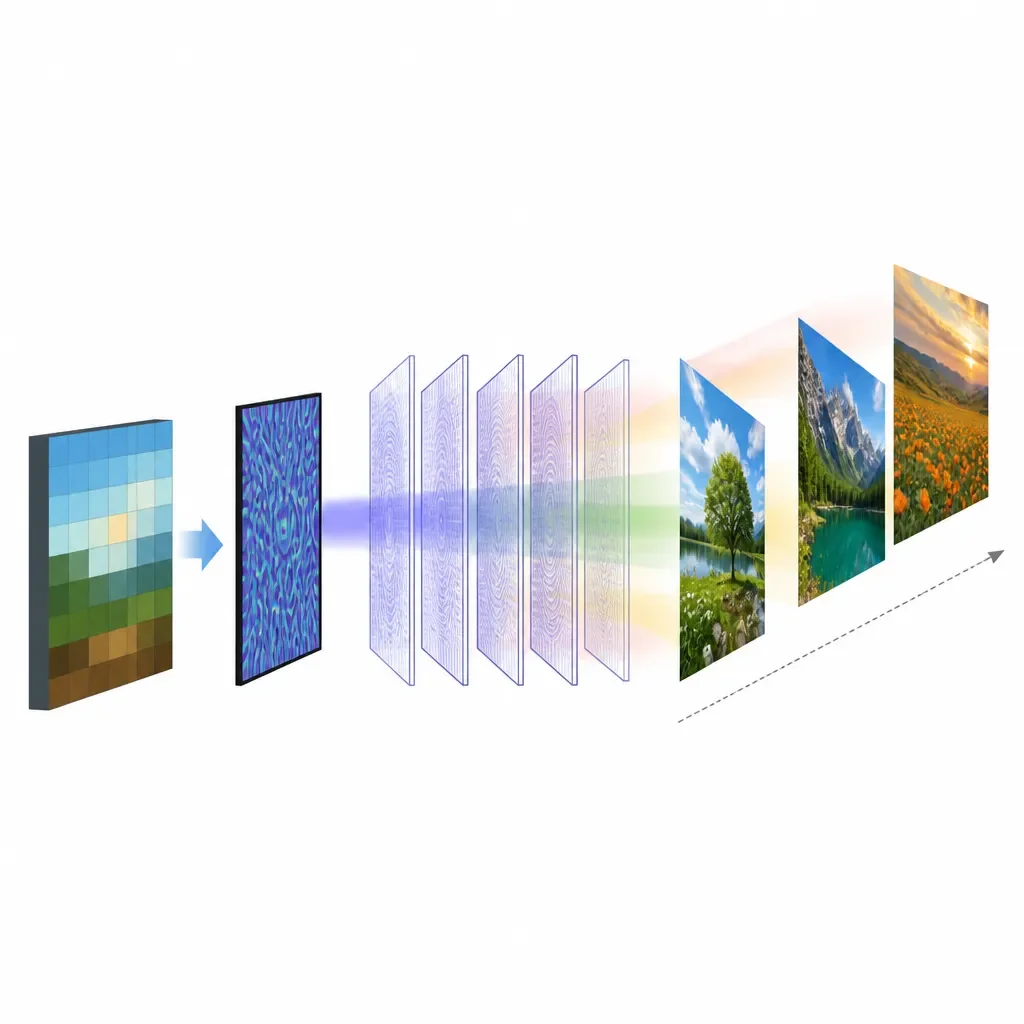
This approach tackles fundamental limitations in display technologies, from virtual reality headsets to holographic systems, which often struggle with sharp 3D scenes without excessive power consumption or data demands. By integrating optical and computational methods, these hybrid systems synthesize high-fidelity images by combining physical and digital elements.

Background: Evolution of Hybrid Imaging
The development of these hybrid systems represents a move towards integrated optical and computational strategies. Earlier work, such as that published in 2022, explored joint optical-digital co-optimization, using techniques like alternating gradient descent and black-box evolution strategies to fine-tune both optical encoder parameters and digital hardware. The emphasis on passive decoding, where diffractive layers incur no active power consumption for image projection, highlights a drive towards energy-efficient and advanced imaging solutions. The researchers involved in this latest publication hail from UCLA, USA, and their findings were published in the journal Light: Science & Applications.
Read More: New York Mets vs Atlanta Braves 7 April 2026 NL East game preview