The Kerala High Court issued a directive on May 16, 2026, allowing a 28-year-old transgender man to proceed with the cryopreservation of his oocytes. Justice Shoba Annamma Eapen ordered that the petitioner’s chosen Assisted Reproductive Technology (ART) bank must facilitate the retrieval and storage of his gametes, effectively removing a significant barrier to his future reproductive autonomy.
The ruling provides legal standing for transgender individuals to access fertility preservation services despite statutory gaps in the ART Act regarding gender identity.

Case Context: The petitioner, Hari Devageeth, initiated legal action after being denied egg cryopreservation by a private facility. The clinic argued that the current ART Act contained no explicit provisions for transgender persons, creating a regulatory ambiguity that hindered service access.
Legal Basis: The petition invoked Article 21 of the Indian Constitution, asserting that the right to reproduction is a fundamental component of the right to life and personal liberty.
Irreversibility: The court recognized that the petitioner’s transition, specifically the impending removal of reproductive organs, constituted an irreversible medical path. Denying the preservation of gametes prior to this procedure would have permanently precluded his ability to have a biological child.
Implications for Reproductive Rights
This intervention marks a shift in how medical institutions and the judiciary interpret existing Reproductive Autonomy frameworks. Previously, private healthcare providers relied on the lack of explicit language in the ART Act to decline service to non-cisgender applicants.

| Aspect | Status |
|---|---|
| Legal Hurdle | Absence of transgender-specific clauses in ART Act |
| Primary Argument | Violation of reproductive rights under Article 21 |
| Judicial Directive | Mandatory access for chosen ART facility to proceed |
| Impact | Precedent for future transgender parenting rights |
Background and Procedural Timeline
The conflict between bureaucratic rigidity and individual constitutional rights became public in early 2025.
Read More: Judge Reyes halts East Potomac Golf site work until April 21 2026
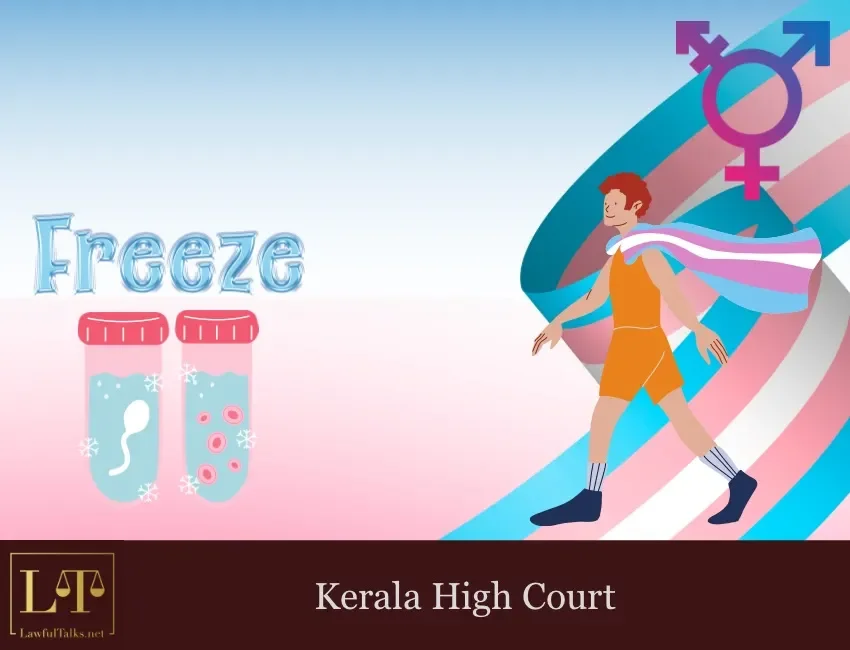
February 2025: The petitioner first approached the court following a refusal by a hospital in Thiruvananthapuram.
Institutional Stance: Clinics involved cited that the prevailing Assisted Reproductive Technology regulations did not categorize or accommodate the specific needs of transgender individuals seeking fertility storage.
Escalation: As the petitioner progressed through various stages of medical transition, the urgency of the matter increased. The High Court's intervention serves as a necessary check on private medical facilities that interpret statutory silence as a prohibition of care.
The judgment establishes a de facto protection for those seeking to balance gender-affirming medical paths with the desire to preserve future biological kinship, signaling a broader evolution in how the state addresses Transgender Healthcare.