Officials Act as LPG Shortages Spur Firewood Demand
Karnataka Forest Minister Eshwar Khandre has ordered a ban on illegal tree felling across various forest and government land types. This directive comes in response to a predicted surge in demand for firewood, linked to a deepening crisis in LPG availability. Forest department officials are tasked with increased patrols and vigilance to curb any uptick in illicit wood extraction.
The immediate concern is a rise in illegal tree felling due to increased demand for firewood, stemming from LPG scarcity, impacting forests, government plantations, and roadside greenery.
The ban encompasses forests, forest edges, government plantations, and roadside plantations. Wildlife conservationist Giridhar Kulkarni had previously alerted the state government to the potential for increased fuelwood extraction, urging officials to remain watchful and to explore regulated mechanisms for meeting legitimate community fuelwood needs, thereby lessening pressure on natural forests.
Read More: Amazon Land Use Changes Cause Disease Clusters in Brazil

Hotels, Paying Guest accommodations, and other establishments are reportedly turning to traditional firewood for cooking due to the LPG shortage, intensifying the demand for wood. This shift could exacerbate tree felling not only in designated forest areas but also on government properties and other green spaces.
Wider Contexts of Firewood Collection and Forest Health
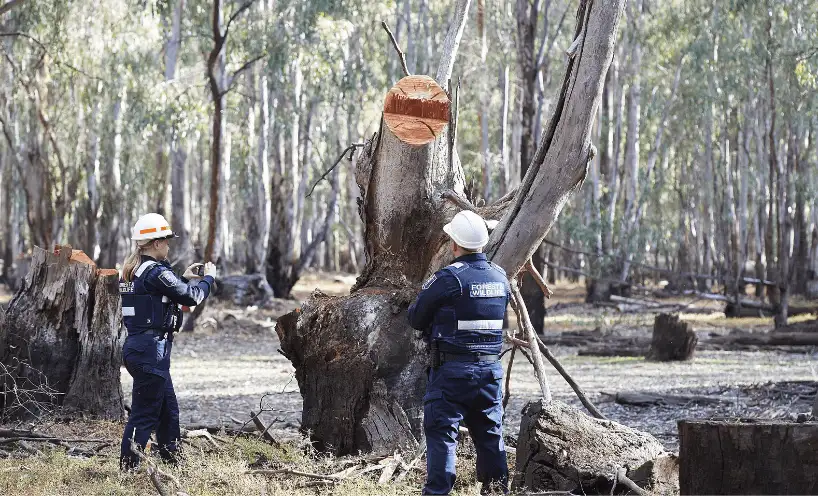
Reports from other regions highlight similar anxieties. In Victoria, Australia, a joint initiative called Taskforce Ironbark was established to combat illegal firewood theft, which has led to the felling of nearly 10,000 trees. Factors such as rising living costs and a lack of public awareness are cited as contributing to increased demand for cheap firewood, placing a strain on parks, forests, and wildlife habitats. Native trees are reportedly being taken faster than they can regenerate, affecting habitats for birds, reptiles, and small mammals.
Similarly, Borno State in Nigeria has issued an executive order banning tree felling and burning for charcoal or firewood. This measure is intended to combat desert encroachment, environmental degradation, and pollution. The state is also exploring alternative stove technologies to minimize tree felling.
Read More: Karnataka requests higher Totapuri mango limit for farmers in April 2026
Environmental Ramifications
The consequences of firewood collection on forest decline are multifaceted, encompassing ecological, social, and economic dimensions. Overharvesting stands as a primary driver of decline. Integrated approaches are deemed necessary to address both human energy needs and forest conservation. Issues such as drought, overcrowding in natural areas, economic impacts on tourism, and the decline of native tree populations and wildlife are all linked to broader environmental pressures, including climate change and urban sprawl.
In stark contrast, a different approach was signaled by former President Trump, who announced an expansion of tree felling and a removal of forest protection measures, ostensibly for economic benefits and wildfire prevention. However, critics questioned the policy's effectiveness, suggesting it risks irreversible damage to ecosystems and undermines long-term forest health.
Read More: Kanyakumari Atomic Mining Permit Extended for 1144 Hectares in 2026
Background
The current directive in Karnataka emerges against a backdrop of ongoing environmental concerns related to resource extraction. The push for firewood reflects a potential systemic vulnerability in energy supply chains, forcing a reliance on traditional, often unsustainable, fuel sources. This situation underscores the delicate balance between immediate human needs and the long-term preservation of ecological systems.