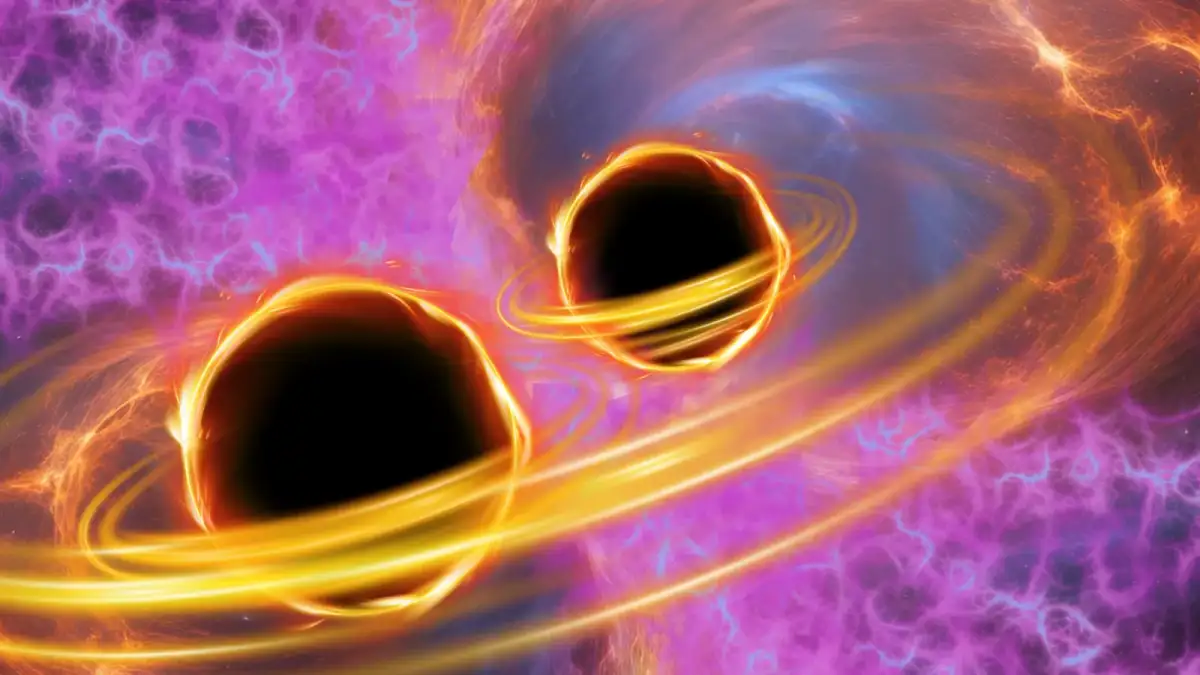
Recent observations from the James Webb Space Telescope (JWST) have stirred debate among cosmologists. Data suggests the presence of black holes that appear surprisingly massive for their early cosmic epochs, challenging existing models of black hole formation and growth. These findings, discussed at recent astronomical gatherings, raise questions about whether these objects represent a genuinely anomalous population or if our current understanding of stellar evolution in the nascent universe needs adjustment.
Early Universe Overachievers?
The Webb telescope's unparalleled sensitivity has allowed astronomers to peer further back in time than ever before. In doing so, it has detected black holes in galaxies that existed when the universe was a fraction of its current age. The surprising aspect isn't just their existence, but their sheer size.
These "early giants" seem to have amassed significant mass much faster than prevailing theories predict.
The conventional narrative posits a gradual accretion process, where black holes grow over billions of years by consuming surrounding gas and stars.
The JWST data hints that some black holes may have had a "head start," or that the conditions in the early universe were far more conducive to rapid growth than previously thought.
Refining the Cosmic Picture
Discussions surrounding these findings have been ongoing within the astronomical community, notably highlighted in events such as the 248th AAS meeting. Such forums serve as critical junctures for sharing preliminary results and fostering collaborative interpretation.
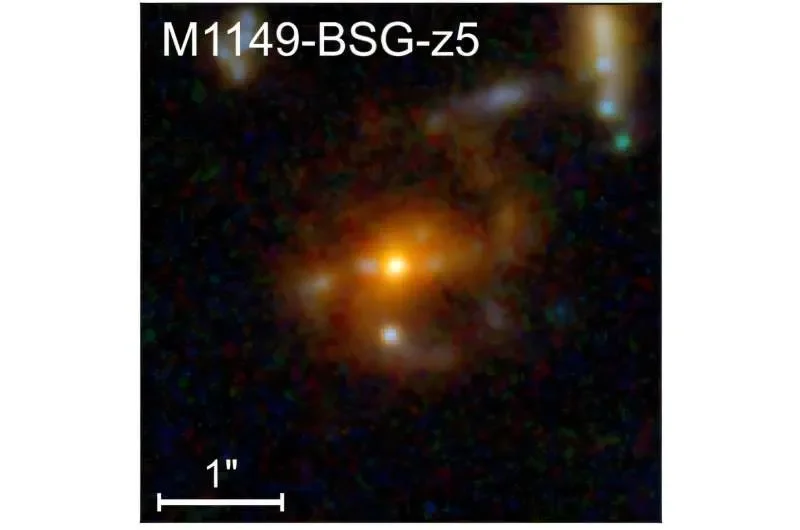
Read More: JWST Finds Oldest Barred Spiral Galaxy M1149-BSG-z5
Updates on the performance and calibration of JWST instruments, like NIRCam and MIRI, are crucial for validating these observations. Precise measurements are paramount when challenging established cosmological frameworks.
Presentations on JWST Mission updates, Cycle 5 results, and Cycle 6 plans indicate a continuous effort to refine data collection and analysis.
The mention of programs like the Rocky Worlds DDT program underscores the diverse scientific objectives being pursued with JWST, even as these more fundamental questions about early cosmic structures emerge.
The implications of these early, massive black holes could be far-reaching, potentially reshaping our understanding of galaxy formation, the evolution of supermassive black holes, and the very fabric of the early cosmos. Whether these are true outliers or a signpost to a more dynamic early universe remains a central question driving ongoing research.