DEEP-SPACE OBJECTS IN LEO BECKON AMATEUR ASTRONOMERS AMIDST APRIL'S CITIZEN SCIENCE INITIATIVES
This April, the constellation Leo is serving up a celestial menu, drawing attention to its more elusive inhabitants – namely, galaxies. The Leo Triplet, a cluster of three interacting galaxies, is highlighted as a point of interest. These galactic congregations, observed under the star Chertan, offer a complex visual display, with their interactions reportedly influencing their individual evolutionary paths. The phenomenon prompts the question: "Do they all look like spiral galaxies to you?"
The constellation's offerings extend beyond galactic congregations. For those equipped with binoculars or a small telescope, Leo harbors a "notable double star," identified as Algieba (also known as Gamma Leonis). This celestial pairing, found within Leo's prominent "sickle" asterism, is but one of several multiple-star systems within the constellation. Observers are encouraged to scan the area, suggesting that varied appearances are a consequence of differing orientations relative to Earth.
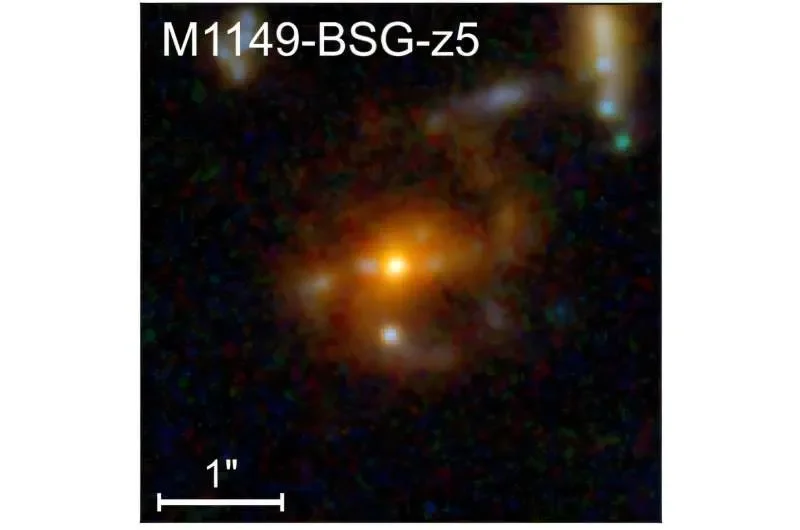
Read More: JWST Finds Oldest Barred Spiral Galaxy M1149-BSG-z5
Beyond these specific targets, Leo itself is a significant presence in the night sky. It ranks as the 12th-largest constellation and is most visible during the March-to-May period. The constellation is anchored by Regulus, its alpha star, a bright blue-white star that dominates the celestial pattern. Another key stellar marker is Denebola, one of three bright stars forming an isosceles triangle, enhancing Leo's recognizable form.
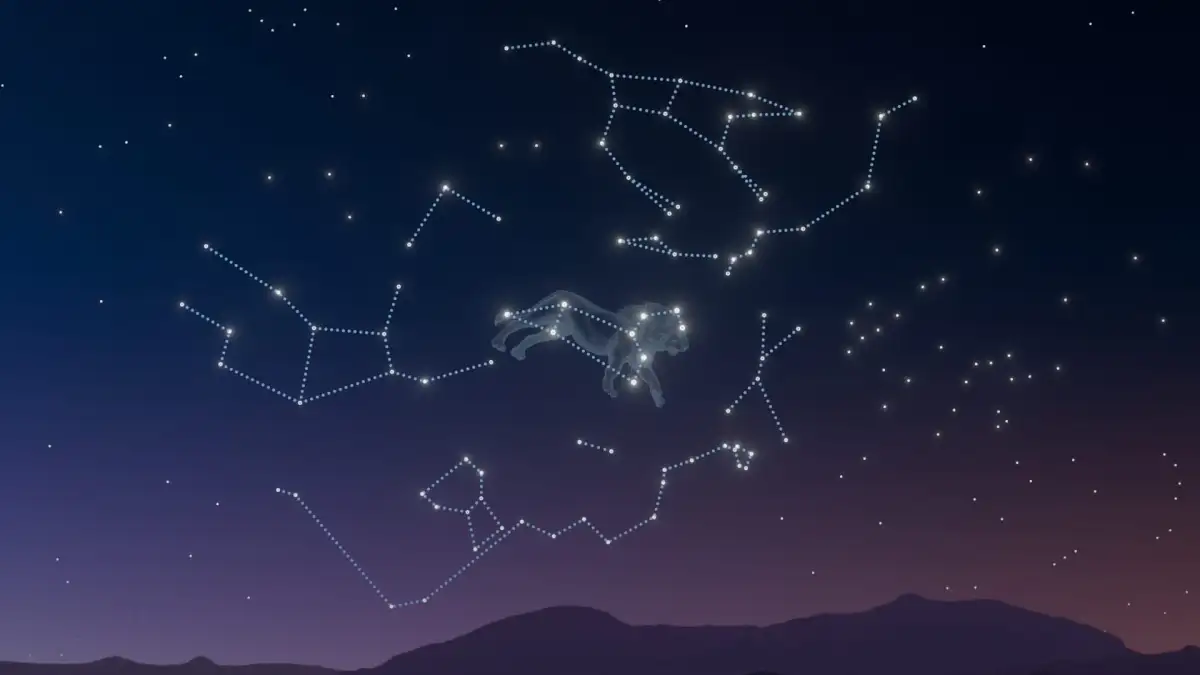
This period coincides with April being designated as 'Citizen Science Month.' Numerous NASA-affiliated community science programs are encouraging enthusiasts to contribute their observations of Leo, ostensibly to deepen understanding and enhance observational skills. This initiative frames the exploration of Leo's celestial wonders not just as passive viewing but as an active contribution to astronomical data.
HISTORICAL AND MYTHOLOGICAL CONTEXTS FRAME LEO'S COSMIC PRESENCE
Leo's mythological roots are deeply embedded in ancient narratives, most notably its association with the Lion of Nemea. This fearsome beast, famously the subject of Hercules' first labor, was an invulnerable creature whose defeat marked a significant trial for the legendary hero. This connection imbues the constellation with a narrative of strength and mythological struggle.
Read More: US Space Force Victus Haze Mission Successfully Tests Orbital Intercepts
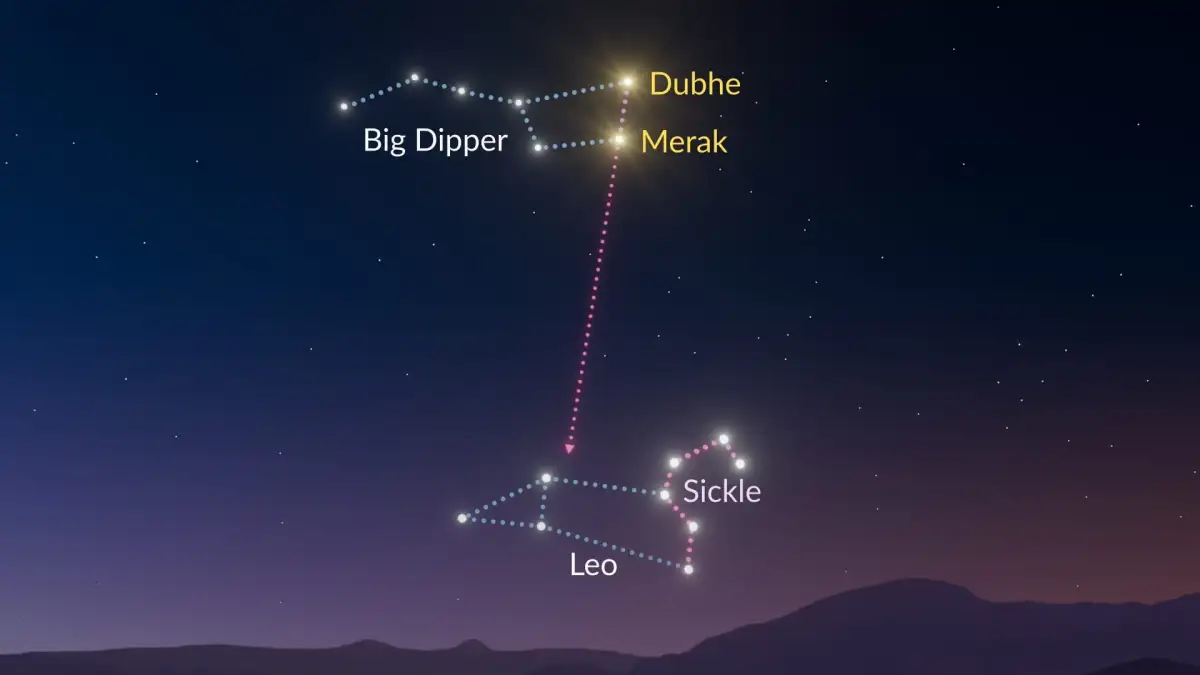
The constellation's structure is further defined by an asterism known as "The Sickle," a pattern of stars that forms a curve, often likened to a backward question mark. This familiar shape aids in orienting observers within the larger celestial landscape of Leo.
The broader visibility of Leo places it firmly within the springtime skies of the Northern Hemisphere, offering a consistent spectacle for those looking upwards during these months. Its seasonal prominence, coupled with its rich tapestry of stars, double stars, and galactic clusters, solidifies Leo's status as a constellation of enduring astronomical and cultural interest.