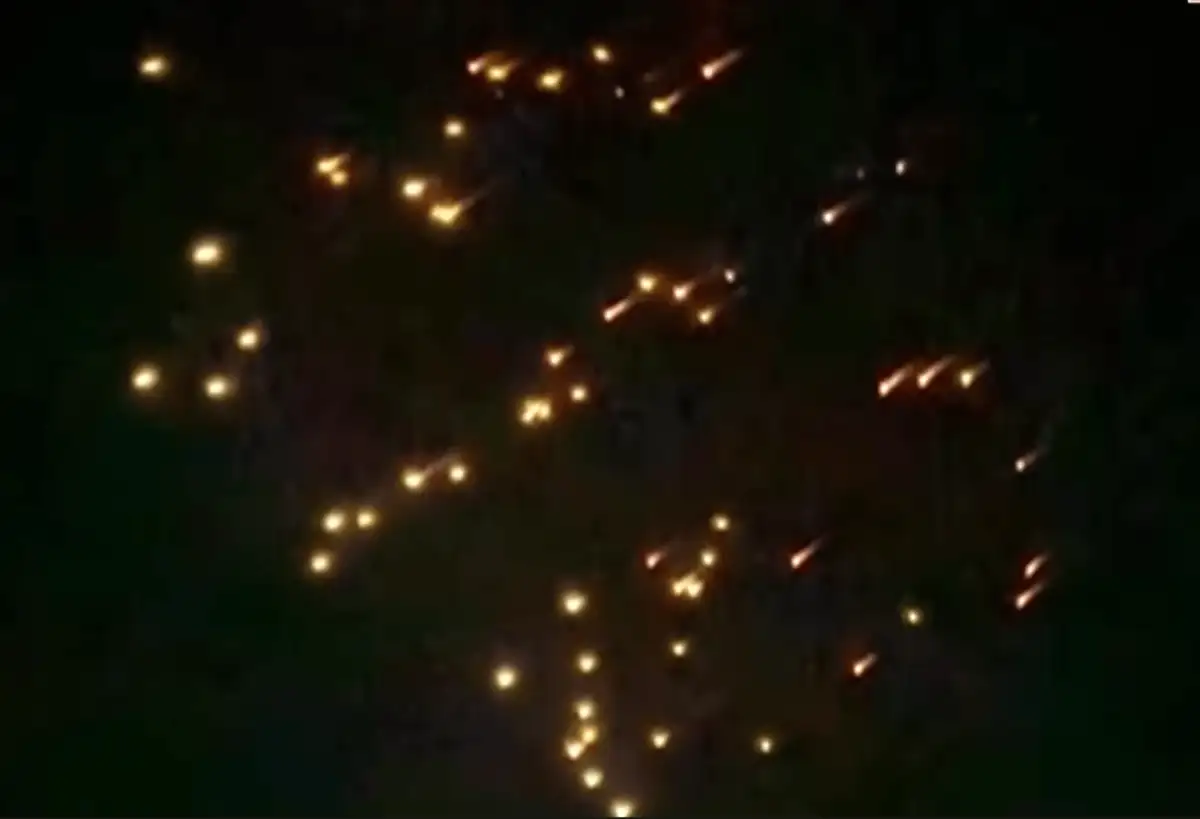
Hezbollah and Iran have initiated coordinated attacks employing cluster munitions against Israel, marking a significant escalation in the ongoing regional conflict. This deliberate strategy aims to exert pressure on Israel from multiple fronts, introducing a complex and perilous dimension to aerial defense. The weapons scatter numerous submunitions over a wide area, posing indiscriminate risks.

Reports indicate that Iran has been firing cluster munitions throughout the present war, a tactic Israel asserts it is not currently employing. The use of these weapons, characterized by their tendency to leave unexploded bomblets dangerous long after deployment, has drawn international criticism regarding their indiscriminate nature.
Intensified Assault and Regional Instability
The synchronized strikes represent a strategic move by Hezbollah and Iran to heighten pressure on Israel. Recent days have seen multiple waves of missile fire targeting across the country. These actions have amplified regional instability and placed civilians in both Israel and Lebanon at considerable risk.
Read More: Russia's attacks up 37% in May, but Ukraine land gains stop

The cluster bomb attacks are understood as part of a broader, coordinated strategy. Footage has emerged showing the impact of Iranian cluster munitions in central Israel during ballistic missile barrages.

Broader Conflict Context
This escalation coincides with wider hostilities. Reports from early March detail Israeli and American strikes on targets within Iran, while Iranian-backed militias, including Hezbollah, have launched missiles at Israel and other regional states. The conflict has expanded, with increased casualties reported.
The International community's response remains varied. While Spain has condemned Israeli attacks on Lebanon and called for adherence to UN resolutions, other nations are focused on the implications of the conflict for regional security and potential impacts on international interests.
Background: A Long-Standing Tussle
The current wave of intensified hostilities builds upon a protracted history of conflict. Hezbollah, an Iranian-allied group, launched strikes on Israel on March 2, 2026, reportedly in response to the killing of Iran's supreme leader, Ali Khamenei. Hezbollah has characterized this action as a "defensive act" following prolonged Israeli incursions despite a prior truce, asserting a goal to compel Israel to cease aggression and withdraw from occupied Lebanese territories. This move was presented as separate from the broader war involving Iran.
Read More: Gulf Oil Exports Rise in June but Still Below Pre-War Levels
In reaction to Hezbollah's actions, Israel conducted retaliatory strikes in Beirut. The Lebanese government has condemned Hezbollah's rocket and drone attacks, deeming them irresponsible acts that endanger national security and fall outside state authority. Meanwhile, Syria has accused Hezbollah of targeting its army positions and observed troop movements near the Lebanon-Syria border, warning of a response to any attacks on its territory.
The conflict is part of a larger entanglement, including ongoing Israeli actions against Hamas in Gaza, and a broader confrontation involving Iran, Israel, and the United States. The current intensity marks a significant step up in a conflict that has destabilized the Middle East.