

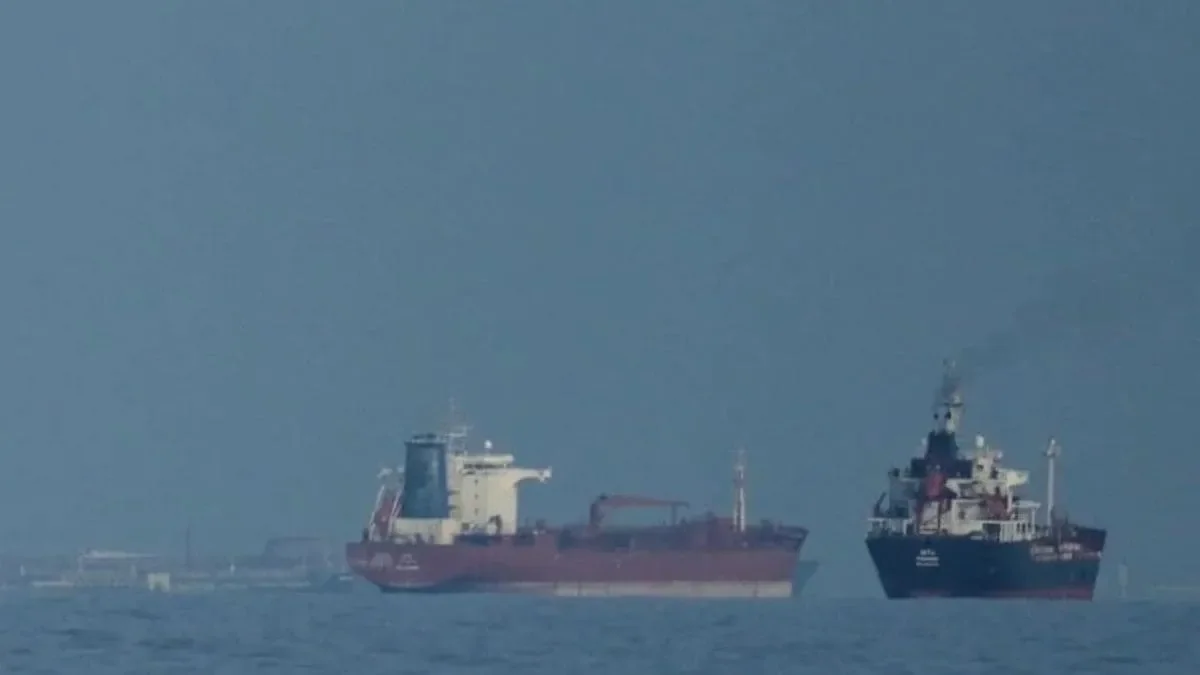
Two Indian vessels altered course in the Strait of Hormuz following reports of gunfire originating from Iran's Revolutionary Guard. Vessel trackers noted the navigational shift, with one report identifying an Indian-flagged supertanker carrying two million barrels of Iraqi oil among the affected ships.

The incident occurred as Iran reimposed restrictions on the vital waterway, citing a US blockade on Iranian shipping and ports. This reversal by Iran followed an earlier pledge to reopen the strait.

Background Tensions and Diplomatic Maneuvers
Earlier reports indicated that two gunboats from Iran's Revolutionary Guard had opened fire on a tanker transiting the Strait of Hormuz. The reimposition of restrictions by Iran appears to be a direct response to the perceived US blockade. Iran's parliamentary Speaker, Mohammad Bagher Qalibaf, had previously warned that the Strait of Hormuz would not remain open if the US blockade continued.
Read More: Strait of Hormuz Traffic Slows Despite Cruise Ship Passage

The situation unfolds against a backdrop of reported diplomatic efforts. US President Donald Trump had stated that the American blockade on Iranian ships and ports would remain in effect until a deal was reached. There were also indications of potential US-Iran peace talks, with Iranian sources suggesting delegations might arrive in Islamabad for discussions.

This latest event contrasts with recent reports of successful diplomatic efforts. Last week, three Indian-flagged ships reportedly passed through the Strait of Hormuz safely after diplomatic talks between India and Iran. India, a significant buyer of LNG and LPG, has been actively seeking safe passage for its vessels.
Meanwhile, Iran's Supreme Leader, Mojtaba Khamenei, had reportedly warned of Tehran's navy readiness and hinted that a temporary ceasefire agreement, due to expire on April 22, might not be extended.
Read More: Strait of Hormuz Closed Again After Iran Says US Blockade Continues


