Tehran, April 18, 2026 — Iran has once again declared the Strait of Hormuz closed to commercial shipping, citing the continuation of a US naval blockade on its ports as the primary reason for reimposing restrictions. This latest development follows a brief period of apparent openness after a ceasefire was agreed upon in Lebanon between Israel and Hezbollah.

The volatile situation hinges on the conflicting interpretations and actions surrounding a ceasefire and the broader US-Iran dispute. Iran's declaration of the strait's closure is directly linked to what it terms US 'piracy' in blocking its ports, a stance that directly challenges US President Donald Trump's assertions that the strait had reopened.

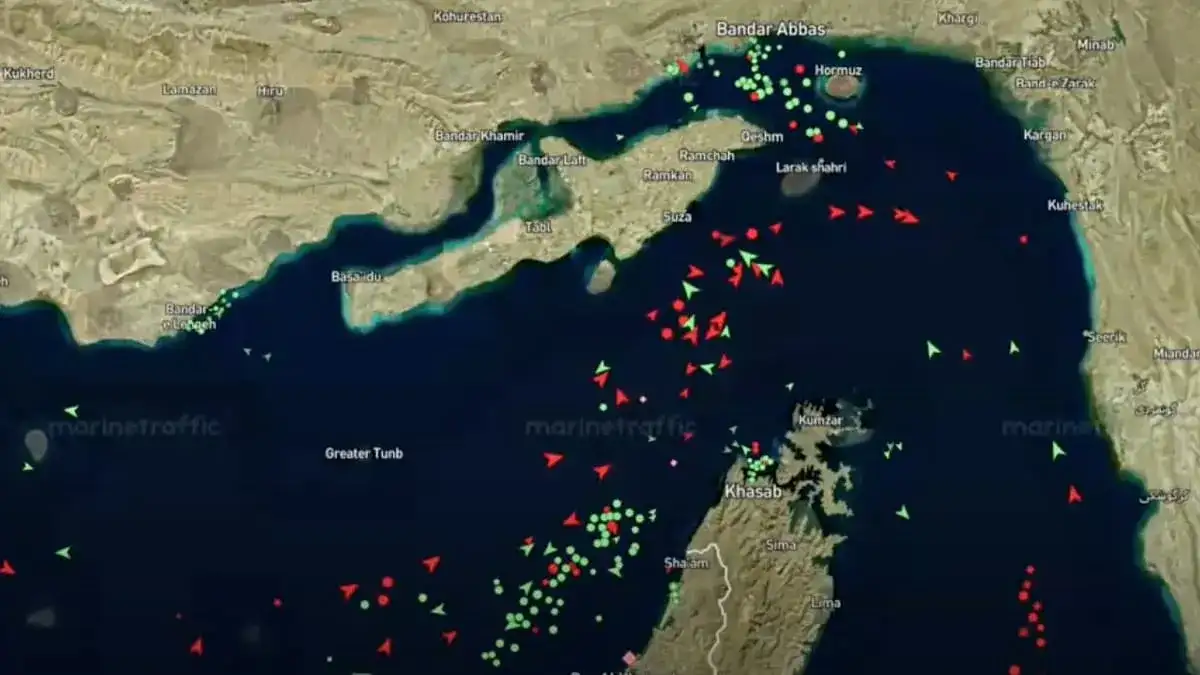
The abrupt reversal has created significant confusion. On Friday, April 17, Iran's foreign minister, Abbas Araghchi, announced the Strait of Hormuz was open to all shipping traffic. This was met with guarded optimism, with Trump even posting a message of thanks on social media. However, this optimism was short-lived. Reports from Iranian state media, including Press TV, indicated the strait had been fully closed, with tankers attempting to pass through being turned around and receiving threatening messages from the Iranian Navy.
Read More: AFP Reviews War Crime Claims Against Australian in Gaza

A source close to Iran's Supreme National Security Council suggested that commercial ships would need to coordinate with Iranian forces, a condition that seemingly contradicts a fully open waterway. This "toing and froing" over the strait's status has cast doubt on Trump's earlier pronouncements about an imminent peace deal to end the conflict involving Iran, the US, and Israel.
Shifting Sands of Maritime Control
The recent events underscore the deep divisions and distrust between Iran and the United States. While Iran framed its initial reopening as a move toward de-escalation following a ceasefire, the continuation of the US blockade appears to have been the catalyst for its subsequent reversal. Trump, meanwhile, has maintained that the US naval blockade will persist until a satisfactory deal with Iran is reached.
Read More: Gulf Oil Exports Rise in June but Still Below Pre-War Levels
An incident where an Iranian gunboat reportedly fired on a tanker 20 nautical miles north-east of Oman further illustrates the escalating tensions. While the tanker and its crew were reported safe, the event highlights the inherent dangers faced by vessels transiting the vital waterway. Maritime tracking data, such as that from Kpler, indicated that movement through the strait remained confined to corridors requiring Iranian approval, even when officially declared open.
Background to the Current Standoff
The Strait of Hormuz, a critical chokepoint through which roughly a fifth of the world's oil and liquefied natural gas typically flows, has been a focal point of the escalating conflict since February 28, 2026. The disruption caused by its closure has had a significant impact on global energy markets, with oil prices surging earlier in the crisis. Brent crude surpassed US$100 per barrel in March, reaching a peak of US$126, marking the largest monthly increase in oil prices on record. The broader economic fallout has extended to other commodity markets, including aluminum, fertilizer, and helium.
Read More: Indus Waters Treaty remains suspended in India and Pakistan April 2026
During the earlier phases of the crisis, Trump had repeatedly threatened military action against Iran. The US military launched a campaign to reopen the strait, though it remained technically open but effectively closed. In late March, Israeli defense minister Israel Katz announced the death of Iranian navy commander Alireza Tangsiri, accusing him of direct responsibility for the strait's closure. Iran, in turn, had previously announced that the Strait of Hormuz would only be closed to ships from the US, Israel, and their Western allies.
Amidst this backdrop of military posturing and economic disruption, diplomatic efforts are underway. Egypt is reportedly working with Pakistan on a peace framework, and Islamabad's military chief, Field Marshal Asim Munir, recently concluded a visit to Iran aimed at securing a peace deal. These efforts occur as a 10-day truce between the US and Iran, brokered in part by a ceasefire in the conflict between Israel and Hezbollah, is set to expire on April 22, 2026.
Read More: US-Iran Talks Stall Over Strait of Hormuz Control on 7 April 2026