

Questions Raised on Transparency in Pricing Policies
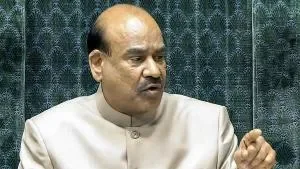
Asaduddin Owaisi, the parliamentarian from Hyderabad, has pressed for clarity regarding Indian Railways' ticket pricing mechanisms. He specifically questioned whether railway ticket fares are being treated as a 'trade secret,' citing the rejection of certain Right to Information (RTI) applications on the matter. Owaisi sought details on steps being taken to ensure transparency in how railway fares, including those for premium services like the 'Vande Bharat Sleeper,' are determined. He also requested a timeline for the public disclosure of the 'base fare formula,' which is understood to encompass dynamic pricing models. This move aims to enable closer 'parliamentary oversight' of the national transporter's pricing strategy.

Ministry Cites Public Availability of Fare Data
In response, the Ministry of Railways has asserted that information pertaining to fares for all passenger service categories is "widely published and available in the public domain." Railway Minister Ashwini Vaishnaw stated in the Lok Sabha that the ministry does not classify ticket fares as a 'trade secret.' To underscore this point, the government highlighted that details regarding the components of passenger fares – such as the base fare, reservation charges, superfast charges, and Goods and Services Tax (GST) – are explicitly displayed on passenger tickets. Furthermore, these details are accessible through published 'fare tables' in both physical and digital formats. The ministry also pointed to computerized ticketing systems, including the Passenger Reservation System (PRS) and Unreserved Ticketing System (UTS), along with mobile applications like 'RailOne,' as avenues for accessing this information.
Read More: Kollam Rail Works Cause Train Schedule Changes

Balancing Affordability and Sustainability
The Ministry of Railways reiterated its commitment to balancing passenger affordability with the financial health of the organisation. Fare details for services, including the recently discussed 'Vande Bharat Sleeper' fares, are calculated on a 'per passenger per kilometre' (PKM) basis. The ministry emphasized strategies to maintain train travel within reach for various economic strata, noting that 'Vande Bharat Sleeper' fares are positioned as lower than comparable global offerings. The 'Vande Bharat Sleeper' trains are equipped with advanced passenger comfort and safety features, including the 'KAVACH' train protection system, CCTV surveillance, and centralized coach monitoring.
Read More: Guntur Hospital Gets New PET Scan for Better Cancer Checks

Fare Structure and Subsidy Considerations
Discussions in parliamentary committees have touched upon the financial realities of the passenger segment. Budget projections for FY26 anticipate passenger revenues of ₹92,800 crore, considerably less than the estimated freight revenue of ₹1,88,000 crore. Reports indicate that the passenger segment, particularly suburban services, is significantly subsidized, with only a fraction of costs recovered. Non-AC travel recovers approximately 30 percent of its cost, while AC travel yields a marginal surplus of about 3.5 percent. A standing committee on Railways has previously recommended periodic comprehensive fare reviews to align AC class fares with operational costs and to facilitate gradual, affordable adjustments for non-AC classes.

Revenue Enhancement Initiatives
To bolster passenger revenues, the ministry has outlined several initiatives. These include the introduction of premium trains like the 'Vande Bharat Express' and 'Amrit Bharat' trains, adjustments to 'flexi-fare' schemes, and the expansion of freight and non-fare revenues through policies such as the 'Gati Shakti' cargo terminal and e-auctions for commercial contracts. A standing committee had previously echoed recommendations for implementing dynamic pricing for AC classes and aligning fares with costs.
Read More: Karnataka KSRTC Bus Strike From May 20 Affects 1.25 Lakh Workers
Parliamentary Proceedings Background
Recent parliamentary proceedings have seen discussions on various matters. In the Lok Sabha, proceedings have included debates such as the No-Confidence Motion, with addresses from key ministers. The Rajya Sabha has commenced its 'Question Hour.' While these proceedings are ongoing, the specific exchange regarding railway fare transparency was highlighted by Owaisi's inquiry.
Historical Context of Railway Pricing
Indian Railways has historically faced challenges in maintaining its dominant position in freight transport, as noted in analyses of its operational and pricing structures. The system operates mixed traffic, balancing scheduled passenger services with freight operations, where the latter have traditionally not been scheduled. The intricacies of these operational demands and the need for financial viability have influenced pricing principles over time.


